Hi, I’m Sarala — a lawyer, storyteller, and unapologetic lover of good wine, good dogs, and good conversation.
After years navigating boardrooms, deals, and governance across the Caribbean, I’ve learned that life — like leadership — is best lived in chapters. Some are bold and ambitious. Some are quiet and healing. And most are best shared over a glass of wine and a wagging tail nearby.
This space is where I write about it all — the beautiful, messy balance of careers, canines, and cabernet. From reflections on purpose and courage to lessons from leadership, love, and dog walks, these are the stories that shape who I am — and, maybe, who we’re all becoming.
Pull up a chair (or pour a glass) and stay awhile. Here’s to life in chapters — imperfect, authentic, and deeply human.
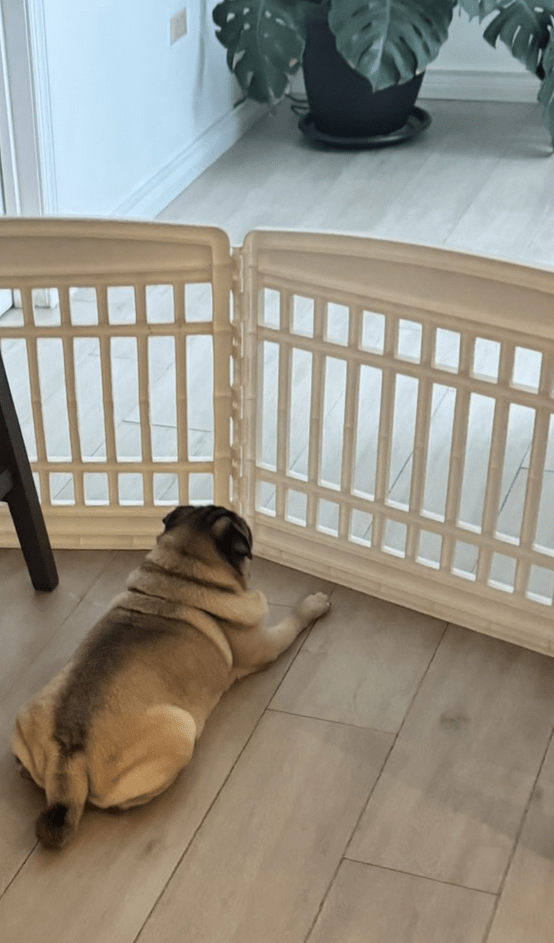
George has decided that my primary purpose in life is to open doors for him.
Not metaphorical doors. Literal doors. Bathroom doors. Pool doors. Pantry doors. Doors that were closed for a reason.
He will sit. He will stare. He will sigh heavily, as though burdened by the incompetence of his staff.
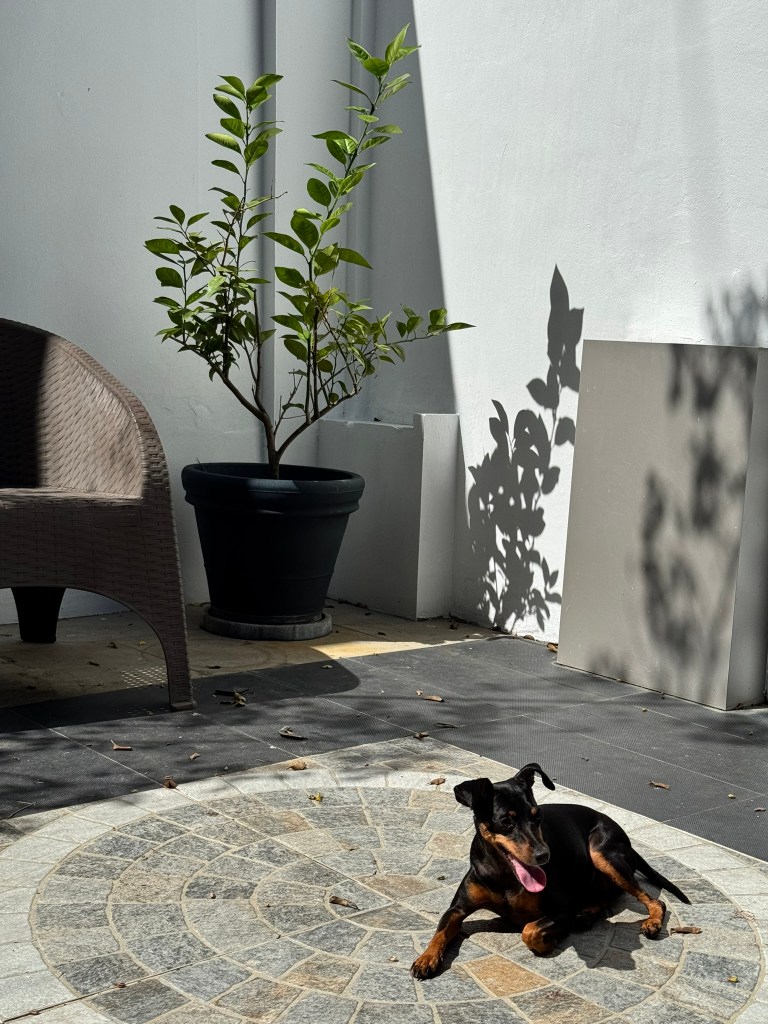
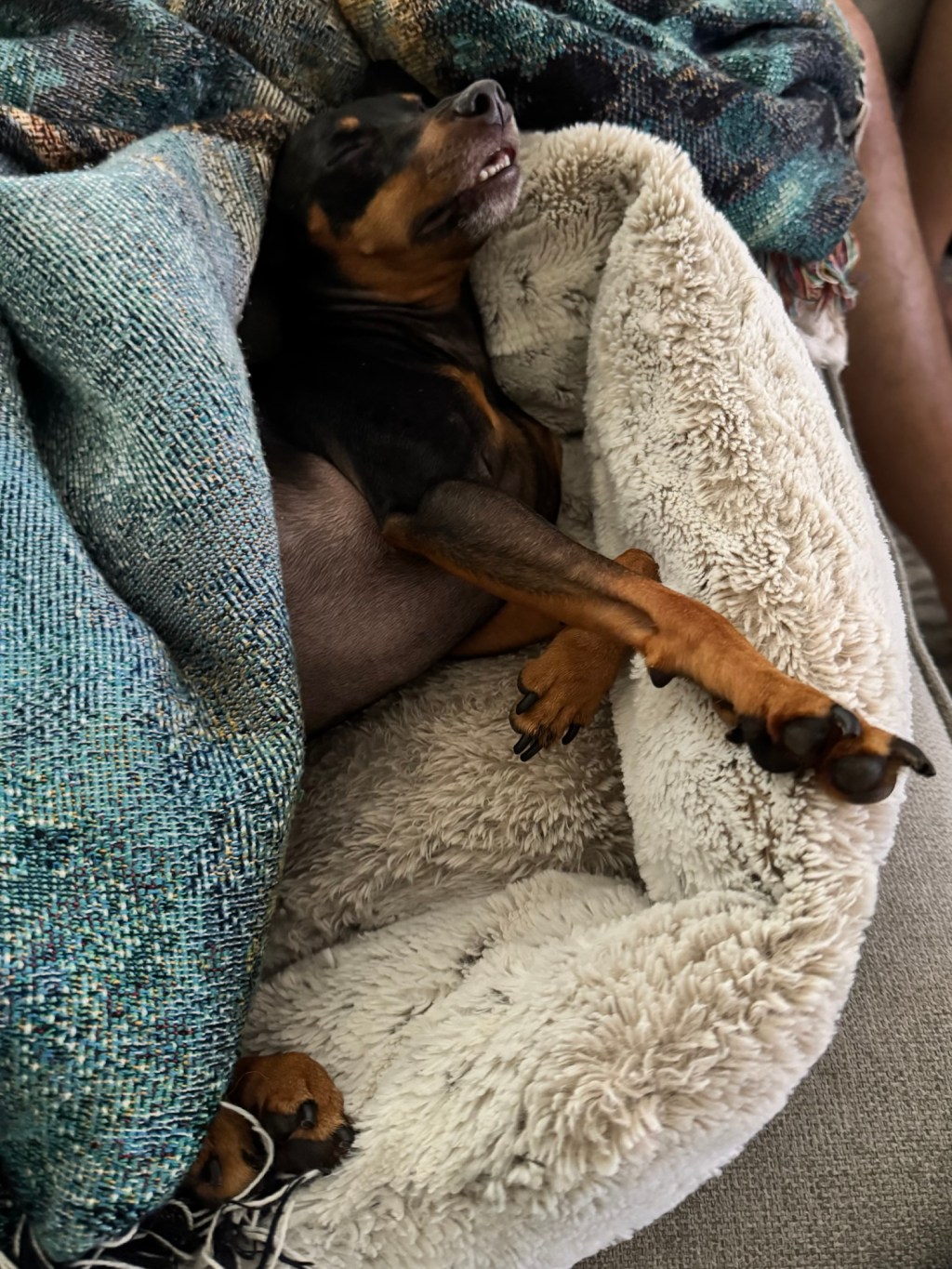
Isabella, on the other hand, has accepted that she is royalty. She does not ask. She positions herself. Preferably in a sunbeam. Preferably on something that was not meant for dogs. Preferably after stepping on George, who accepts this as his lot in life.
They do not rush.
They do not check emails.
They do not wonder if they should be doing something more productive with their time.
They simply exist—with alarming confidence.
This weekend, I am attempting the same.
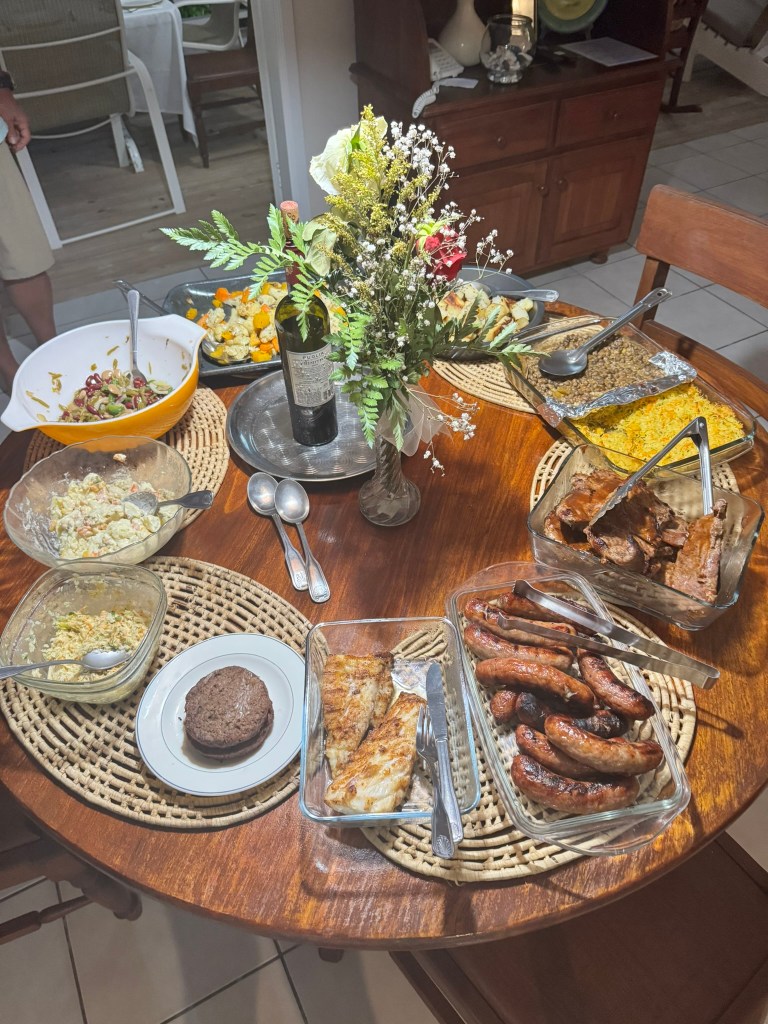
I am reconnecting with a girlfriend who knew me in crazy overdrive mode and who I’m lucky continues to get to know me in this new season. I am having what I have decided will be a sexie breakfast with a fun aunt—by which I mean good coffee, a cute dress- because diva I am, and conversations that drift into inappropriate laughter. I am also celebrating my mother-in-law’s birthday with family, where food will be both excessive and mandatory.
And somewhere in between, I will sit in the sun.
I will waddle in a pool without trying to optimize the experience.
I will read a new book without turning it into research.
I will allow time to pass without negotiating with it.
George will likely supervise.
Isabella will judge.
And both of them will remind me that joy does not require permission.
We have been taught that a good life is a productive life. But I am starting to suspect that a good life is simply a present one.
Unrushed.
Unimpressive.
Unapologetically yours.
Tell me—what is one small, slightly indulgent thing you are doing this weekend that your younger self would approve of?
The biggest challenge I will face in the next six months is choosing—deliberately and without apology.
Not choosing out of fear. Not choosing out of habit. Not choosing based on what looks impressive on paper or what makes other people comfortable.
Choosing what is aligned.
This season of my life is full of possibility. New work, new directions, new ways of defining success that are less about titles and more about meaning. For a long time, my path was structured—clear ladders, defined expectations, measurable milestones. Now, the path is mine to design. And with that freedom comes a quieter, more confronting responsibility: discernment.
Opportunity is no longer the challenge. Discernment is.
The challenge will be resisting the urge to say yes to everything simply because I can. To trust that the right work will not require me to shrink myself, over-prove, or abandon the parts of my life that matter. To build something sustainable, not just impressive.
It will also mean tolerating uncertainty—the space between what was and what will be. That space can feel uncomfortable. It asks for patience. It asks for faith in your own judgment. It asks you to believe that walking away from what no longer fits is not loss, but authorship.
Six months from now, I don’t know exactly what my professional life will look like. But I know how I want it to feel: grounded, purposeful, and honest.
And perhaps that is the real challenge—not building a life that others recognise, but building one I recognise as my own.
Not the performative version—the one where you sit on a beach but your mind is still answering emails, calculating risk, projecting outcomes. I mean the kind where your body arrives before your thoughts do. Where your nervous system slowly realizes there is nothing it needs to fix.
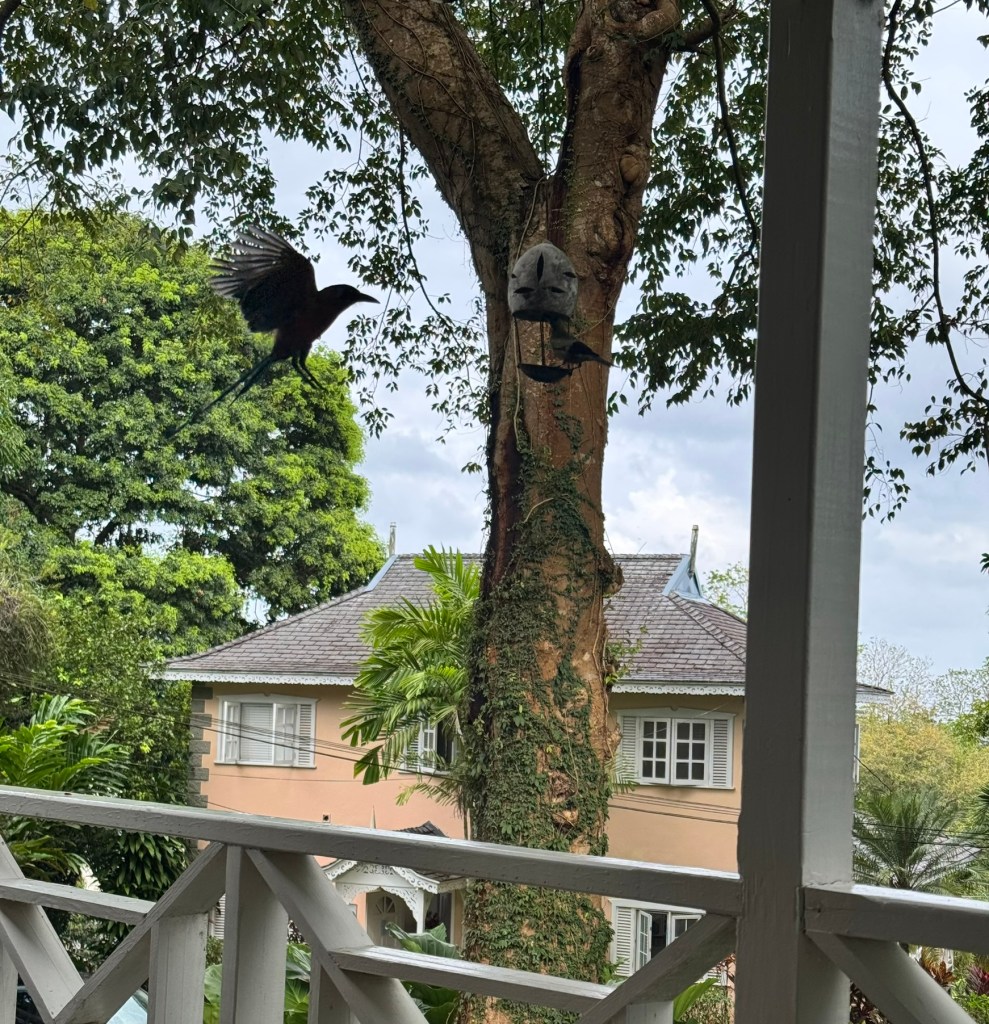
In Tobago, my days began in softness. Helping with breakfast in a kitchen that smelled of coffee and salt air. Sitting on the verandah afterwards, listening to birds whose names I did not know but whose rhythms I began to recognize. Watching the light move across the hills. Letting time stretch without urgency.
For the first time in a long time, I was not measuring my worth by my output.
I was learning to float.
At first, only in the pool. Suspended awkwardly, my body stiff with instinct, two new female friends beside me. “Relax,” they said gently. “Trust the water.”
Trust did not come naturally. Not in water. Not in life.
But slowly, breath by breath, I let my neck release. My spine soften. My limbs grow heavy. The water held me.
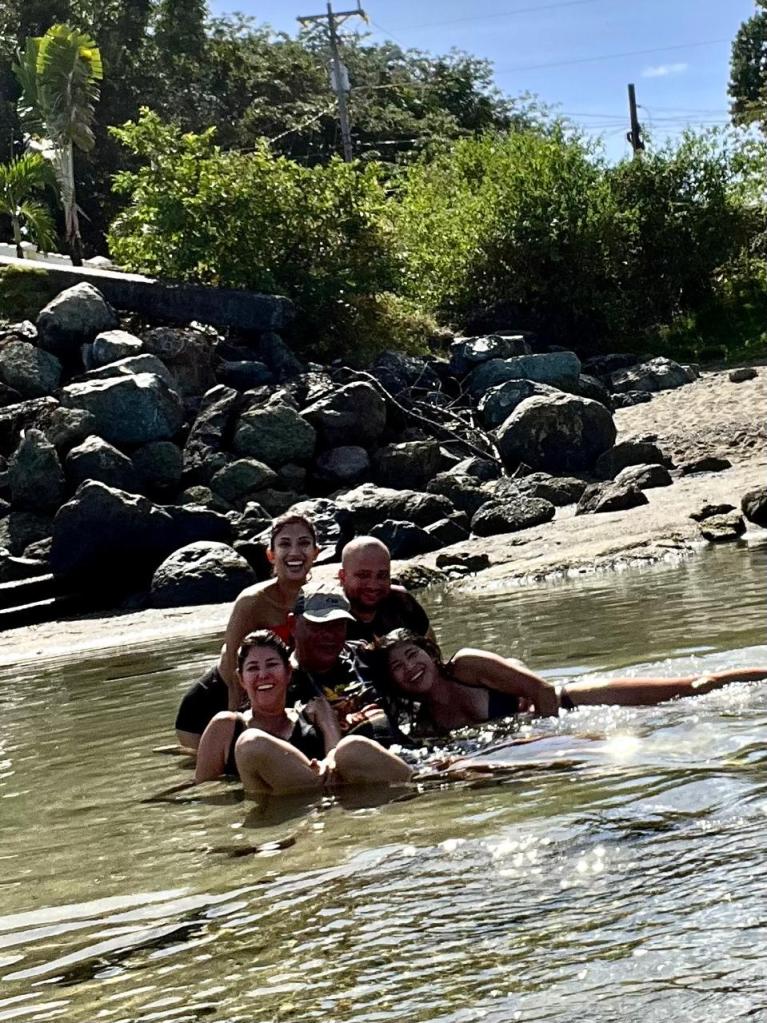
Later, in the ocean, I floated again—this time surrounded by both old and new community. Women whose lives intersected mine by timing and grace rather than history. We spoke of futures not yet realized. Of pregnancy hopes whispered between laughter. Of the strange courage it takes to imagine joy again.
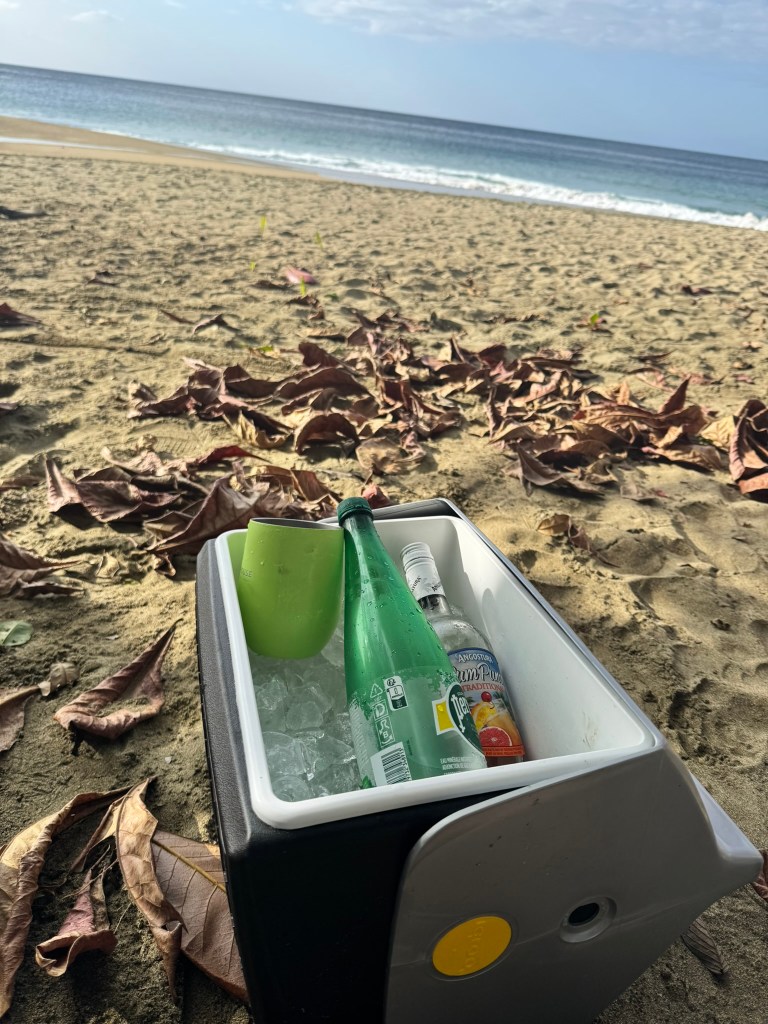
We popped champagne on the sand for birthdays and survival and the quiet triumph of still being here.
Blue balloons appeared unexpectedly in the sky on one girlfriend’s birthday, drifting upward as if carrying prayers with them. On my husband’s birthday, there were quieter signs. Stillness. Presence. The simple gift of being together in a place where neither of us needed to be anything other than ourselves.
We slept in a double bed—too small for two adults accustomed to space—but somehow perfect. I oscillated between wanting to smother him for his snoring and pulling myself closer into the familiar safety of him. We had not, either of us, slept in a bed this size since we were teenagers, when life was still mostly possibility.
In many ways, it was possibility again.
I let paint be splattered on my bare skin at J’ouvert, laughing as it dripped down my arms and back. I sat in shallow, crystal-clear water, watching fish dart between shadows while conversations unfolded around me without agenda or conclusion. I drank a piña colada at the pool bar long after I was already drunk on sun and salt and relief.
There was lunch in rum shops. Vodka poured from the back of a truck. Gin by the pool. Champagne on sand still warm from the day’s heat.
My suitcase, packed with the anxiety of preparation, grew lighter as the week went on. Clothes unworn. Versions of myself no longer needed.
I returned to places that held memory. Seahorse Inn, where past and present gently overlapped. La Tartaruga, where new friendships were sealed over shared plates and red wine and the easy intimacy of people allowing themselves to be known.
I laughed at myself. At a cocorico—the national bird—whose name I had misremembered as cocrite. At the improbable mix of music my husband curated without apology, each genre bleeding unapologetically into the next- sometimes with a cringe factor so strong we had to laugh.
I grocery shopped as if we would be staying for a month, not a week. I stayed up far beyond my usual hours. I said yes to things I would once have declined.
This is what pivot looks like, I realized. Not dramatic reinvention. Quiet permission.
I took photographs and, later, looked at them without criticism. I liked how I looked. Not because I was perfect, but because I was present.
I sent far too many photos to my dearest girlfriend, narrating each moment as if I had never traveled before. In some ways, I hadn’t. Not like this. Not without armor.
For a long time, I believed control was safety. That if I anticipated every outcome, managed every risk, performed competence without pause, I could protect myself from loss.
But control was only ever an illusion.
Do I still have fears? Of course. I think about clients. About value. About the fragile architecture of building something new. Those thoughts have not disappeared.
But they no longer define the horizon.
In celebrating my husband’s birthday, I found a rebirth of my own.
Coming home was abrupt. Straight from the airport to the veterinarian with Isabella, my miniature pinscher, suddenly fragile and unwell. Sleepless nights. Medication schedules. The helplessness of loving something that cannot explain its pain. Life reasserting its unpredictability.
And then, the familiar voice of my mother, after weeks of silence, remarking on how dark my tan had become. Asking whether I had a job yet. Referencing my fertility journey as if it were a project delayed.
There was a time when those words would have eclipsed everything. When they would have rewritten the narrative of my trip into something smaller, something defensive.
This time, they did not.
I allowed myself to feel the anger. The disappointment. And then I allowed it to pass. I accepted that some people will never know you—not because you are unknowable, but because their world has no room for your expansion.
I felt, instead, a quiet compassion for the smallness of that perspective. For the fear that keeps people tethered to certainty.
My world has grown wider.
I am planning my next conference. Looking ahead to Easter. Returning to the work of building a life that feels aligned rather than impressive.
I am learning that rest is not the absence of ambition. It is the foundation of clarity.
I am learning that community can be formed at any stage of life.
I am learning that joy does not require permission.
Most of all, I am learning to float.
To trust that I am held—even when I do not know what comes next.
About the Author Sarala Rambachan is a Caribbean corporate lawyer turned fractional general counsel and governance advisor. She writes about power, identity, leadership, and rebuilding a life and career beyond titles. Her work explores the intersection of ambition, loss, healing, and becoming—often shaped by the rhythms and realities of Caribbean life.
I wouldn’t start with Parliament. I would start with the boardroom.
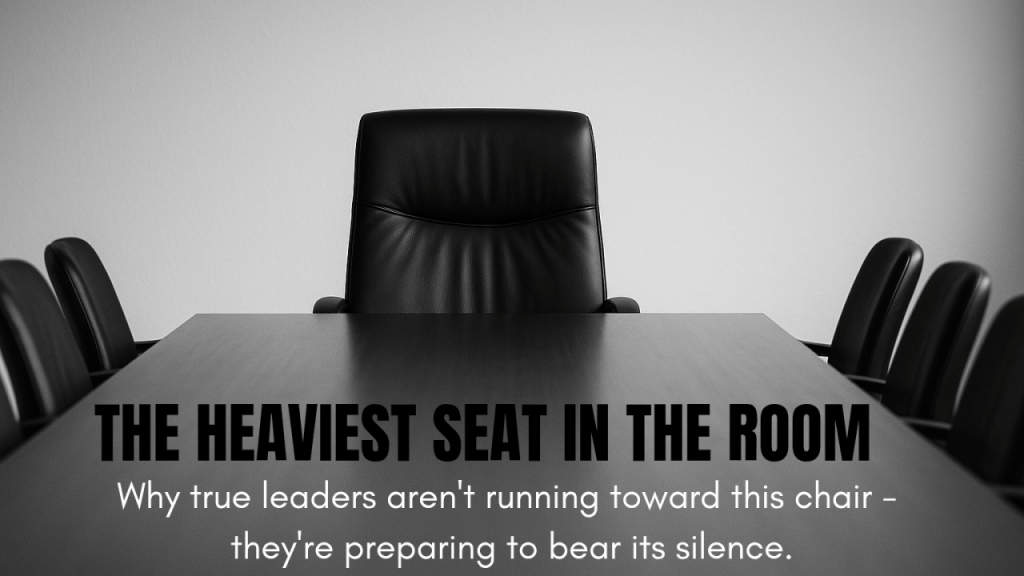
If I had the power to change one law, it wouldn’t be written in statute. It would be the implied corporate law that says:
“Survive by alignment. Rise by silence. Stay safe by being smaller than the insecurity above you.”
It’s the unwritten rule that politicking is strategy. That closing ranks protects “the business.” That the high performer who asks uncomfortable questions must be “managed.”
We laugh at cancel culture on social media, but inside corporations scapegoating is often a performance management tool. Gaslighting is dressed up as “feedback.” Narcissism hides behind passive-aggressive emails and withheld advocacy.
There is nothing more destabilising than reporting to an insecure leader who will not advocate for you—not because you are incapable, but because you are uncontrollable.
Some people are made examples of. Not because they failed. But because they cannot be folded into fear.
And fear, in many corporate cultures, is currency.
In my work across post-merger integrations and change initiatives, I have seen it repeatedly: culture eats strategy for breakfast. But culture only nourishes growth when people are not living in quiet survival mode.
When integration becomes consolidation of power rather than alignment of purpose. When “fit” becomes code for compliance. When HR—often structurally designed to protect the company from liability—cannot protect the employee who represents necessary disruption.
We talk about governance frameworks. We draft beautiful codes of ethics. We commission culture audits.
But the real law in many organisations is still this:
Protect the hierarchy. Contain the truth. Reward loyalty over courage.
That’s the law I would repeal.
If I could change one rule, it would be this:
Advocacy for your people would be mandatory, not optional.
Leaders would be measured not by how well they protect themselves, but by how safely their teams can challenge them. Promotion would require demonstrated sponsorship of others—not silent tolerance. Performance reviews would include psychological safety metrics with real consequence.
And retaliation disguised as “strategic restructuring” would be what it actually is: misconduct.
Subtle? Perhaps not. Necessary? Absolutely.
Here is the harder truth though:
Implied laws exist because we uphold them.
We participate in silence. We normalise dysfunction. We tell ourselves it’s just how things are.
But it all starts small. It starts at home. It starts in the decision to not gaslight yourself about what you are seeing. To not shrink to stay palatable. To not trade your full life for a survival contract.
I have been in rooms where pivot was forced upon me. Where the system quietly signalled, “You do not belong in this version of the story.”
And yet—what felt like punishment became liberation.
Because the real law I now live by is this:
A career should not be your sentence.
We need to be truest to ourselves—even when that truth costs proximity to power. Especially then.
Change the implied law. Start with how you lead. Start with how you protect others. Start with how you refuse to participate in fear.
Because a life lived in quiet compliance is not stability.
Not because they were bad or frivolous, but because I changed.
There was a time when I loved the thrill of being everywhere at once – saying yes to every invitation, every committee, every event, every networking opportunity that promised “visibility.” I thought busyness was a personality trait and exhaustion was a badge of honour.
I’ve outgrown that.
I used to enjoy the performative parts of professional life – the small talk, the forced smiles, the endless cycle of showing up simply to be seen. Somewhere along the way I realised I didn’t actually like rooms filled with people I had to impress. I liked rooms where I could be myself.
So I lost interest in performing.
I’ve also outgrown hobbies that required me to shrink. Activities I only did because they looked good on a résumé or because “people like us” were supposed to enjoy them. I used to collect interests like accessories – book clubs I didn’t really read for, fitness trends I pretended to love, social circles I didn’t feel safe in.
Over time, I stopped.
These days my hobbies are quieter. Slower. More honest.
Long walks with my dogs. Cooking meals that taste like home. Writing. Reading without needing to finish the book. Sitting with a glass of wine and a sunset instead of rushing to the next thing. Protecting my peace as fiercely as I once protected my calendar.
What I’ve really outgrown is urgency.
I’ve lost interest in anything that asks me to be less than myself or more than human.
And that, I’ve learned, is not a loss at all. It’s growth.
It took me twelve years to realize that someone I called a true friend was never really my friend at all.
Twelve years.
And even when she stopped speaking to me, I still didn’t believe it.
I held on to the story of us long after the story had already ended.
It wasn’t until another friend—now also an ex-friend—sat down with me over various “get togethers” cooking and laughing in my kitchen that the years of two-faced deception began to unravel and the truth began to surface. The many conversations she had apparently had about me. The times she said we weren’t really friends. That she was just “going along with me.” That I was pressuring her.
All while we traveled together, spoke every day, shared traditions, celebrated milestones. She was my self-proclaimed best friend. I rallied for her, defended her, turned up for her when life was hard. I dragged my poor husband to her family home every Christmas Eve for years because it was “our tradition.” She was a permanent fixture in my life.
And yet, it was all built on a lie.
She even lived in my home for over a year—rent free—when she was rebuilding her life. I wanted to give her a safe place, a soft landing, because that’s what friends do.
Or at least, that’s what I thought we were.
Looking back, I can see how my own childhood loneliness shaped my judgment. My desire to be loved. To belong. I poured and poured into that friendship, hoping it would finally fill something in me.
Maybe I wasn’t a perfect friend. I’m sure I wasn’t. But I loved her the best way I knew how at the time.
And in the end, it still dissolved without closure—except the closure that came later when I learned the convenient narrative she had been telling about me all along.
They say you become who you associate with.
Truth be told, shedding that entire circle—my “musketeers”—was a blessing in disguise. I was dropping my standards, exhausting myself, pouring into people whose cups could never be filled with authenticity because they simply weren’t my people.
They were stuck. Unhealed. Not doing the work.
And I was trying to save friendships that were never meant to be saved.
I thought writing about this would stir up emotion. That I would feel anger or sadness or resentment.
But the truth is—I feel nothing.
No rage. No heartbreak. No longing for what was.
And that, in itself, is a lesson.
It means I’ve done the work.
I’ve come to understand that the friendship served its purpose. Maybe it was meant to teach me what loving too much and too disproportionately can do. Maybe it was meant to teach me about seasons. About boundaries. About releasing people without guilt.
My season of shedding has been long, vast, and strangely fruitful—if such a thing can be said.
For every friendship I have lost, space has opened up. Space for myself. Space for healing. Space for relationships that are honest and mutual—where mirrors have become windows.
Do I regret some losses? Of course. There are two that still sit softly in my heart. One I’ve already written about. One that lives in a grey area—a season that is good for both of us right now.
But I’ve learned this: real friendships are not built only in trauma.
They are built in mutual pouring. In meaningful connection. In honesty. In effort. In the ability to stay—and also in the grace to let go.
I could write pages about the pain of that breakup. About the year it took me to come to terms with it. About the six months of quiet crying. This wasn’t melo drama; it was the loss of what I considered the first friendship on my return “home”.
But those tears were for me, not for her.
Not everyone is worth your tears. And when you shed them, let it be for your healing—not for their memory.
The most powerful realization for me has been this: I no longer have any accumulation of feeling for that person.
And why should I?
Why should someone occupy space in my life—or in my heart—that they do not deserve?
We are not on a quest to hand out our power like candy.
So this is the lesson in the becoming of friendships:
It hurts because we care. Because we are human. But it is okay to leave some friends in the seasons of the past. It is okay to ask, “What is the lesson here?” And to move forward with purpose instead of bitterness.
I’ve learned recently how important it is to be intentional about who is in your circle—and who is not.
Your friendship is a privilege. Your time is a gift. Your heart is not a community project.
Don’t be ashamed of your worth.
Share it sparingly.
And leave the overage for that extra caramel sauce you want on your brownie.
Not every goodbye is a loss—some are promotions.
Perhaps the writing was on the wall: she didn’t like dogs, and my dogs have excellent judgment.
Clue of the Week: If a friendship constantly leaves you drained, confused, or questioning your worth, that is not a season—it’s a signal.
About the Author: Sarala writes her life in chapters—honest, imperfect, and human. A corporate attorney turned intentional living advocate, she believes in healing out loud, setting brave boundaries, and choosing people and spaces that choose you back. When she isn’t reflecting on lessons learned, she can be found with a strong cup of coffee, her two dogs at her feet, and a good book reminding her that growth is always a work in progress.
I’ve learned that life only really changes you if you’re brave enough to ask the important question: What’s the lesson here?
And then—harder still—if you’re willing to do the work.
The healing work. The practical work. The uncomfortable, messy, no-one-else-can-do-it-for-you work.
When you do, you come out stronger. More assured. More aware of what truly matters. It feels a bit like stripping back a mask—the one you’ve worn for years because it was expected of you. But there is breaking in the becoming, and you have to be prepared for that. Sometimes to break hard. To sit with anger, despair, hurt. To let the tears come without rushing to tidy them away.
Not everyone allows life to change them. Some people go through enormous experiences and remain exactly the same—whether for better or worse. As with everything, it comes down to choice. The choices you make for yourself. The signs you decide to notice. The quiet nudges that tell you you’re growing, that you’re becoming a version of yourself that is freer from shame you were never meant to carry and doubt that has held you back for far too long.
I no longer believe that “time heals all wounds.” Time on its own does nothing.
It’s your actions—and your inactions. Your willingness to be open to different approaches. Your decision to move, or to stay stuck.
Those are the things that shape your outlook on life.
I recently heard a quote that struck me deeply: it is a heavy weight to carry the disappointment of unmet expectations of another person. That felt apt. Life events are not simply things that happen to us; they are things we decide what to do with.
Sometimes going through the worst shows you that you can survive things you never imagined you could.
For years I struggled with being alone. In my childhood, “alone” was framed as punishment. Something to fear. Something to avoid. Now, in this season of my life, I rather enjoy it. Quiet mornings with coffee. Snuggling in bed with the dogs. A carefully set dinner for one while I read a good book. I’ve learned that solitude, when chosen, can be a gift.
I pinned so much expectation on turning forty—imagining it as a magical turning point. But when forty arrived, I realized change had been all around me for years. The only thing missing was my willingness to step into it. Meaningful change doesn’t arrive with a birthday or a calendar year.
It arrives when you decide to embrace it.
For yourself. By yourself. One honest choice at a time.
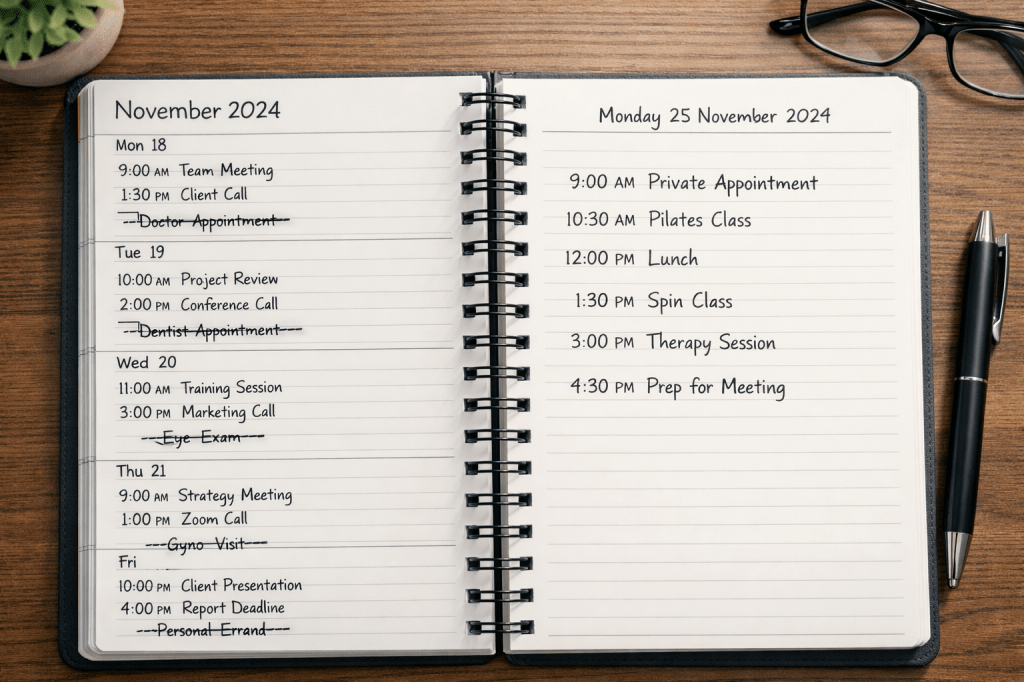
If I’m honest, the things that most often stay untouched on my to-do list are the ones that are personal to me.
For years it was so easy to kick the can on anything that didn’t feel urgent. Work deadlines? Never missed. Commitments to others? Done with precision and pride. But the things that only affected me?
Doctor’s appointment? I’m not dying. Dentist cleaning? It can wait a few more months. Eye test? I can still see well enough. Gynecologist visit? Is it really necessary this year?
Somehow, my own care always found itself at the bottom of the pile.
I used to tell myself it was efficiency – that I was prioritizing what “mattered most.” The truth is, I was simply conditioned to believe that my needs could wait. That personal maintenance was optional while professional performance was mandatory.
What I’ve learned, slowly and sometimes the hard way, is that ignoring yourself isn’t discipline – it’s neglect disguised as dedication.
These days I’m trying to rewrite that habit. To treat the appointments that keep me well with the same seriousness I give a board meeting. To see self-care not as indulgent, but as responsible. To remember that the life I’m building only works if I’m healthy enough to live it.
So the answer to the prompt?
The thing that never gets done is “me” – unless I choose, deliberately, to move myself to the top of the list.
A complex, high-stakes game played by sly navigators who smile warmly to your face, then mispronounce your name in rooms where you aren’t present. Athletes of insecurity—those who dim others because they haven’t learned how to stand in their own light.
I watch those obsessed with titles, money, optics—trophies that matter most when self-respect is missing. The players who take freely but never give, who justify private harm if public perception benefits, who confuse strategy with character.
It’s a fascinating sport, really. Because many never realise that the life they’re living is the consequence of the damage they’ve inflicted—no matter how glossy it looks from the outside.
And me? I don’t play to win anymore. I observe. I learn. I do the work.
Even in my softer, sadder moments, I’m discovering this: it’s far better to be who I am than to perform who I think I should look like.
This post contains personal reflections on loss, sudden death, suicide, depression, illness, and grief. Please read with care. If you or someone you know is struggling, consider reaching out to a trusted person or a mental‑health professional. Support resources are listed at the end of this post.
One Year On
It has been one year since my husband’s—later, my—dear friend, Kirn, died by suicide. A year that has passed both slowly and impossibly fast.
I still remember that Wednesday. I was in a strategy session—one of those meetings where you are expected to be present, sharp, purposeful. My phone buzzed with a call from my husband. That alone wasn’t unusual, but he knew exactly where I was. I missed the call and messaged: Don’t forget I’m in a meeting. He replied: Ok, call me after.
Nothing about the exchange was extraordinary. And yet, something in my body went on alert. I excused myself, stepped into the hallway, and called him back.
For someone who is guided by purpose—who always needs to understand—and who for a long time led with philosophy and intellect rather than emotion, I was shaken in a way I hadn’t experienced before. This was a friend I had spoken to only days earlier. A friend my husband spoke to almost every morning, having known him since secondary school. One of the most expressive, caring, generous people we knew.
For a long time, I grappled with how he could take his own life. My husband grappled with how his best friend never shared that weight with him.
My therapist suggested I read The Bell Jar by Sylvia Plath—to sit with the interior world of someone who lived with depression and self‑harm ideation. I could understand self‑criticism. I knew how to diminish myself, reject my own strengths, fixate on failure—and then dust myself off and push forward. That wasn’t always healthy, but it was familiar. What I couldn’t understand was this.
I understand now that sometimes, you simply don’t understand.
Kirn’s death was meticulously planned—if a phrase like that can ever be used without discomfort. Funeral arrangements booked and paid for. Outfit chosen. Instructions left for the distribution of his assets; those not already shared or donated. His own eulogy written. Instructions of who should read it. Even an approved guest list.
I am still haunted by the words read by my father‑in‑law—because Kirn was like a son to them. That he was tired. That this was his choice. That he had lived a full life at 43. That he had given enough. That it was time. That we should not be sad for him, but happy—because he was happy now.
For 43 years, he worked relentlessly to provide: for his mother, his sisters, his children. Forever the hustler. Forever the giver. Always there for others.
A stark lesson: you cannot pour from an empty cup.
Later, through letters he left for my husband and a small few others, we learned he had been diagnosed with stomach cancer. The prognosis was not good. He decided he did not want to be a burden.
Those words—I don’t want to be a burden—landed with a weight I cannot fully explain. They were familiar. And they filled me with guilt. That someone so generous, so loving, so consistently present for others could believe he was undeserving of the care and priority others would surely have given him. That we would have given to him- was that my ego?
During that time, as I was learning about anger in therapy, I felt flashes of it—at him, at us, at the world, at God. Cancer does not discriminate. That is a fact. But emotion is not always rational.
In a moment I once would have called pettiness—but now recognise simply as emotion—I thought of someone else I knew. Someone deeply disappointing, insecure, two‑faced. Someone who survived their own cancer journey. I had shown up for them professionally and personally, even without knowing the full story. They survived. They thrived. And from what I could see, learned not one meaningful thing about humility, authenticity or humanity. As I still lament on this, perhaps this is my unhealed wound of that experience coming up.
And then there was Kirn. A good person. Exhausted from fighting for everyone else. Too tired to fight for himself.
That is not a sugar‑coated lesson. It still makes me angry.
Just writing this, I felt it again. I messaged my husband to say so. He asked—gently—whether I was just feeling randomly angry. (A fair question. I am capable of that.)
Our feelings don’t disappear. We work on healing, authentically, but the feelings live in us. We can give them space, acknowledgment, and grace—and we must also choose not to let them consume us.
I still don’t understand. But I accept that it happened.
I understand now that we cannot judge what someone has carried unless we have lived it ourselves. And no—this is not a justification for treating others poorly. Harmful behaviour is still a choice. Sometimes deliberate. Sometimes born of unhealed wounds. Both can be true.
I turned 40 last year. In the years leading up to it, I learned real, unglamorous life lessons. I am grateful that I chose not just to survive them, or rush past them in search of a victory narrative. I sat with my mistakes. With my losses. With friendships that ended. With questions about who I was becoming and where I wanted my life to go.
On a lighter, but strangely meaningful note—my best friend deepened my interest in astrology. Last year, I asked my priest what my stars looked like. The answer was bleak. There was no way to dress it up. This year, I asked again. The difference was profound. When I questioned how such a change was possible, his answer stayed with me:
Time, karma, and the work you’ve done—this happened because of you.
Faith—spiritual or otherwise—can anchor us. It reinforced what I already felt: that the internal work matters. That what truly matters in life is not always what looks impressive from the outside.
Kirn fought a good fight for others. He was extraordinary. And still, he suffered. Perhaps he felt he was not enough. Perhaps he believed it truly was his time. We will never fully know.
What I do know is this: we all have a choice in how we live and who we become. The lessons of the last few years have shaped the choices I make today.
We are all worth the fight. We owe it to ourselves to say that out loud—to examine who we allow into our mental, physical, and spiritual spaces.
The sound of Kirn’s mother’s cries as his body was taken away still rings in my ears. A reminder that our choices carry consequences that ripple far beyond us.
It is harder for my husband. Losing Kirn is like losing a limb. I advocate deeply for therapy—for myself, for others—not as a cure, but as a companion in learning how to live with pain rather than be ruled by it.
I believe Kirn lived a full life because he was full of life. Do I wish he were still here? Of course. But that is my lens, my longing.
He left behind three beautiful children. The road is unimaginably hard. And still, his life—and his loss—continues to teach.
I am thinking of him today. And of everyone who is struggling. Words urging people to speak and seek help matter. And so does the quieter work: choosing how we live, how we care for ourselves, how we care for others.
It feels fitting—and painful—that this reflection is written on a Wednesday. The call came on a Wednesday. I moved my therapy session that week from Wednesday to Thursday; and ironically my schedule did not allow for a session today. Full circles have a way of finding us.
Books have enriched me. But it is life that has taught me most—the tears, the endings, the pivots, the disappointments, the joy. I try to pause now and ask: What is the lesson here?
I am trying to live kinder. More purposefully. Less impressed by titles and optics, more guided by integrity and truth.
For all the lessons—even the ones that broke us—may we ask better questions. May we find meaning where we didn’t think to look. May we choose quality over quantity.
Kirn’s lessons live on. They continue to shape me.
🌿 If no one has reminded you today: you matter, your life matters, and you are worthy of care—especially from yourself.
✍🏽 Author’s Note This piece is shared in remembrance, reflection, and honesty—not as an answer, a solution, or a guide. It is one person’s experience of grief, anger, learning, and ongoing acceptance. If it stirs something tender in you, please treat yourself gently and reach for support where you can.
If You Need Support
If this post brings up difficult feelings, please consider reaching out:
A trusted friend or family member
A mental‑health professional
Local or international suicide‑prevention helplines




















 Sarala Life — Life in Chapters: Careers, Canines, Cabernet & Courage