I am learning how to lock off.
Not the performative version—the one where you sit on a beach but your mind is still answering emails, calculating risk, projecting outcomes. I mean the kind where your body arrives before your thoughts do. Where your nervous system slowly realizes there is nothing it needs to fix.
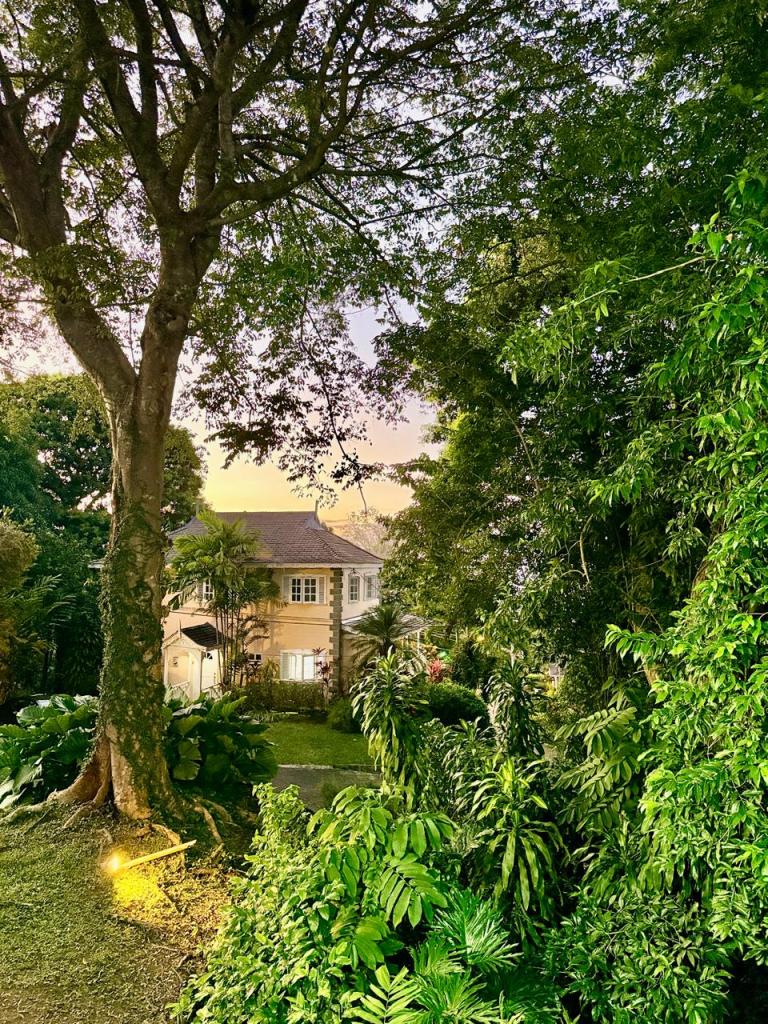
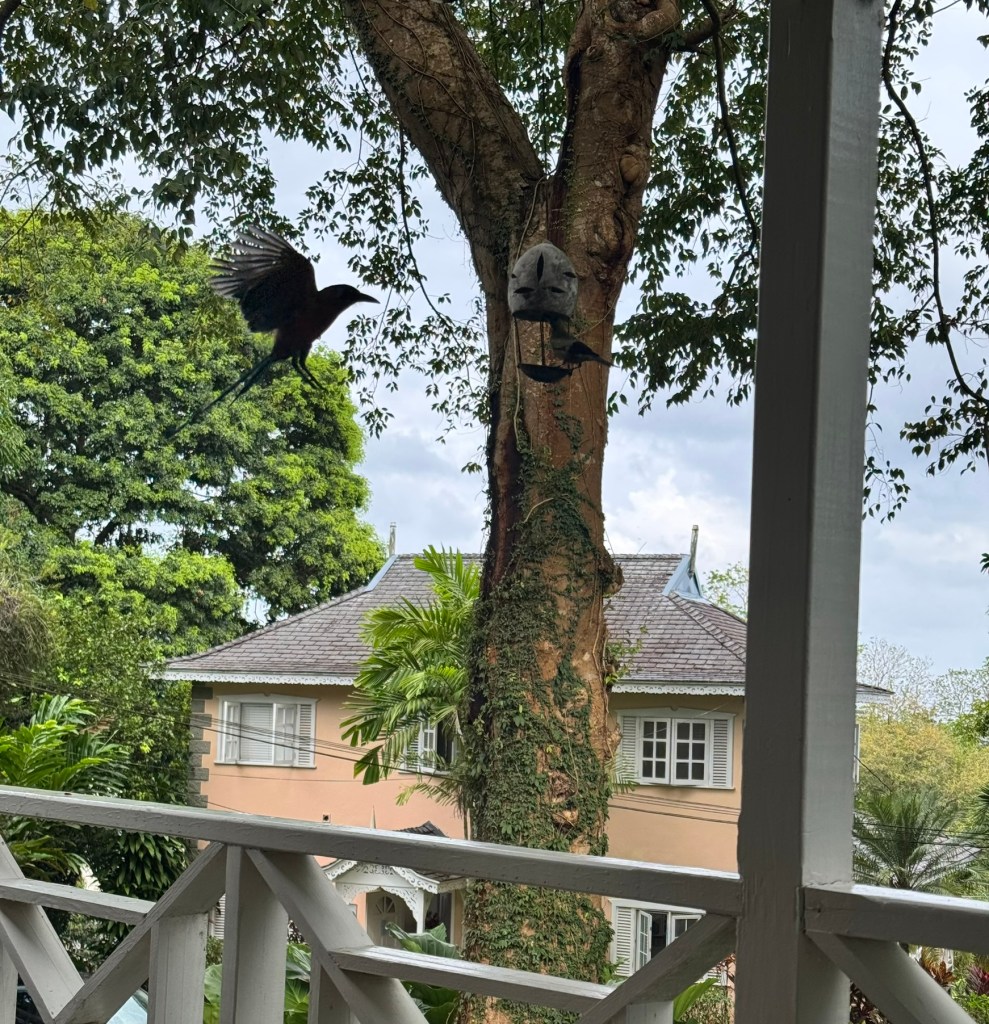
In Tobago, my days began in softness. Helping with breakfast in a kitchen that smelled of coffee and salt air. Sitting on the verandah afterwards, listening to birds whose names I did not know but whose rhythms I began to recognize. Watching the light move across the hills. Letting time stretch without urgency.
For the first time in a long time, I was not measuring my worth by my output.
I was learning to float.
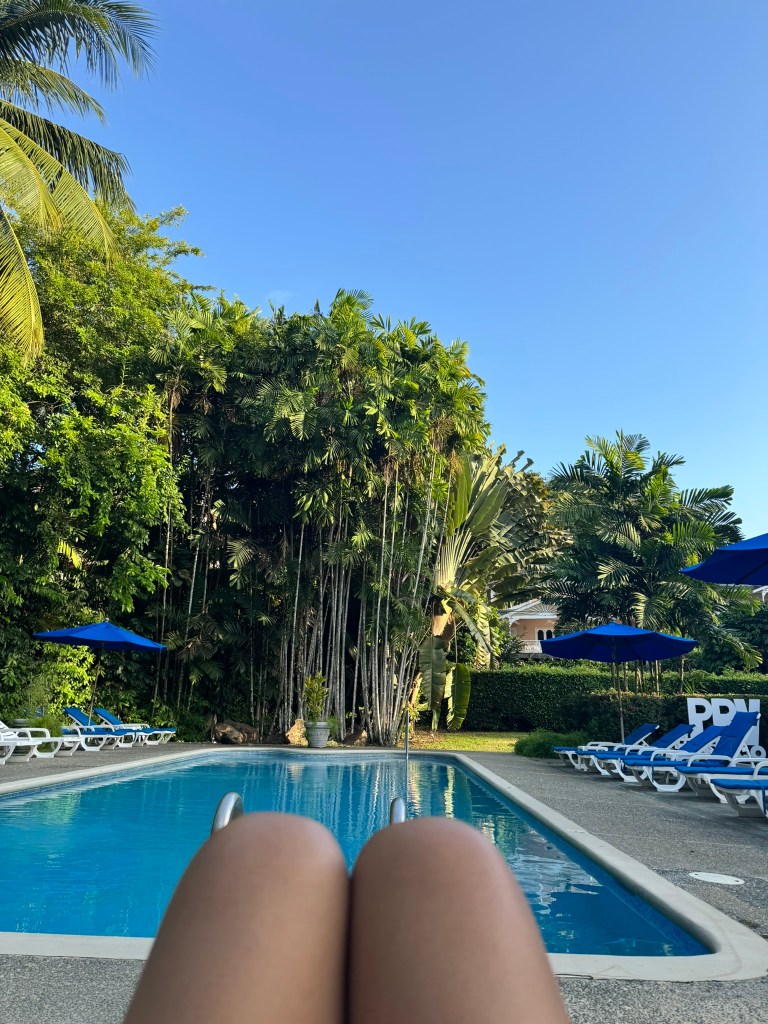
At first, only in the pool. Suspended awkwardly, my body stiff with instinct, two new female friends beside me. “Relax,” they said gently. “Trust the water.”
Trust did not come naturally. Not in water. Not in life.
But slowly, breath by breath, I let my neck release. My spine soften. My limbs grow heavy. The water held me.
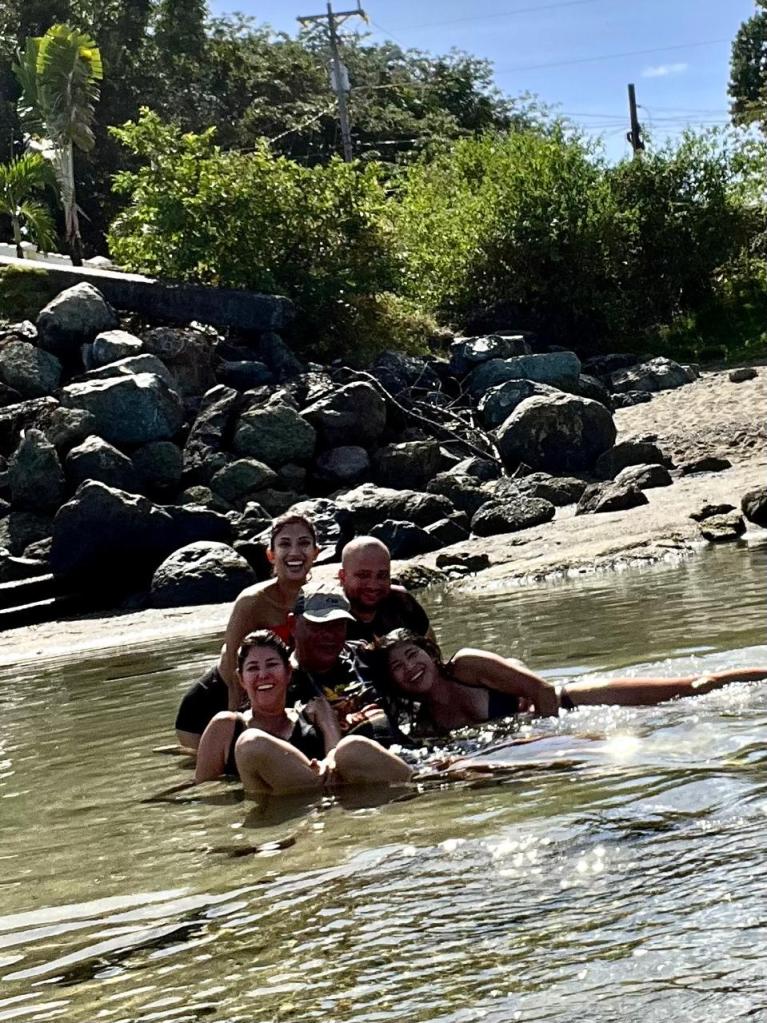
Later, in the ocean, I floated again—this time surrounded by both old and new community. Women whose lives intersected mine by timing and grace rather than history. We spoke of futures not yet realized. Of pregnancy hopes whispered between laughter. Of the strange courage it takes to imagine joy again.
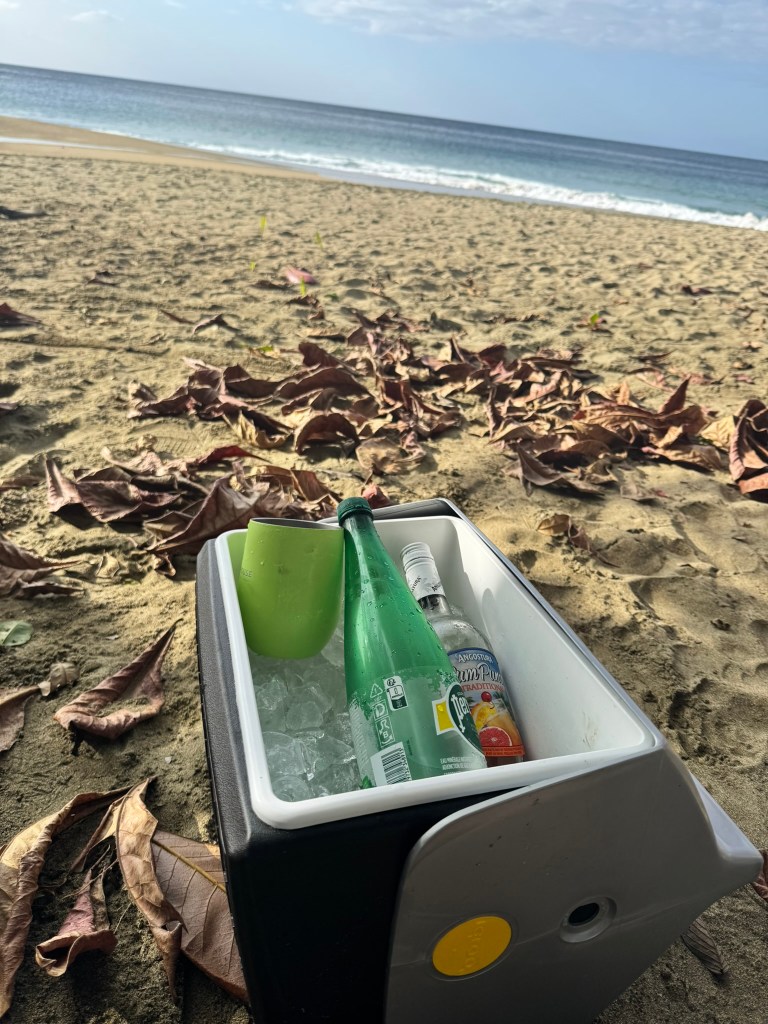
We popped champagne on the sand for birthdays and survival and the quiet triumph of still being here.
Blue balloons appeared unexpectedly in the sky on one girlfriend’s birthday, drifting upward as if carrying prayers with them. On my husband’s birthday, there were quieter signs. Stillness. Presence. The simple gift of being together in a place where neither of us needed to be anything other than ourselves.
We slept in a double bed—too small for two adults accustomed to space—but somehow perfect. I oscillated between wanting to smother him for his snoring and pulling myself closer into the familiar safety of him. We had not, either of us, slept in a bed this size since we were teenagers, when life was still mostly possibility.
In many ways, it was possibility again.
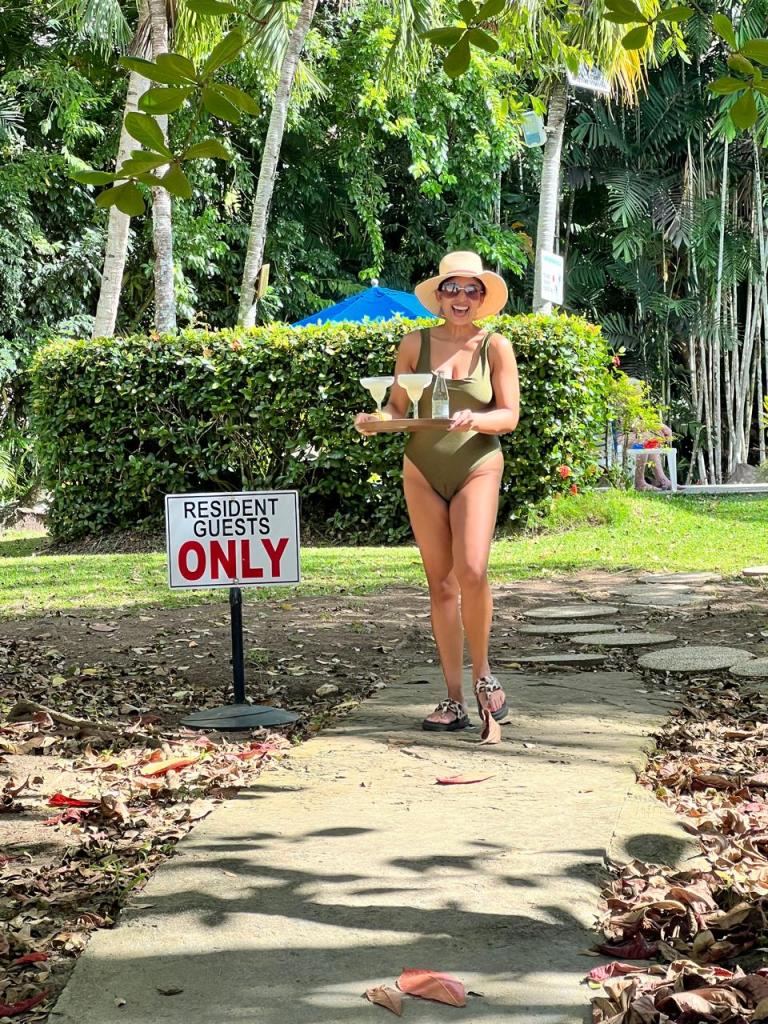
I let paint be splattered on my bare skin at J’ouvert, laughing as it dripped down my arms and back. I sat in shallow, crystal-clear water, watching fish dart between shadows while conversations unfolded around me without agenda or conclusion. I drank a piña colada at the pool bar long after I was already drunk on sun and salt and relief.
There was lunch in rum shops. Vodka poured from the back of a truck. Gin by the pool. Champagne on sand still warm from the day’s heat.
My suitcase, packed with the anxiety of preparation, grew lighter as the week went on. Clothes unworn. Versions of myself no longer needed.
I returned to places that held memory. Seahorse Inn, where past and present gently overlapped. La Tartaruga, where new friendships were sealed over shared plates and red wine and the easy intimacy of people allowing themselves to be known.
I laughed at myself. At a cocorico—the national bird—whose name I had misremembered as cocrite. At the improbable mix of music my husband curated without apology, each genre bleeding unapologetically into the next- sometimes with a cringe factor so strong we had to laugh.
I grocery shopped as if we would be staying for a month, not a week. I stayed up far beyond my usual hours. I said yes to things I would once have declined.
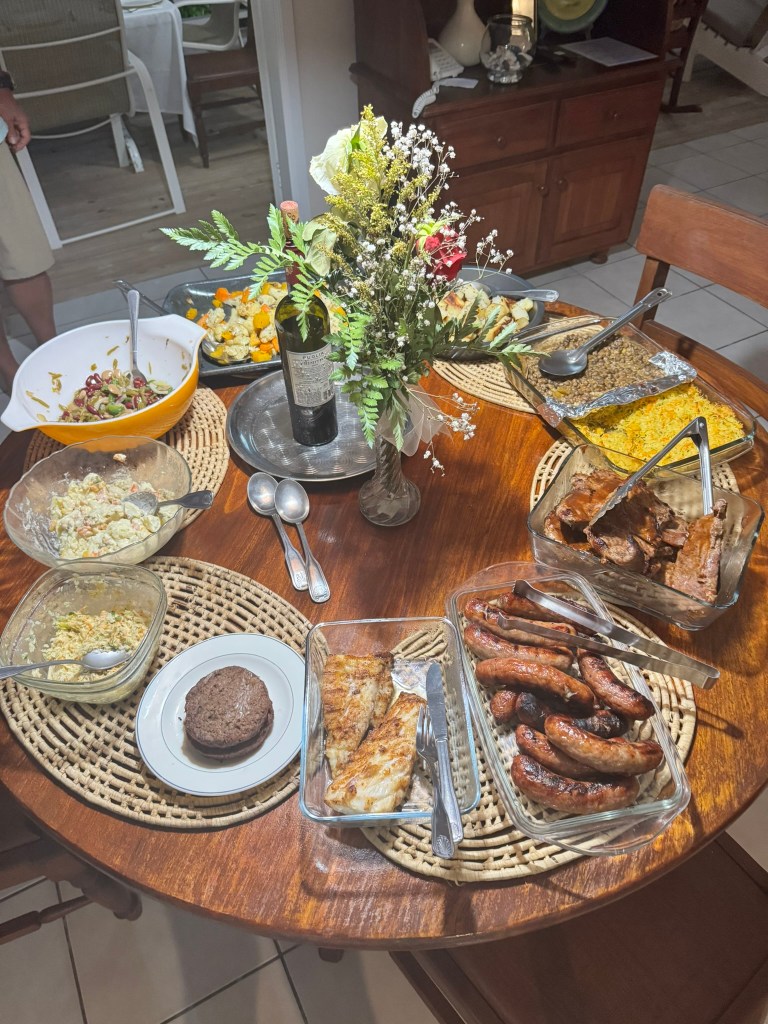
This is what pivot looks like, I realized. Not dramatic reinvention. Quiet permission.
I took photographs and, later, looked at them without criticism. I liked how I looked. Not because I was perfect, but because I was present.
I sent far too many photos to my dearest girlfriend, narrating each moment as if I had never traveled before. In some ways, I hadn’t. Not like this. Not without armor.
For a long time, I believed control was safety. That if I anticipated every outcome, managed every risk, performed competence without pause, I could protect myself from loss.
But control was only ever an illusion.
Do I still have fears? Of course. I think about clients. About value. About the fragile architecture of building something new. Those thoughts have not disappeared.
But they no longer define the horizon.
In celebrating my husband’s birthday, I found a rebirth of my own.
Coming home was abrupt. Straight from the airport to the veterinarian with Isabella, my miniature pinscher, suddenly fragile and unwell. Sleepless nights. Medication schedules. The helplessness of loving something that cannot explain its pain. Life reasserting its unpredictability.
And then, the familiar voice of my mother, after weeks of silence, remarking on how dark my tan had become. Asking whether I had a job yet. Referencing my fertility journey as if it were a project delayed.
There was a time when those words would have eclipsed everything. When they would have rewritten the narrative of my trip into something smaller, something defensive.
This time, they did not.
I allowed myself to feel the anger. The disappointment. And then I allowed it to pass. I accepted that some people will never know you—not because you are unknowable, but because their world has no room for your expansion.
I felt, instead, a quiet compassion for the smallness of that perspective. For the fear that keeps people tethered to certainty.
My world has grown wider.
I am planning my next conference. Looking ahead to Easter. Returning to the work of building a life that feels aligned rather than impressive.
I am learning that rest is not the absence of ambition. It is the foundation of clarity.
I am learning that community can be formed at any stage of life.
I am learning that joy does not require permission.
Most of all, I am learning to float.
To trust that I am held—even when I do not know what comes next.
About the Author
Sarala Rambachan is a Caribbean corporate lawyer turned fractional general counsel and governance advisor. She writes about power, identity, leadership, and rebuilding a life and career beyond titles. Her work explores the intersection of ambition, loss, healing, and becoming—often shaped by the rhythms and realities of Caribbean life.

 Sarala Life — Life in Chapters: Careers, Canines, Cabernet & Courage
Leave a comment