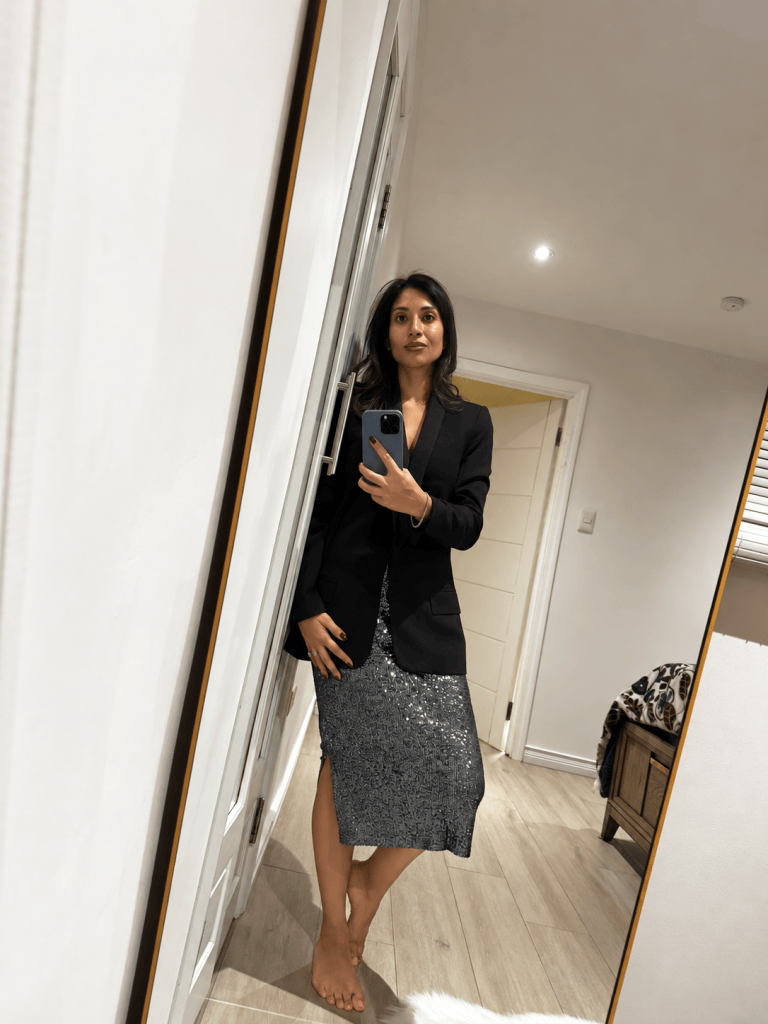
Sarala Life — Life in Chapters: Careers, Canines, Cabernet & Courage

A life well-poured: work, wine, and everything in between.

  • I used to think adulthood would eventually feel like arrival. I am beginning to suspect it is simply learning to be scared about the bills, hopeful about the future, tired of holding everything together — and still noticing the small things that are giving us more life.
    Screenshot

    There is something strangely reassuring about taking your senior dog for his medical and being told that the hard work is working.

    George has lost five pounds.

    Five pounds might not sound like much, but on a pug, it is apparently quite the achievement.

    We have been paying more attention to what he eats. Adding bone broth and chicken supplements to his dry food. Trying to find the balance between nutrition and the reality that he is an elderly gentleman with very definite opinions about what constitutes an acceptable meal.

    We are getting in walks when we can. When we cannot, we make time for play. A little exertion. A little movement. A little reminder that there is still life to be lived and energy to be spent.

    And sitting there at his senior medical, being told that the effort we have been putting in has quite possibly given him more years, I felt incredibly proud.

    And relieved.

    Because there is so much in life that you cannot control.

    You can love something deeply and still lose it.

    You can do everything right and still not get the outcome you hoped for.

    You can work hard, make the sensible decision, take the risk, follow the advice, trust yourself, pray, plan and prepare — and still have absolutely no idea how things are going to turn out.

    So perhaps hearing that, in this one small corner of my life, the work was working meant more to me than it should have.

    Because lately, I have been wondering whether the work is working for me too.

    PMS hit hard this month.

    Not the mildly irritable, eat-something-sweet and complain-about-bloating variety.

    The intrusive-thoughts-at-inconvenient-hours variety.

    The what-are-you-doing-with-your-life variety.

    The how-are-you-going-to-earn-enough-money variety.

    The are-you-doing-enough, becoming-enough, building-enough, visible-enough, brave-enough variety.

    The adult stuff.

    I am a woman in my forties building a business, rebuilding parts of my life and trying to create something that feels more aligned with who I am now.

    Some days, that feels incredibly exciting.

    Other days, I remember that alignment does not pay the electricity bill.

    Purpose does not remove financial responsibility.

    Choosing yourself does not mean you stop worrying about whether you can afford the life you have worked hard to build.

    There are moments when I am deeply proud of myself. I look at the work I am doing, the rooms I am entering, the conversations I am having and the woman I am becoming, and I think: perhaps I am exactly where I am supposed to be.

    And then there are moments when I wonder why on earth I have made some of the choices I have made.

    I wonder whether I should have stayed somewhere safer.

    Whether I should have wanted less.

    Whether reinvention is simply a beautiful word we use for the terrifying period between what was and whatever comes next.

    I am trying to romanticise my life.

    I genuinely am.

    I notice the coffee. The quiet mornings. The dogs. The books. The conversations. The opportunities that seem to arrive unexpectedly. The privilege of having time to think about who I want to become.

    But sometimes life does not feel romantic.

    Sometimes it feels scary.

    Sometimes you do not want to be resilient.

    You do not want another lesson.

    You do not want to journal about it, reframe it, find the gratitude or identify the growth opportunity.

    Sometimes you just want to be held instead of always being the one holding everything together.

    And sometimes, that is simply not available to you.

    So you keep going.

    This week, keeping going also meant navigating family.

    There was an event for my grandfather, whom I loved dearly.

    And grief, I am learning, does not exist separately from family dynamics.

    Love can bring you into rooms that anxiety would rather avoid.

    Rooms filled with noise and people and performance. Rooms where privacy feels impossible and where interactions can stir feelings you thought you had neatly packed away.

    You can love the person being remembered and still struggle with the way the remembering happens.

    You can honour your family and still find parts of family life difficult.

    You can show up and still need to recover afterwards.

    Apparently, this too is part of the adult stuff.

    As are difficult conversations with in-laws.

    As are conversations about money.

    Marriage.

    Responsibility.

    Expectations.

    The future.

    All the things nobody warns you remain complicated even after you become the age you once believed adults had everything figured out.

    But somewhere in the middle of all of this, something else happened.

    I saw a photograph of myself.

    Not a planned photograph.

    Not one where I had found the right angle, adjusted my posture, checked the lighting or prepared my face.

    Just me.

    And I looked at it and thought:

    I am an attractive woman.

    It sounds like such a small thing.

    Perhaps even a vain thing.

    But it wasn’t.

    There was no criticism attached to the thought. No immediate inventory of what could be thinner, smoother, younger or better.

    I simply looked at myself and saw a woman I liked.

    A woman who has lived.

    A woman who is still figuring things out.

    A woman who can be frightened about money in the morning, manage a difficult conversation in the afternoon, feed her elderly pug bone broth in the evening and lie awake wondering about her entire existence at night.

    A woman who does not have everything figured out.

    But perhaps does not need to.

    I used to think adulthood would eventually feel like arrival.

    That at some point, the fear would disappear.

    The finances would be secure.

    The relationships would become uncomplicated.

    The family dynamics would resolve themselves.

    The decisions would become obvious.

    And I would finally become one of those people who knew exactly what they were doing.

    I am beginning to suspect those people do not exist.

    Perhaps adulthood is simply learning to hold two truths at once.

    I am scared, and I am hopeful.

    I am uncertain, and I am building.

    I am tired of holding everything, and I am still capable of carrying myself.

    I miss what I thought my life would be, and I am curious about what it might become.

    I worry about money, and I am grateful for freedom.

    I struggle with parts of my family, and I love them.

    I am getting older, and I looked at a photograph of myself and thought I was beautiful.

    George is getting older too.

    But he is five pounds lighter.

    He is eating his supplements.

    He is playing.

    He is loved.

    And apparently, all the small things we have been doing have been adding up.

    Maybe that is what I needed to hear.

    Not that everything will work out.

    Not that I should stop being afraid.

    Not that some enormous breakthrough is waiting just around the corner.

    Just that the small things count.

    The meal you prepare.

    The walk you take.

    The boundary you hold.

    The conversation you survive.

    The photograph you allow yourself to like.

    The invoice you send.

    The opportunity you pursue.

    The day you get through.

    The moment you let yourself enjoy even though you still do not know how everything is going to turn out.

    Maybe this season of my life is not about becoming fearless.

    Maybe it is about learning that I can be scared and still build a life.

    That I can worry about the adult stuff and still notice the beautiful stuff.

    That I can want to be held and, when no one is there to hold me, learn to sit gently with myself.

    And maybe, like an elderly pug who is five pounds lighter and still very much interested in dinner, I am discovering that life does not always need a grand transformation.

    Sometimes, the small things we do to care for ourselves really are giving us more life.

  • If you had asked me a year ago what success looked like, I probably would have described achievement.

    A respected title.
    A seat at important tables.
    A calendar filled with meetings.
    A career that made sense to everyone else.

    Today, my answer is different.

    The biggest lesson I’ve learned recently is that purpose and practicality have to learn to live together.

    For a long time, I believed that if you found your purpose and worked hard enough, everything else would naturally fall into place. The opportunities would come. The finances would follow. The uncertainty would disappear.

    Reality has been a little more complicated.

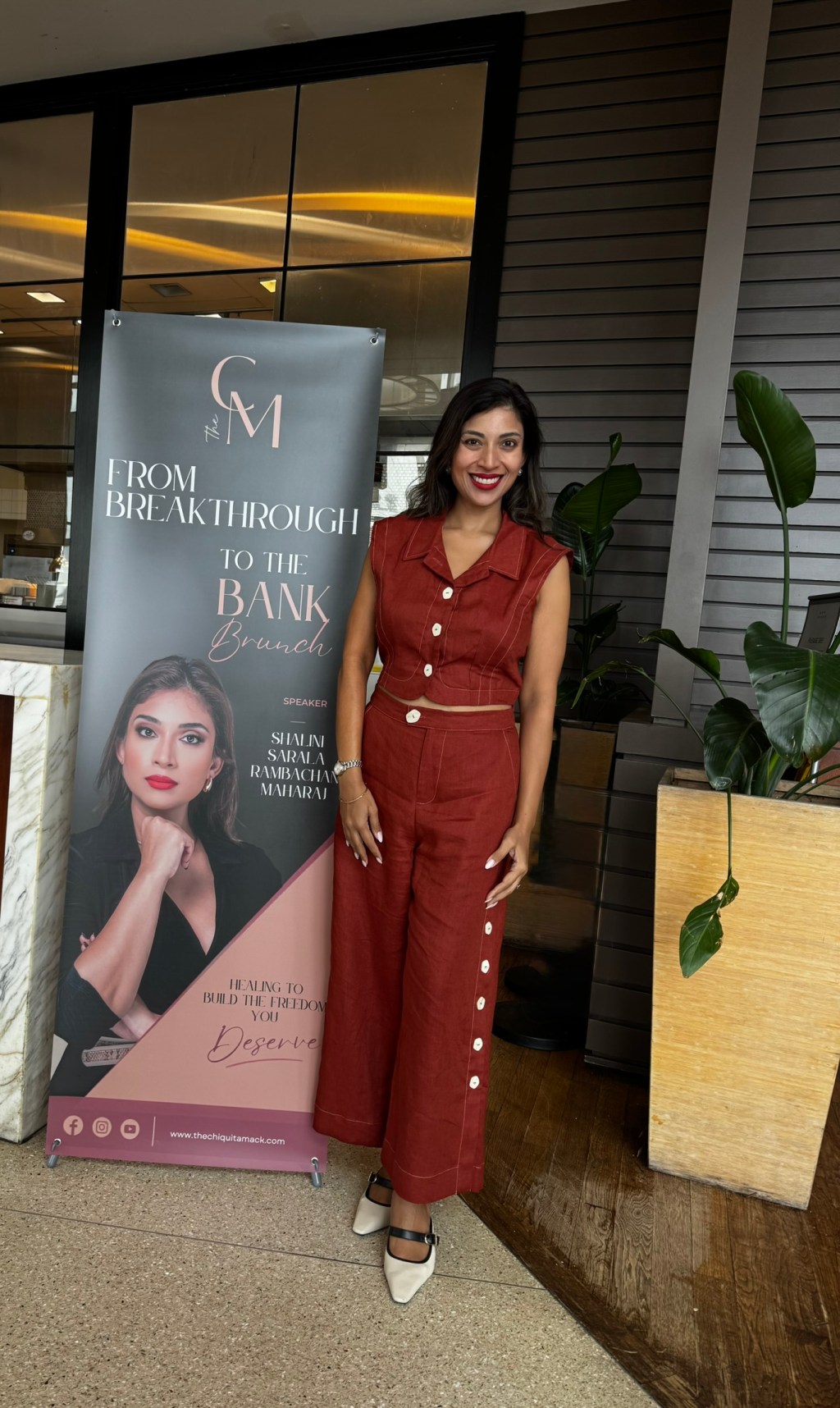
    Over the past few weeks, I’ve stood on stages speaking to incredible women across the Caribbean, Canada and USA. I’ve had conversations that reminded me why I started writing and why I chose to build my consultancy. I’ve met people who saw something in me that I had almost forgotten to see in myself.

    Those moments have been deeply affirming.

    But they don’t replace the practical questions.

    How do you build a sustainable business?
    How do you create predictable income?
    How do you balance purpose with responsibility?

    No amount of applause pays the mortgage.

    And that’s okay.

    That realization hasn’t made me cynical. It has made me wiser.

    I’m learning that purpose isn’t the destination—it’s the compass (and how ironic – and perfectly placed-that the Fearless Women’s Conference I attended was hosted in the “Compass Room”). Strategy is the map. Discipline is the vehicle. Consistency is the fuel.

    You need all of them.

    I’ve also realised that success isn’t simply about being seen. It’s about creating something valuable enough that people are willing to invest in it.

    That’s a different kind of work.

    It requires uncomfortable questions.

    What problem do I solve?

    Who do I serve best?

    Am I building a business, or am I simply collecting compliments?

    Those questions have changed my perspective.

    I’ve stopped believing that uncertainty means I’m on the wrong path. Sometimes uncertainty is simply the price of building something that has never existed before.

    I’ve also become gentler with myself.

    There is enormous pressure to have everything figured out—to pivot flawlessly, to grow quickly, to monetise immediately, and to appear endlessly confident while doing it.

    But perhaps growth is less about having all the answers and more about becoming the person who can keep asking better questions.

    I’m still learning.

    I’m still building.

    I’m still figuring out what this next chapter looks like.

    But I no longer measure progress only by what I’ve accomplished.

    I measure it by who I’m becoming while I’m building it.

    That feels like a lesson worth learning.

    What lesson has changed your perspective recently? I’d genuinely love to hear yours. Sometimes someone else’s lesson becomes the encouragement we didn’t know we needed.

    The biggest lesson I've learned recently is that purpose and practicality have to learn to live together. Passion matters. Calling matters. But building a meaningful life also requires strategy, discipline, and the courage to ask better questions.
  • Daily writing prompt
    What’s the best way to deal with negative thoughts?

    For a long time, I believed that the loudest voice in my head was the one telling the truth.

    It was the voice that questioned whether I was good enough, whether I had made the right decision, whether everyone else was somehow further ahead, more capable, more successful, more certain.

    The problem with negative thoughts is that they don’t usually arrive announcing themselves as fear. They often disguise themselves as logic.

    “Be realistic.”

    “Don’t get your hopes up.”

    “You’re probably not ready.”

    I’ve learned that the best way to deal with negative thoughts isn’t to fight them or pretend they don’t exist. It’s to get curious about them.

    Where did this thought come from?

    Is it based on facts or fear?

    Would I ever say this to someone I love?

    Therapy has taught me something that I wish more of us understood: a thought is not a verdict. It is simply a thought. Sometimes it’s an old story trying to protect us. Sometimes it’s a wound speaking louder than our wisdom.

    When I catch myself spiralling, I come back to evidence instead of emotion.

    I remind myself of the challenges I’ve already overcome.

    I remember the rooms I’ve walked into afraid and left stronger.

    I think about the people who have believed in me long before I believed in myself.

    And sometimes, I simply let the thought pass without giving it a seat at the table.

    The truth is, courage isn’t the absence of negative thinking. Courage is making the next decision anyway.

    There are still mornings when I question myself. Starting my own business has certainly produced a few of them. There are days when purpose feels crystal clear, and others when the mortgage seems much louder than the dream.

    But I’ve stopped expecting confidence to come first.

    Action usually arrives before confidence does.

    So when negative thoughts visit—and they still do—I no longer ask, “How do I make them disappear?”

    Instead, I ask, “Do they deserve to make today’s decisions?”

    Most of the time, the answer is no.

    Maybe that’s what resilience really is: not silencing every doubtful thought, but refusing to hand it the steering wheel.

    What helps you quiet your inner critic when it gets loud? I’d love to hear what works for you.

  • It has been a couple of weeks since I last wrote here.

    Life has been full.

    I spent last week speaking at the Fearless Women’s Summit in St. Lucia, and somewhere between standing on a stage, sharing my story, laughing over dinners, praying with women I had only just met, and having conversations that stretched long after the sessions ended, I realised something.

    Sometimes you don’t travel somewhere to teach.

    Sometimes you travel somewhere to remember.

    One of the biggest gifts of the week wasn’t speaking. It was witnessing women who were genuinely secure in themselves.

    Women who offered encouragement without competition.

    Prayer without performance.

    Warmth without expectation.

    Advice without agenda.

    I left reminded that there is still extraordinary goodness in people.

    Ironically, one conversation kept surfacing over and over again.

    Women hurting other women.

    It’s remarkable how universal that experience is, yet how quietly we speak about it.

    Different countries.

    Different careers.

    Different ages.

    Same story.

    Not always dramatic betrayal.

    Sometimes it’s exclusion.

    Sometimes it’s gossip.

    Sometimes it’s gatekeeping.

    Sometimes it’s the subtle message that there isn’t enough room for both of us.

    We don’t talk about it enough because somehow it still feels uncomfortable to admit that one of our deepest professional wounds sometimes comes from another woman.

    But perhaps healing starts by acknowledging that it exists.

    Thankfully, the women I met in St. Lucia reminded me that there is another way.

    One where your confidence doesn’t require someone else’s insecurity.

    One where another woman’s success isn’t a threat to your own.

    One where kindness is still powerful.

    I came home carrying that with me.

    I also came home with another question.

    What exactly am I building?

    Running your own consultancy is exciting.

    It’s also wonderfully terrifying.

    Exposure is lovely.

    Speaking invitations are lovely.

    Meaningful conversations are lovely.

    Purpose is beautiful.

    But purpose doesn’t replace fear.

    And choosing yourself doesn’t pay the mortgage.

    That line landed with me this week.

    There comes a point where passion has to become strategy.

    Where you stop asking, “What do I love doing?” and start asking, “What problem do I solve?”

    I’m standing at that intersection now.

    I know I have something valuable to offer.

    I know my experience has value.

    I know I’m meant to build something that reaches beyond the immediate environment around me.

    Now comes the work of making that sustainable.

    That’s entrepreneurship.

    Not the Instagram version.

    The real version.

    The version where you wake up wondering whether you’re brave enough to bet on yourself again today.

    Thankfully, the answer keeps being yes.

    Speaking of betting on myself…

    It’s time to behave like someone who has holiday photos coming up.

    For the next couple of weeks, it’s mission health.

    Less flour.

    More intention.

    A carefully negotiated relationship with Prosecco and Sauvignon Blanc during the football matches.

    (I’m realistic, not delusional.)

    Bestie’s birthday trip is around the corner, which means it’s time to dust off the swimsuits and remember that confidence isn’t a dress size—it’s showing up anyway.

    Then there was the sweetest part of coming home.

    George and Isabella.

    I genuinely don’t know if anyone has ever been happier to see me than those two little faces.

    There is something profoundly grounding about being loved by dogs.

    No questions.

    No expectations.

    No conditions.

    Just joy.

    They don’t care whether your speech went well.

    They don’t care how many people followed you on LinkedIn.

    They don’t care about your business model.

    They just missed you.

    And perhaps we all need someone—or something—that reminds us who we are outside of achievement.

    Of course, life also has a way of slipping in one final lesson.

    My husband’s family recently published a book documenting their family history.

    It’s beautifully done.

    As I turned the pages, I noticed something.

    On the relevant family page, every immediate family member was represented.

    Except me.

    My husband is there.

    His brothers are there.

    His parents.

    His niece.

    But the only wife missing was me.

    One of the women at the conference looked at me after I told the story and said quietly,

    “They’re writing you out of the family.”

    Now, I don’t actually care about being in the book.

    That’s not the point.

    The point is that no one even thought to ask for a photograph.

    And yes, a tiny part of me wondered whether, because we don’t yet have children, I somehow remain… optional.

    It’s amazing how quickly your mind can wander into old narratives.

    But therapy has taught me something invaluable.

    Instead of asking,

    “Why is this happening to me?”

    I’ve started asking,

    “What is this teaching me?”

    The lesson isn’t about a photograph.

    It’s about noticing where you are seen.

    Where you are valued.

    Where you are considered.

    And equally importantly…

    Where you aren’t.

    Not every omission is malicious.

    But every omission gives you information.

    Information that helps you make better decisions about where you invest your energy, your loyalty and your heart.

    That shift—from victim to student—changes everything.

    So here we are.

    Back to work.

    Back to client meetings.

    Back to figuring out how to build the business.

    Back to finding time for exercise.

    Back to booking George’s vet appointment because I think my distinguished old gentleman has developed a little eye ulcer.

    Back to ordinary life.

    Except…

    It doesn’t feel quite so ordinary anymore.

    Because sometimes you leave home to change your environment.

    And sometimes you come home having changed yourself.

    I think this trip was the latter.

    And I’m quietly grateful for that.

    Perhaps that’s what reinvention really is. Not becoming someone else. Coming home more fully as yourself


    Question for you:

    Have you ever come home from a trip, a conversation, or an experience and realised that nothing around you had changed—but you had? I’d love to hear what that moment taught you.

  • Daily writing prompt
    What’s the best advice you’d give to someone younger than you?

    Stop waiting for permission.

    Permission to change your mind.
    Permission to leave a path that no longer fits.
    Permission to want more.
    Permission to want less.
    Permission to rest.
    Permission to begin again.

    For a long time, I thought success was about climbing the ladder as quickly and as perfectly as possible. Get the degree. Get the promotion. Tick the boxes. Earn the title. From the outside, it looked like progress.

    What nobody tells you is that sometimes the ladder breaks.

    A job ends. A relationship changes. A dream shifts. Life asks a question you weren’t expecting.

    When that happens, don’t waste years trying to glue the old ladder back together.

    Build a different way up.

    There is a popular narrative these days that younger generations give up too easily. That they quit when things get hard. That they lack resilience.

    I think the conversation is more complicated than that.

    There is tremendous value in grit. Effort matters. Discipline matters. Sacrifice matters. Some things are hard because they are worth doing. Growth often requires us to stay in the room a little longer, try one more time, and keep showing up when the outcome is uncertain.

    But resilience was never meant to mean permanent endurance.

    Sometimes we stay in jobs, relationships, routines, and identities long after they have stopped serving us because we are afraid that leaving means we failed.

    It doesn’t.

    If you have done the work, shown up consistently, learned the lessons, honoured your commitments, and given something your genuine effort, it is okay to make a different choice.

    It is okay to pivot.

    It is okay to choose peace over proving a point.

    It is okay to recognise that persistence and stubbornness are not the same thing.

    The older I get, the more I realise that life is not a straight line. It is a series of seasons, and every season asks something different of us. The courage required at 20 is not the courage required at 40.

    At 20, courage is often saying yes.

    At 40, courage is sometimes saying no.

    The advice I would give someone younger than me is this: trust yourself sooner.

    You do not need everyone to understand your choices. You do not need to win every argument. You do not need to prove your worth through exhaustion.

    Learn to listen to the quiet voice inside you before the world gets loud.

    Protect your peace. Be kind. Stay curious. Invest in your friendships. Call your parents. Travel when you can. Take the photo. Learn the new thing. Start before you feel ready.

    And remember this:

    The people you admire most are rarely the ones who never failed.

    They are the ones who kept becoming.

    What’s one piece of advice you would give to your younger self today?

  • This week, I board a plane for St. Lucia to speak at the Fearless Women’s Summit.

    A few years ago, I would have thought the achievement was the invitation.

    Today, I know the achievement is the woman boarding the plane.

    Not because she is speaking.

    Not because her name appears on a programme alongside accomplished women from across the World.

    Not because she has a title, credentials, or a microphone.

    The achievement is that she finally understands that none of those things determine her worth.

    For much of my career, like many professionals, I climbed. I chased opportunities, accepted challenges, worked long hours, collected achievements, and measured progress by the next rung on the ladder.

    Promotion. Title. Recognition. Responsibility.

    Climb. Climb. Climb.

    And for a long time, that worked.

    Until one day it didn’t.

    Not because I failed.

    Not because I wasn’t capable.

    But because I discovered something many of us eventually learn: ladders are often built by other people. Other people’s expectations. Other people’s definitions of success. Other people’s timelines.

    And when one of those ladders breaks—or perhaps when we realise it was leaning against the wrong wall all along—we are left standing still, wondering who we are without it.

    That moment can feel terrifying.

    It certainly did for me.

    This year has been a year of reinvention. Of launching my legal, governance, strategy and reinvention consultancy. Of stepping into speaking opportunities. Of building something that is entirely my own. Of learning that investing in yourself feels very different when there is no corporate budget behind it.

    Every conference ticket.

    Every flight.

    Every hotel booking.

    Every piece of branded material.

    Every risk.

    Every decision.

    Mine.

    And if I’m honest, there have been moments when I’ve looked at those investments and wondered if I was being brave or simply slightly mad.

    There is a vulnerability that comes with betting on yourself.

    No title can shield you from it.

    No employer can absorb the risk.

    No organisational chart can tell you what comes next.

    It is just you.

    Your experience.

    Your voice.

    Your belief that what you have to offer matters.

    As I prepared for St. Lucia this week, I found myself reflecting on how much of my growth this year has had nothing to do with professional accomplishments and everything to do with self-trust.

    Learning to trust my instincts.

    Learning to trust my experience.

    Learning to trust that I can enter new rooms without needing to prove why I deserve to be there.

    Because perhaps the biggest lesson of all is this:

    Confidence doesn’t arrive after success.

    Confidence arrives when you decide to move before success is guaranteed.

    It is booking the ticket before you know exactly how the opportunity will unfold.

    It is submitting the application before you know whether you will be selected.

    It is launching the business before every detail is perfect.

    It is raising your hand before you feel completely ready.

    For many years, I thought confidence was something successful people possessed.

    Now I think confidence is something ordinary people practice.

    One decision at a time.

    One uncomfortable step at a time.

    One brave choice at a time.

    As I pack my suitcase this week, I am carrying more than outfits, speaking notes, and business cards.

    I am carrying every lesson that brought me here.

    The lessons from leadership.

    The lessons from disappointment.

    The lessons from therapy.

    The lessons from entrepreneurship.

    The lessons from learning that some people will misunderstand you, underestimate you, or simply choose not to support you—and that none of those things have the power to define you unless you hand them the pen.

    I will stand on a stage this week and speak about what happens when the ladder breaks.

    But today, I am reminded that the real story isn’t about the ladder at all.

    It’s about the woman who discovers she can build a different way up.

    And sometimes, she discovers she was never meant to climb someone else’s ladder in the first place.

    Reflection Question:
    What is one thing you would do this year if you stopped waiting for permission?

  • Daily writing prompt
    What is something you wish you could tell your 20-year-old self?
    At 20, I thought success was about climbing the right ladder. At 40, I've learned that sometimes the ladder breaks—and that's where life truly begins.

    If I could sit across from my 20-year-old self, I’d probably start by telling her to relax.

    Not because life will be easy. It won’t.

    Not because everything will work out exactly as planned. It won’t.

    But because she is carrying far too much responsibility for things that were never hers to control.

    At 20, I believed life was a series of milestones. Study hard. Get the degree. Build the career. Find the partner. Buy the house. Tick the boxes. Climb the ladder.

    I thought success was something waiting for me at the top.

    What I didn’t know was that some of the most meaningful parts of life would happen when the ladder broke.

    I would tell her that people will disappoint her.

    Some friendships won’t last.

    Some leaders won’t deserve her loyalty.

    Some opportunities she desperately wants will pass her by.

    Some dreams will take far longer than she imagined.

    And yet, none of those things will define her.

    I would tell her that she does not have to earn her worth.

    Not through grades.

    Not through promotions.

    Not through being the reliable one.

    Not through being the fixer, the peacemaker, or the person who always says yes.

    Her value is not something she achieves. It is something she already possesses.

    I would tell her to stop comparing.

    The woman she envies today will have struggles she cannot see.

    The person racing ahead may later choose a different path entirely.

    Life is not a competition, despite what the world keeps trying to sell us.

    One of the greatest freedoms I have found in adulthood is living by a simple principle:

    No compare. No compete. No gossip.

    The older I get, the more I realise how much peace lives there.

    I would tell her that it is okay to change her mind.

    She will outgrow people, roles, ambitions and versions of herself.

    That is not failure.

    That is growth.

    There will come a day when she realises she has spent years building a life that looks successful from the outside while quietly asking herself whether it still fits on the inside.

    When that day comes, I hope she is brave enough to listen.

    I would tell her that being ambitious and being happy are not mutually exclusive.

    That she is allowed to redefine success.

    That she is allowed to choose peace.

    That she is allowed to build a life that feels good, not just one that looks impressive.

    And perhaps most importantly, I would tell her this:

    The people who love you most are not the ones applauding your achievements.

    They are the ones sitting beside you when there is nothing to celebrate.

    Invest in those people.

    Protect those relationships.

    Everything else is temporary.

    At 20, I thought life was about becoming someone.

    At 40, I am learning that life is really about coming home to who you have been all along.

    And if my younger self could hear just one thing, it would be this:

    You do not need to have everything figured out.

    Keep showing up.

    Keep learning.

    Keep loving.

    Trust yourself more.

    The woman you become will surprise you.

  • Daily writing prompt
    What are the biggest mistakes people make when visiting your country?

    One of the biggest mistakes people make when visiting Trinidad and Tobago is assuming we’re only about Carnival.

    Don’t get me wrong—Carnival is incredible. The music, the costumes, the energy, the creativity—it deserves every bit of its global reputation. But if that’s all you come for, you’ve only met one version of us.

    We’re also early morning doubles vendors who somehow know exactly how much pepper you can handle before you’ve had your first coffee. We’re quiet beaches and hidden coves in Tobago. We’re conversations that last for hours around a kitchen island, where everyone is somehow related to someone you know. We’re Diwali lights, Eid celebrations, Christmas parang, steelpan, tassa, and a cultural blend that somehow works despite all logic.

    Visitors are often surprised by how much of our identity is tied to community. We lime. We tell stories. We feed people as an expression of love. We will probably ask you where you’re from, who your family is, and whether you’ve eaten yet—all within the first five minutes of meeting you.

    Another mistake? Trying to rush. Trinidad and Tobago reveals itself slowly. The best experiences are often the ones you didn’t plan: the roadside food stop recommended by a stranger, the sunset you accidentally catch, the impromptu gathering that turns into an unforgettable evening.

    So yes, come for Carnival if you can.

    But stay long enough to discover the people, the food, the humour, the resilience, the contradictions, and the warmth that exist long after the last costume is packed away.

    Because Trinidad and Tobago isn’t just an event on a calendar.

    It’s a collection of stories, cultures, and connections—and that’s where the real magic lives.

    What’s a place you’ve visited that turned out to be completely different from what you expected?

  • One of the hardest leadership lessons I have learned is this:

    Not everyone wants talented people around them.

    Some leaders see capability and think, “How can I help this person grow?”

    Others see capability and think, “How do I protect my position?”

    The difference between those two mindsets can determine the culture of an entire organisation.

    For years, I thought leadership was about strategy.

    Then I thought it was about influence.

    Then I thought it was about decision-making.

    After more than a decade spent in boardrooms, transactions, governance meetings, restructures, mergers, and leading teams across the Caribbean, I have come to believe leadership is often much simpler than that.

    Leadership is about what you do when talented people show up around you.

    Early in my career, I assumed that if I worked hard, stayed curious, and delivered results, everyone would welcome that.

    Experience taught me otherwise.

    Some of the best leaders I worked with opened doors, shared opportunities, and advocated for people in rooms they were not in. They trusted others with meaningful work before they felt ready. They understood that leadership was not diminished by developing others—it was demonstrated through it.

    Others seemed threatened by the very people they had hired.

    It was one of the most valuable lessons I learned about leadership—and about human nature.

    Because competence does not threaten secure leaders.

    It excites them.

    Secure leaders are relieved when capable people walk into the room. They share information. They create opportunities. They recommend people for projects. They introduce them to stakeholders. They celebrate their wins.

    They understand that another person’s success is not evidence of their own failure.

    Insecure leaders see the same person and reach a different conclusion.

    Questions are interpreted as challenges.

    Ideas are viewed as criticism.

    Visibility becomes something to control rather than create.

    Opportunities become scarce resources that must be protected.

    What could have been collaboration becomes competition.

    What could have been growth becomes politics.

    And the saddest part is that most talented people are not trying to take anyone’s place.

    They are usually trying to do a good job.

    I have seen this play out in organisations of every size.

    Large corporates.

    Small businesses.

    Professional services firms.

    Not-for-profits.

    The industry changes.

    People don’t.

    In the Caribbean, there is an additional layer to this reality.

    Our professional communities are relatively small.

    The degrees of separation are often two or three conversations at most.

    People know each other.

    Families know each other.

    Business circles overlap.

    Reputations travel faster than formal announcements.

    This can create incredible opportunities for connection, mentorship, and collaboration.

    It can also create an environment where some people become overly protective of their position, influence, or access.

    In a region where everyone seems to know everyone, it can be tempting to protect access instead of sharing it.

    Yet some of the most successful Caribbean leaders I have encountered are the ones who understand that relationships are not diminished by being shared. Influence grows when it is used to open doors, not guard them.

    Sometimes we operate from a mindset of scarcity.

    There is only one seat.

    One promotion.

    One board position.

    One speaking engagement.

    One opportunity.

    But growth rarely comes from gatekeeping.

    It comes from expanding the table.

    Some of the leaders I respect most did exactly that for me.

    They shared knowledge.

    They trusted me.

    They challenged me.

    They advocated for me in rooms where I was not present.

    Looking back, I realise that the leaders who had the greatest impact on my career were not necessarily the smartest people in the room.

    They were the most secure.

    They did not need to be the only voice.

    They did not need to have all the answers.

    They were confident enough to create space for others.

    As I build this next chapter of my own career and business, I find myself returning to one simple question:

    When talented people enter the room, do they leave feeling smaller or bigger because of my leadership?

    That is the standard I am trying to hold myself to.

    Because leadership is not measured by how much space we occupy.

    It is measured by how much space we create for others.

    And perhaps that is the leadership lesson I wish more of us talked about.

    Not how to become the most important person in the room.

    But how to ensure we are not the reason someone else feels they cannot become one too.


    Question for readers:

    Have you ever worked for a leader who made themselves bigger by making others smaller?

    Or one who made everyone around them better?

    What did that experience teach you about leadership?

  • Daily writing prompt
    What’s something you’d love to see in the future, but know you probably won’t live to witness?

    I would love to see a world where people are finally valued for who they are, rather than what they produce.

    A world where success is measured less by job titles, salaries, follower counts, and status symbols, and more by kindness, integrity, curiosity, and contribution.

    As someone who spent years climbing ladders—corporate ladders, academic ladders, professional ladders—I know how seductive achievement can be. It gives us identity, validation, and a neat answer when someone asks, “What do you do?”

    But somewhere along the way, I learned that the most meaningful parts of life rarely fit on a résumé.

    They are the conversations that change us. The friendships that hold us together. The courage it takes to heal old wounds. The choice to be gentle when the world rewards sharp elbows. The decision to keep showing up as ourselves when performing would be easier.

    I would love to see a future where communities are designed around connection instead of competition. Where literacy, healthcare, and opportunity are available to everyone. Where leadership is less about power and more about stewardship. Where we leave the planet and each other better than we found them.

    Will humanity get there? I honestly don’t know.

    What I do know is that every generation plants trees whose shade they may never sit under.

    Perhaps that is enough.

    Perhaps our job is not to see the finished garden, but to do our small part in tending it.

    What tree are you planting today that you may never sit under?