Hi, I’m Sarala — Caribbean corporate strategist/executive woman writing honestly about power, identity, leadership, reinvention and emotional truth- and what it costs.
After years navigating boardrooms, deals, and governance across the Caribbean, I’ve learned that life — like leadership — is best lived in chapters. Some are bold and ambitious. Some are quiet and healing. And most are best shared over a glass of wine and a wagging tail nearby.
This space is where I write about it all — the beautiful, messy balance of careers, canines, and cabernet. From reflections on purpose and courage to lessons from leadership, love, and dog walks, these are the stories that shape who I am — and, maybe, who we’re all becoming.
Pull up a chair (or pour a glass) and stay awhile. Here’s to life in chapters — imperfect, authentic, and deeply human.
There is something revealing about a Saturday when you have absolutely nothing you must do.
Not the performative kind of “busy Saturday” where brunch, errands, gym, and social plans are stacked like a corporate agenda. I mean the rare, quiet Saturday where time stretches out in front of you and the only real decision is whether you want coffee or tea.
Those Saturdays can be surprisingly uncomfortable.
Because when life slows down, you start to notice things.
For years, my Saturdays were filled with motion.
Deadlines. Meetings. Flights. Social commitments. Events. Even my downtime was structured—planned brunches, gym classes, networking events disguised as social outings. Productivity has a sneaky way of creeping into every corner of life when you’re a high-functioning professional.
But lately, Saturdays have started to look different.
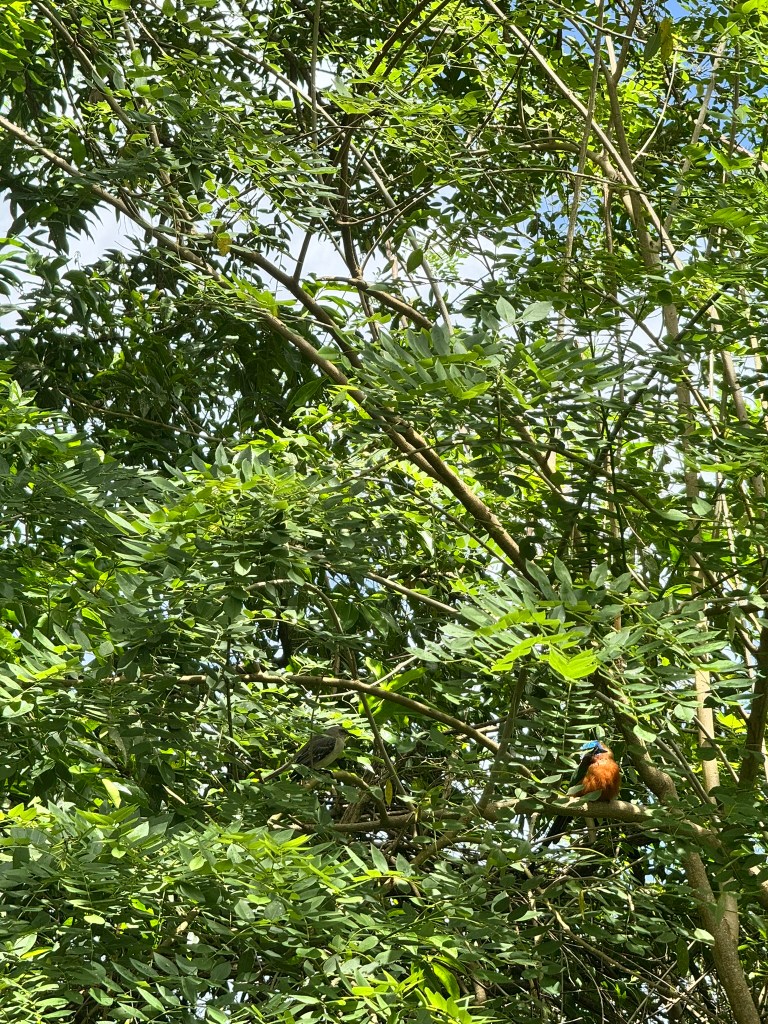
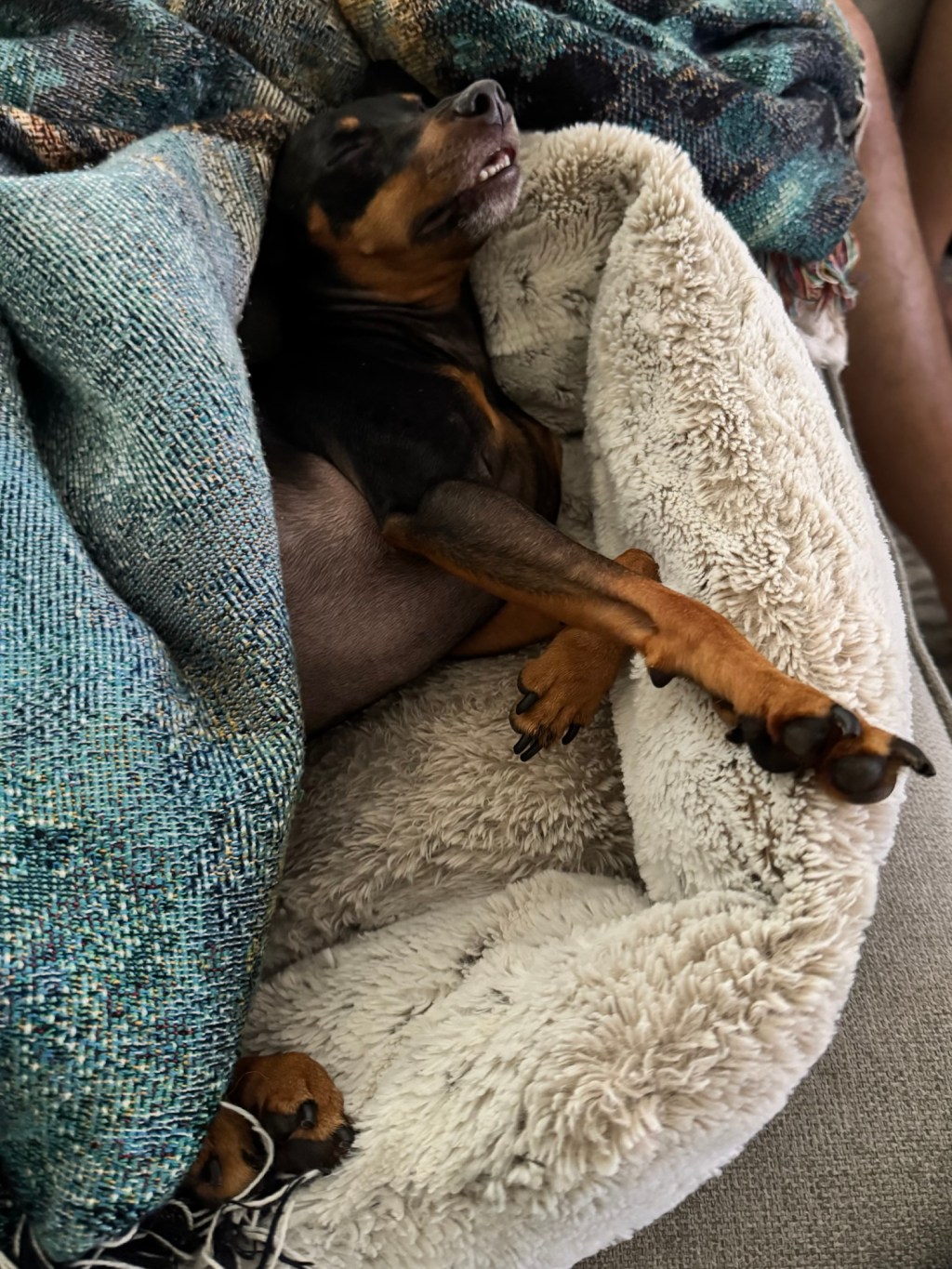
Sometimes it’s just me, a book, ginger tea, and the quiet hum of the house. George snoring somewhere nearby. Isabella loudly announcing to the neighbourhood birds that she disapproves of their existence.
And in those slower moments, something interesting happens.
You start to notice what actually feels good.
Not impressive. Not productive. Not socially validated.
Just… good.
You notice which friendships feel easy and which feel like effort. You notice how your body responds to rest after years of running on adrenaline. You notice the thoughts that appear when you’re no longer distracted by work.
Sometimes they’re beautiful.
Sometimes they’re uncomfortable.
But they’re honest.
I used to think slowing down meant losing momentum.
Now I think it might actually be where clarity lives.
The clarity about who you are becoming. The clarity about who belongs in this next chapter. The clarity about what you no longer need to chase.
A quiet Saturday has a way of revealing whether the life you’re building actually fits you.
And if it doesn’t, it gently invites you to start adjusting the pieces.
These days, I’ve learned to respect the quiet Saturdays.
They may not look like much from the outside, but they are often where the most important parts of life quietly rearrange themselves.
A former friend once nicknamed me “Bee” — short for beetle.
At the time, I never questioned it too deeply. Nicknames often stick without explanation, and friendships have a way of creating their own language. But over time I found myself wondering about it.
Did she really see me?
Or did she simply project the version of me she needed to see?
Ironically, the beetle carries a very different meaning in many spiritual traditions than the one people might casually imagine. In ancient symbolism—particularly the scarab—the beetle represents transformation, renewal, persistence, and evolution. A creature that pushes forward, carrying its world with it, constantly reshaping what came before.
When I later learned that, I laughed.
Because if there is one thing that has defined my life, it is the constant pursuit of growth and evolution. Professionally, personally, spiritually—I am always asking the question: What is the lesson here? Even when the lesson arrives wrapped in discomfort, loss, or change.
So perhaps the nickname was more accurate than either of us realized.
Or perhaps it reveals something else entirely about relationships: sometimes people give us names not because they truly understand us, but because they are trying to place us neatly inside their own story.
The truth is, the people who know us best are rarely the ones who define us.
We define ourselves through the work we are willing to do — the healing, the learning, the shedding of old skins, the courage to keep moving forward even when the path feels uncertain.
If I am a beetle, then I’ll take the full symbolism of it.
A small creature perhaps.
But one that keeps pushing forward, carrying transformation with it wherever it goes.
For those who know me well, some would say I give extrovert energy.
And perhaps I do.
Not because I thrive endlessly in crowds or social calendars that resemble military logistics… but because I love fully, enthusiastically, and with intention. I bring joy to the people I care about.
Work joy is one thing. Friend joy is another.
But here’s the quiet truth: people who give a lot of energy also need to recharge a lot of energy.
My idea of restoration is simple.
A book. Ginger tea. My pool and a bevvy.
And the only tolerated soundtrack is birds chirping… and Isabella barking at the birds chirping.
So after a particularly busy weekend a couple weeks ago, I planned what I called a vegetative and restorative weekend.
Key word: planned.
Life had other ideas.
The weekend began with the lingering remnants of food poisoning, which meant that by Saturday I was so exhausted I could barely move from the sofa. Not a chosen rest. A body-enforced shutdown.
So naturally I thought: Sunday will be the day.
Sunday morning began with mild irritation.
I had asked my husband to take charge of morning doggy duty so I could sleep in.
He agreed.
However… he never set his alarm.
So there I was—grumbling my way through feeding, walking, and clean-up, reminding myself that deep breathing is indeed a life skill.
Determined to salvage the day, I decided a soft Pilates class would help realign my mood and spine.
And just as I was getting ready… the phone rang.
An invitation to attend a Women’s Day Tea.
Now let me be clear. I had absolutely no plans to dress up, engage, and smile politely at people on what was supposed to be my sacred lazy Sunday.
But in what I will generously call the spirit of women’s empowerment (and what may also have involved a touch of guilt), I ultimately agreed to go.
Yes. I own the decision.
So I grumbled through Pilates.
I grumbled through Sunday meal prep.
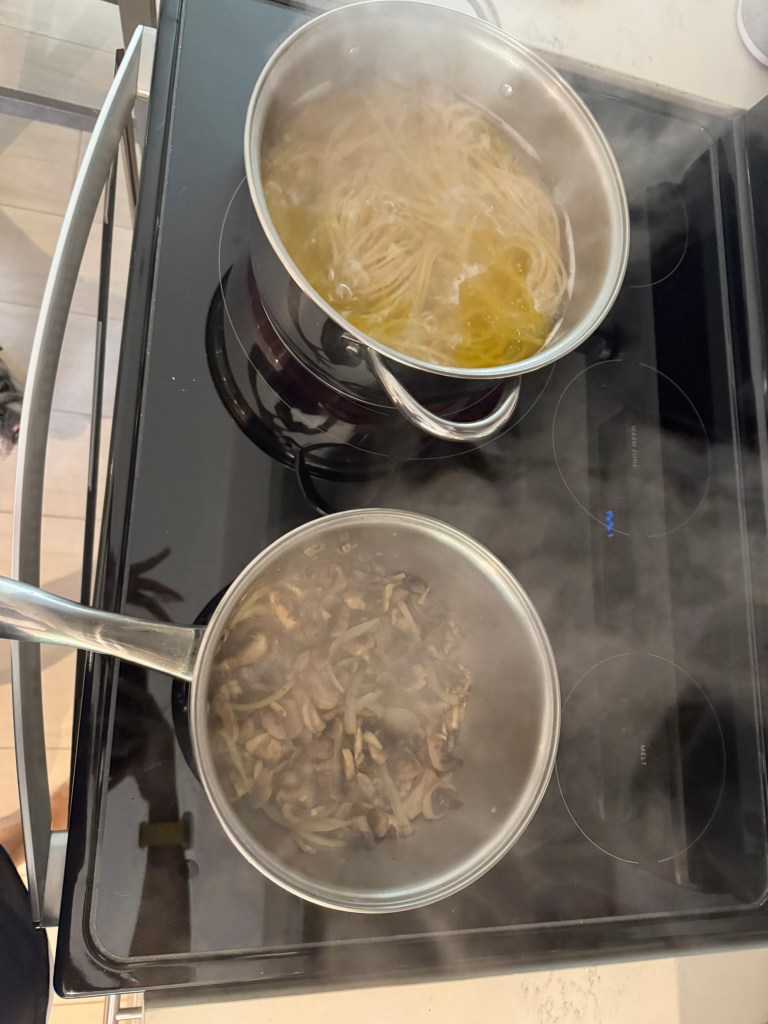
Which is normally one of my favourite rituals — cooking with a gin & tonic in hand, chatting with my husband in the kitchen.
But not this Sunday.
Because I had to get dressed.
For the event.
And just as I was rushing around the kitchen… another call came in.
An invitation from a dear friend of my husband’s to come relax in their backyard and watch the sunset.
Lovely invitation.
Wrong timing.
My husband, of course, immediately accepted.
And kindly informed them that I would join after the event.
Rest where exactly?
But here is the thing.
The Women’s Day Tea turned out to be… delightful.
I had forgotten how much women in Trinidad love a good reason to dress up.
I looked lovely. I people-watched. I saw many familiar faces.
Some full of genuine smiles.
And some with jealousy so ripe it looked like mango smoothie forming right before my eyes.
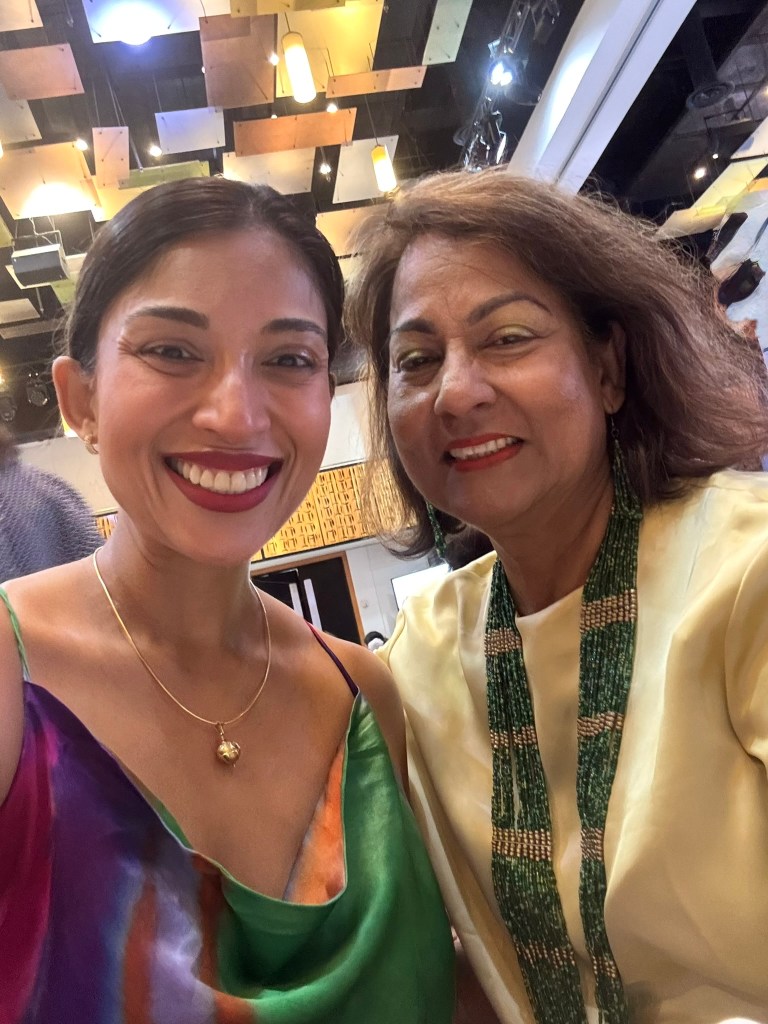
I spent lovely time with my mother-in-law, who is always good fun, nibbling chocolate cake while admiring artwork and catching up.
And immediately after the event, I was whisked away to our friend’s house.
Where a cold glass of champagne, genuine laughter, and warm company awaited.
And truly — there are far worse ways to spend a Sunday evening.
We laughed.
We dipped into the pool at 6:45pm.
We met new furry friends.
And I spent time with my newly forming “Coco Crew.”
(Yes. There is absolutely a story behind that name.)
I am forming new friendships in this season of my life, and if I’m honest, that requires something that can feel surprisingly difficult:
Trust.
Trust that not everyone is mean.
Not everyone is a user.
Not everyone is two-faced.
Learning to open that door again while still protecting your peace is delicate work.
But Sunday reminded me that sometimes the very human interactions we dread can end up being exactly what fills us back up.
And then came Tuesday.
A random invitation to spend a few hours down the islands.
Normally I might hesitate — close quarters, new people, unknown dynamics.
But lately I’ve noticed something.
The moments that push me slightly outside my comfort zone have often turned out to be the most joyful.
So off I went.
Hummus and cheese puffs.
Prosecco.
Easy conversation.
New acquaintances.
A turtle sighting.
Sand underfoot.
And rain on the boat ride back to shore.
Truthfully… a glorious Tuesday afternoon.
Which reminded me of something.
Gratitude and appreciation may not fill bank accounts.
But they fill hearts.
They fill spirits.
They fill lives.
And much like corporate culture — something I wrote about last week — the most meaningful parts of life are often the things that cannot be neatly packaged into KPIs or performance metrics.
Connection.
Laughter.
Trust.
Unexpected joy.
Those things matter more than we often admit.
So that was the curious case of the quiet weekend that wasn’t quiet… and the random Tuesday that turned out to be rather perfect.
A reminder that sometimes it’s worth saying yes.
To new things.
To new people.
To moments you didn’t plan.
And to giving yourself the grace to redefine what rest, joy, and community actually look like.
Now if you’ll excuse me…
I am very much looking forward to the coming weekend.
Serious Faces, Silent Advocacy, and Other Curious Leadership Lessons
A conversation this week took me somewhere unexpected.
Someone told me they had recently experienced insecurity from another woman in leadership — and they said it quietly, almost apologetically, as though this kind of behaviour must surely be an anomaly.
It stopped me.
Not because it surprised me. But because it reminded me how many of us still think these dynamics are isolated incidents rather than patterns.
Right now there’s a lot of conversation about ally leadership — particularly encouraging men to sponsor women, advocate for them in rooms they are not in, and move beyond passive mentorship.
And that is important.
But there is also a quieter, more uncomfortable truth we do not always talk about: sometimes the resistance comes from other women.
Not always. Not even most of the time. But often enough to matter.
Women who refuse to advocate for other women because:
they dislike you
they see you as competition
you trigger something unhealed in them
or they simply cannot control you
I once had someone tell me — six months after the fact — that they could not advocate for me in a leadership conversation because my facial expression was serious during a serious meeting.
Apparently they “couldn’t tell what I was feeling.”
Six months.
Six months of silence. Six months of withheld advocacy. All because my face looked… serious.
In a serious meeting.
I wish I could say this story was unusual.
But as more millennials begin re-evaluating their relationship with work — and Gen Z enters the workplace with radically different expectations — these conversations are happening more openly.
People are asking questions like:
What does leadership actually look like?
Who is advocating for whom?
And why does culture stay broken even when the people change?
Someone said something to me recently that has stayed with me:
“Culture doesn’t change just because people do. It lives in the bones of an organisation.”
And unless someone consciously chooses to rip out the bad and replace it with something healthier, people simply cycle through and adopt what already exists.
The problem is that culture change rarely shows up neatly in a KPI.
You cannot easily measure:
psychological safety
quiet advocacy
or the courage to support someone who might outshine you
So the conversations stay theoretical while the behaviour stays the same.
Meanwhile… in the very human chapter of this week
This was a harder week for me.
I was achy. Not sleeping well. Fatigued in that annoying way where your body feels like it is negotiating with gravity.
I came down with an acute case of food poisoning that left me questioning the need for sanity.
Still — life continued.
Workouts happened. Meetings happened. Life happened.
And somewhere in the middle of it all, I realised something very simple:
I miss my best friend.
She’s off living an incredible adventure right now, and for the first few months it almost felt normal — schedules get busy, weeks pass, you don’t see each other.
But in the second rotation of time, you feel it differently.
You suddenly realise that you cannot send a random message saying:
“Drinks tonight?”
And actually make it happen.
So naturally, I informed my husband that he needed to start doing “cutesy things” with me instead.
Bless him — he asked what exactly that meant.
We are still working through the definition.
The Mentorship Question
This week I also had a call with a mentee.
She showed up with an honesty and strength that honestly blew me away.
Later my husband asked me something that made me pause:
“How do you show up like that for people when you’re not feeling your best?”
It is a fair question.
The truth is, I am no longer a big advocate for the old autopilot push-through culture that defined so many of our careers.
But there are still moments when you show up because the responsibility matters.
The key difference now is this:
You do not sacrifice authenticity to do it.
You show up honestly. Presently. Without pretending everything is perfect.
Because ironically, the thing we all say we dislike — the “what looks good” culture — is often the thing we continue performing.
But what if something looks good… and nobody has anything genuinely good to say about it?
That’s when living more honestly becomes the better metric.
The Big Question
Of course we cannot all abandon corporate life tomorrow and run off into private ventures (although some days that does sound appealing).
But something is shifting.
People are asking harder questions about:
culture
leadership
self-worth
and the cost of staying in environments that ask too much of your spirit
Sometimes the biggest change is not leaving.
Sometimes it is simply deciding:
“I will make the choices that are right for me before I am forced to.”
And now… the weekend.
As I write this, Isabella is sitting in the corner arguing with me for reasons known only to herself.
Last weekend was very social, so this one will be slower.
My ambitious plans include:
pajamas
watching My Lottery Dream Home (a personal weekend ritual if I’m honest)
a soft workout
Pilates and a walk
and the most exhausting task of the weekend
Washing my hair.
So wherever you are in your own chapter this weekend — thriving, surviving, questioning, resting — I hope it unfolds exactly as you need it to.
Preferably in a way that carries you gently into Monday…
with absolutely no Monday scaries.
About the Author
Sarala writes about leadership, life transitions, corporate culture, and the messy human realities that sit behind professional success. When she isn’t advising organisations on governance and strategy, she is usually walking her dogs, reflecting on life’s chapters, or searching for the perfect glass of wine.
There is a particular kind of heartbreak that doesn’t come from an enemy.
It comes from a friend.
From someone you rallied for. Defended. Prayed for. Sat with. Someone whose sharp edges you understood long before they understood them themselves. And yet — when the moment came — their instinct to protect themselves required hurting you.
And perhaps what hurt the most wasn’t even the action.
It was the inability to have a real conversation about it.
When someone is deeply committed to their own victimhood, accountability feels like attack. Reflection feels like betrayal. And silence becomes safer than truth.
So the silence grows.
And you’re not surprised.
Disappointed? Yes. But surprised? No.
Because when you step back, you see the pattern. You see how easy it was for them to wound you, even as you would have moved mountains to shield them. You see how some people can only process pain from the lens of what was done to them, never what they have done through others.
And that realization is sobering.
The Season of Transition (Where There Is No Script)
This season I am in is raw.
There is no corporate title to introduce myself with. No daily barrage of meetings to validate my usefulness. No one assigning me tasks except… me.
And that is both liberating and terrifying.
There are mornings when getting out of bed requires negotiation. Not because my life is tragic. Not because I am ungrateful. But because transition is exhausting. The nervous system doesn’t love uncertainty. The ego certainly doesn’t.
Some days I want to hide.
To not see anyone. To not have to speak optimism into rooms when internally I am quaking. To not answer the “So what’s next?” questions with polished confidence when the honest answer is: I am building it. Brick by brick. And sometimes I am just resting between bricks.
There’s also that strange lull of fatigue that creeps in. The kind that makes you wonder: is this emotional exhaustion? Early whispers of perimenopause? Burnout residue? Or simply the body processing change?
No one prepares you for how disorienting growth can feel.
The Financial Reality No One Romanticizes
Let’s be honest.
Living a life that makes you happier does not always immediately produce the financial gains you were accustomed to.
And that’s confronting.
There’s a tension between trusting the process and refreshing your banking app. Between believing in your long-term strategy and remembering how comforting a steady corporate pay cheque was.
You wonder: Am I losing my sharpness by not applying it every day? Is my skillset dulling while I explore these other parts of me?
But then you notice something else.
The skills you are using now.
Discernment. Creativity. Emotional intelligence. Boundaries. Writing. Speaking. Resting without guilt (still learning). Courage without applause.
Those are skills too.
Just not the ones that get bonuses attached to them.
The Myth of “One Break”
Sometimes I catch myself thinking:
“If I just get one big break, I’ll be back on track.”
But back on which track?
The one where I was applauded but quietly misaligned? The one where validation came externally and disappeared just as quickly? The one where corporate systems crown golden children — until they don’t?
The corporate world is exceptional at handing out titles.
It is less skilled at handing out self-belief.
And when you step away from the machinery that feeds your identity daily, you realize how much of your confidence was externally sourced.
No one hands out intrinsic self-worth like they hand out promotions.
You have to build that yourself.
And that — my friends — is the hardest work I have ever done.
On Hurt and Self-Respect
Back to the friend.
Part of growth is recognizing that you can love someone and still choose distance.
You can understand why they acted from fear and still acknowledge that it hurt.
You can release the need for them to “get it.”
And perhaps the real grief isn’t losing the person.
It’s losing the version of the friendship you believed in.
But here is what I know:
I would rather be the person who rallies for others and occasionally gets burned than the person who protects themselves by burning others first.
That is not weakness.
That is alignment.
The Quiet Truth
Not every day is a good day.
And that’s okay.
Not every day is a bad day either.
And that’s even better.
Some days are simply neutral. Some days are heavy. Some days are hopeful. Some days are both.
I am lucky. I have a supportive husband. Friends who show up. Therapy. Work I can shape. A body that still carries me forward even when my mind is tired.
And I am doing the work.
Even when no one is clapping.
Especially then.
Because self-belief built in silence is sturdier than confidence built on applause.
If you are in a transition season — if you’ve been hurt by someone you loved, if you are building without a blueprint, if you are cheering yourself on because no one else is — I see you.
You are not behind.
You are becoming.
And becoming sometimes looks like breaking first.
A Gentle Practice for Transition Seasons
When self-belief feels shaky, create evidence.
Not big evidence. Not public wins.
Small, private proof.
Send the email you’ve been avoiding.
Finish the paragraph.
Make the therapy appointment.
Go for the walk.
Invoice for your work without apology.
Confidence rarely precedes action. It follows it.
And in seasons where no one is validating you externally, self-trust grows from keeping small promises to yourself.
✍🏽 About the Author
Sarala Maharaj is a corporate commercial attorney turned fractional general counsel and strategic advisor, navigating a bold season of transition with intention. With over a decade of cross-Caribbean experience in governance, M&A and leadership, she now writes about identity beyond titles, people-centric power, healing in high performance spaces, and building a life that feels aligned — not just impressive.
When she’s not advising boards or reimagining professional power, she’s usually by a pool, on a verandah listening to birds, or being outnumbered by two very opinionated dogs.
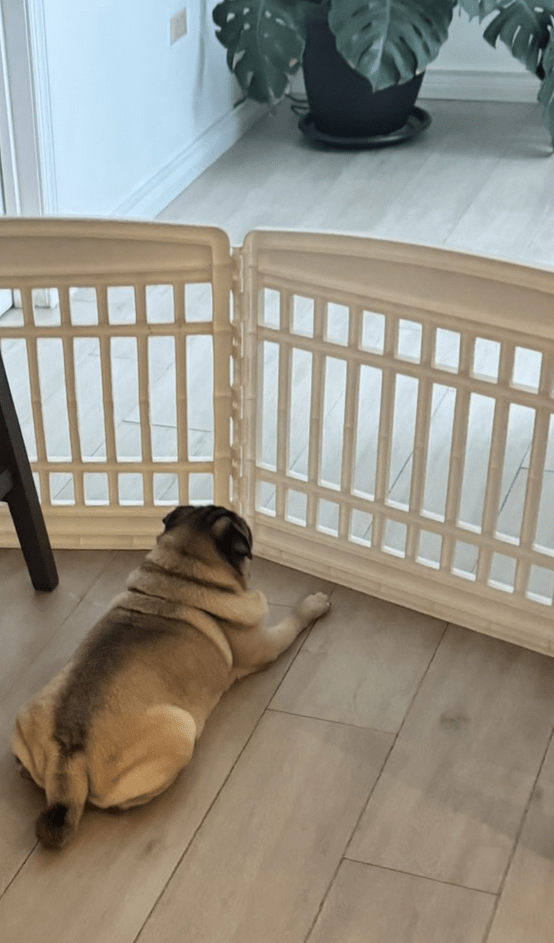
George has decided that my primary purpose in life is to open doors for him.
Not metaphorical doors. Literal doors. Bathroom doors. Pool doors. Pantry doors. Doors that were closed for a reason.
He will sit. He will stare. He will sigh heavily, as though burdened by the incompetence of his staff.
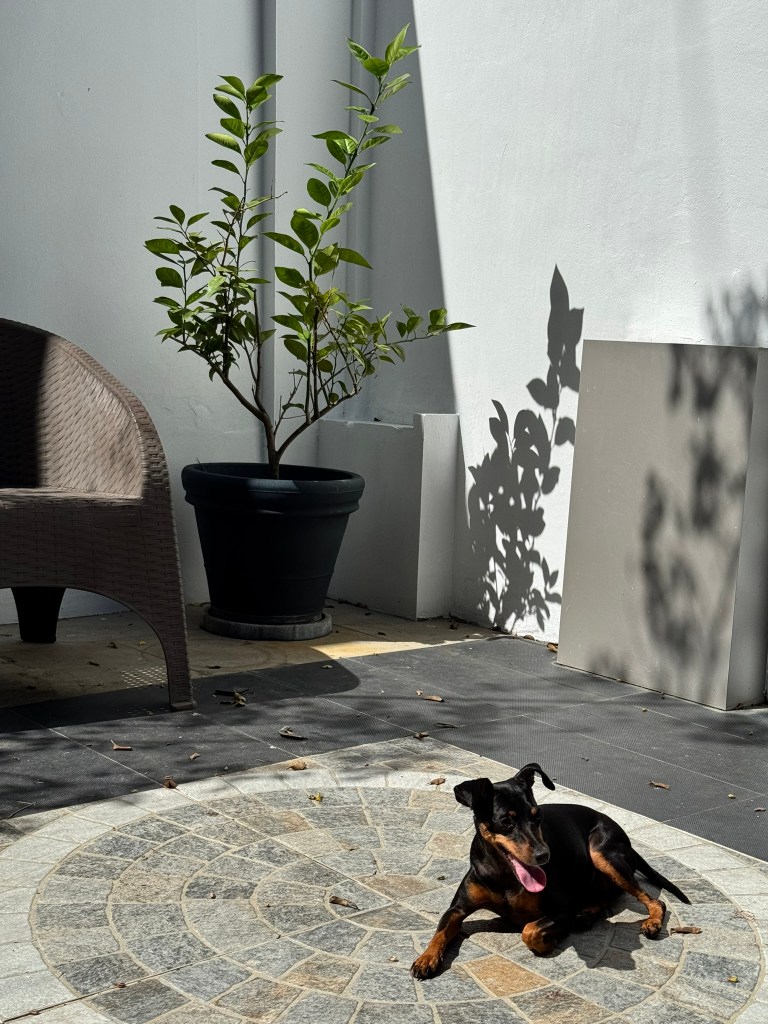
Isabella, on the other hand, has accepted that she is royalty. She does not ask. She positions herself. Preferably in a sunbeam. Preferably on something that was not meant for dogs. Preferably after stepping on George, who accepts this as his lot in life.
They do not rush.
They do not check emails.
They do not wonder if they should be doing something more productive with their time.
They simply exist—with alarming confidence.
This weekend, I am attempting the same.
I am reconnecting with a girlfriend who knew me in crazy overdrive mode and who I’m lucky continues to get to know me in this new season. I am having what I have decided will be a sexie breakfast with a fun aunt—by which I mean good coffee, a cute dress- because diva I am, and conversations that drift into inappropriate laughter. I am also celebrating my mother-in-law’s birthday with family, where food will be both excessive and mandatory.
And somewhere in between, I will sit in the sun.
I will waddle in a pool without trying to optimize the experience.
I will read a new book without turning it into research.
I will allow time to pass without negotiating with it.
George will likely supervise.
Isabella will judge.
And both of them will remind me that joy does not require permission.
We have been taught that a good life is a productive life. But I am starting to suspect that a good life is simply a present one.
Unrushed.
Unimpressive.
Unapologetically yours.
Tell me—what is one small, slightly indulgent thing you are doing this weekend that your younger self would approve of?
The biggest challenge I will face in the next six months is choosing—deliberately and without apology.
Not choosing out of fear. Not choosing out of habit. Not choosing based on what looks impressive on paper or what makes other people comfortable.
Choosing what is aligned.
This season of my life is full of possibility. New work, new directions, new ways of defining success that are less about titles and more about meaning. For a long time, my path was structured—clear ladders, defined expectations, measurable milestones. Now, the path is mine to design. And with that freedom comes a quieter, more confronting responsibility: discernment.
Opportunity is no longer the challenge. Discernment is.
The challenge will be resisting the urge to say yes to everything simply because I can. To trust that the right work will not require me to shrink myself, over-prove, or abandon the parts of my life that matter. To build something sustainable, not just impressive.
It will also mean tolerating uncertainty—the space between what was and what will be. That space can feel uncomfortable. It asks for patience. It asks for faith in your own judgment. It asks you to believe that walking away from what no longer fits is not loss, but authorship.
Six months from now, I don’t know exactly what my professional life will look like. But I know how I want it to feel: grounded, purposeful, and honest.
And perhaps that is the real challenge—not building a life that others recognise, but building one I recognise as my own.
Not the performative version—the one where you sit on a beach but your mind is still answering emails, calculating risk, projecting outcomes. I mean the kind where your body arrives before your thoughts do. Where your nervous system slowly realizes there is nothing it needs to fix.
In Tobago, my days began in softness. Helping with breakfast in a kitchen that smelled of coffee and salt air. Sitting on the verandah afterwards, listening to birds whose names I did not know but whose rhythms I began to recognize. Watching the light move across the hills. Letting time stretch without urgency.
For the first time in a long time, I was not measuring my worth by my output.
I was learning to float.
At first, only in the pool. Suspended awkwardly, my body stiff with instinct, two new female friends beside me. “Relax,” they said gently. “Trust the water.”
Trust did not come naturally. Not in water. Not in life.
But slowly, breath by breath, I let my neck release. My spine soften. My limbs grow heavy. The water held me.
Later, in the ocean, I floated again—this time surrounded by both old and new community. Women whose lives intersected mine by timing and grace rather than history. We spoke of futures not yet realized. Of pregnancy hopes whispered between laughter. Of the strange courage it takes to imagine joy again.
We popped champagne on the sand for birthdays and survival and the quiet triumph of still being here.
Blue balloons appeared unexpectedly in the sky on one girlfriend’s birthday, drifting upward as if carrying prayers with them. On my husband’s birthday, there were quieter signs. Stillness. Presence. The simple gift of being together in a place where neither of us needed to be anything other than ourselves.
We slept in a double bed—too small for two adults accustomed to space—but somehow perfect. I oscillated between wanting to smother him for his snoring and pulling myself closer into the familiar safety of him. We had not, either of us, slept in a bed this size since we were teenagers, when life was still mostly possibility.
In many ways, it was possibility again.
I let paint be splattered on my bare skin at J’ouvert, laughing as it dripped down my arms and back. I sat in shallow, crystal-clear water, watching fish dart between shadows while conversations unfolded around me without agenda or conclusion. I drank a piña colada at the pool bar long after I was already drunk on sun and salt and relief.
There was lunch in rum shops. Vodka poured from the back of a truck. Gin by the pool. Champagne on sand still warm from the day’s heat.
My suitcase, packed with the anxiety of preparation, grew lighter as the week went on. Clothes unworn. Versions of myself no longer needed.
I returned to places that held memory. Seahorse Inn, where past and present gently overlapped. La Tartaruga, where new friendships were sealed over shared plates and red wine and the easy intimacy of people allowing themselves to be known.
I laughed at myself. At a cocorico—the national bird—whose name I had misremembered as cocrite. At the improbable mix of music my husband curated without apology, each genre bleeding unapologetically into the next- sometimes with a cringe factor so strong we had to laugh.
I grocery shopped as if we would be staying for a month, not a week. I stayed up far beyond my usual hours. I said yes to things I would once have declined.
This is what pivot looks like, I realized. Not dramatic reinvention. Quiet permission.
I took photographs and, later, looked at them without criticism. I liked how I looked. Not because I was perfect, but because I was present.
I sent far too many photos to my dearest girlfriend, narrating each moment as if I had never traveled before. In some ways, I hadn’t. Not like this. Not without armor.
For a long time, I believed control was safety. That if I anticipated every outcome, managed every risk, performed competence without pause, I could protect myself from loss.
But control was only ever an illusion.
Do I still have fears? Of course. I think about clients. About value. About the fragile architecture of building something new. Those thoughts have not disappeared.
But they no longer define the horizon.
In celebrating my husband’s birthday, I found a rebirth of my own.
Coming home was abrupt. Straight from the airport to the veterinarian with Isabella, my miniature pinscher, suddenly fragile and unwell. Sleepless nights. Medication schedules. The helplessness of loving something that cannot explain its pain. Life reasserting its unpredictability.
And then, the familiar voice of my mother, after weeks of silence, remarking on how dark my tan had become. Asking whether I had a job yet. Referencing my fertility journey as if it were a project delayed.
There was a time when those words would have eclipsed everything. When they would have rewritten the narrative of my trip into something smaller, something defensive.
This time, they did not.
I allowed myself to feel the anger. The disappointment. And then I allowed it to pass. I accepted that some people will never know you—not because you are unknowable, but because their world has no room for your expansion.
I felt, instead, a quiet compassion for the smallness of that perspective. For the fear that keeps people tethered to certainty.
My world has grown wider.
I am planning my next conference. Looking ahead to Easter. Returning to the work of building a life that feels aligned rather than impressive.
I am learning that rest is not the absence of ambition. It is the foundation of clarity.
I am learning that community can be formed at any stage of life.
I am learning that joy does not require permission.
Most of all, I am learning to float.
To trust that I am held—even when I do not know what comes next.
About the Author Sarala Rambachan is a Caribbean corporate lawyer turned fractional general counsel and governance advisor. She writes about power, identity, leadership, and rebuilding a life and career beyond titles. Her work explores the intersection of ambition, loss, healing, and becoming—often shaped by the rhythms and realities of Caribbean life.
I wouldn’t start with Parliament. I would start with the boardroom.
If I had the power to change one law, it wouldn’t be written in statute. It would be the implied corporate law that says:
“Survive by alignment. Rise by silence. Stay safe by being smaller than the insecurity above you.”
It’s the unwritten rule that politicking is strategy. That closing ranks protects “the business.” That the high performer who asks uncomfortable questions must be “managed.”
We laugh at cancel culture on social media, but inside corporations scapegoating is often a performance management tool. Gaslighting is dressed up as “feedback.” Narcissism hides behind passive-aggressive emails and withheld advocacy.
There is nothing more destabilising than reporting to an insecure leader who will not advocate for you—not because you are incapable, but because you are uncontrollable.
Some people are made examples of. Not because they failed. But because they cannot be folded into fear.
And fear, in many corporate cultures, is currency.
In my work across post-merger integrations and change initiatives, I have seen it repeatedly: culture eats strategy for breakfast. But culture only nourishes growth when people are not living in quiet survival mode.
When integration becomes consolidation of power rather than alignment of purpose. When “fit” becomes code for compliance. When HR—often structurally designed to protect the company from liability—cannot protect the employee who represents necessary disruption.
We talk about governance frameworks. We draft beautiful codes of ethics. We commission culture audits.
But the real law in many organisations is still this:
Protect the hierarchy. Contain the truth. Reward loyalty over courage.
That’s the law I would repeal.
If I could change one rule, it would be this:
Advocacy for your people would be mandatory, not optional.
Leaders would be measured not by how well they protect themselves, but by how safely their teams can challenge them. Promotion would require demonstrated sponsorship of others—not silent tolerance. Performance reviews would include psychological safety metrics with real consequence.
And retaliation disguised as “strategic restructuring” would be what it actually is: misconduct.
Subtle? Perhaps not. Necessary? Absolutely.
Here is the harder truth though:
Implied laws exist because we uphold them.
We participate in silence. We normalise dysfunction. We tell ourselves it’s just how things are.
But it all starts small. It starts at home. It starts in the decision to not gaslight yourself about what you are seeing. To not shrink to stay palatable. To not trade your full life for a survival contract.
I have been in rooms where pivot was forced upon me. Where the system quietly signalled, “You do not belong in this version of the story.”
And yet—what felt like punishment became liberation.
Because the real law I now live by is this:
A career should not be your sentence.
We need to be truest to ourselves—even when that truth costs proximity to power. Especially then.
Change the implied law. Start with how you lead. Start with how you protect others. Start with how you refuse to participate in fear.
Because a life lived in quiet compliance is not stability.
Not because they were bad or frivolous, but because I changed.
There was a time when I loved the thrill of being everywhere at once – saying yes to every invitation, every committee, every event, every networking opportunity that promised “visibility.” I thought busyness was a personality trait and exhaustion was a badge of honour.
I’ve outgrown that.
I used to enjoy the performative parts of professional life – the small talk, the forced smiles, the endless cycle of showing up simply to be seen. Somewhere along the way I realised I didn’t actually like rooms filled with people I had to impress. I liked rooms where I could be myself.
So I lost interest in performing.
I’ve also outgrown hobbies that required me to shrink. Activities I only did because they looked good on a résumé or because “people like us” were supposed to enjoy them. I used to collect interests like accessories – book clubs I didn’t really read for, fitness trends I pretended to love, social circles I didn’t feel safe in.
Over time, I stopped.
These days my hobbies are quieter. Slower. More honest.
Long walks with my dogs. Cooking meals that taste like home. Writing. Reading without needing to finish the book. Sitting with a glass of wine and a sunset instead of rushing to the next thing. Protecting my peace as fiercely as I once protected my calendar.
What I’ve really outgrown is urgency.
I’ve lost interest in anything that asks me to be less than myself or more than human.
And that, I’ve learned, is not a loss at all. It’s growth.