Hi, I’m Sarala — Caribbean corporate strategist/executive woman writing honestly about power, identity, leadership, reinvention and emotional truth- and what it costs.
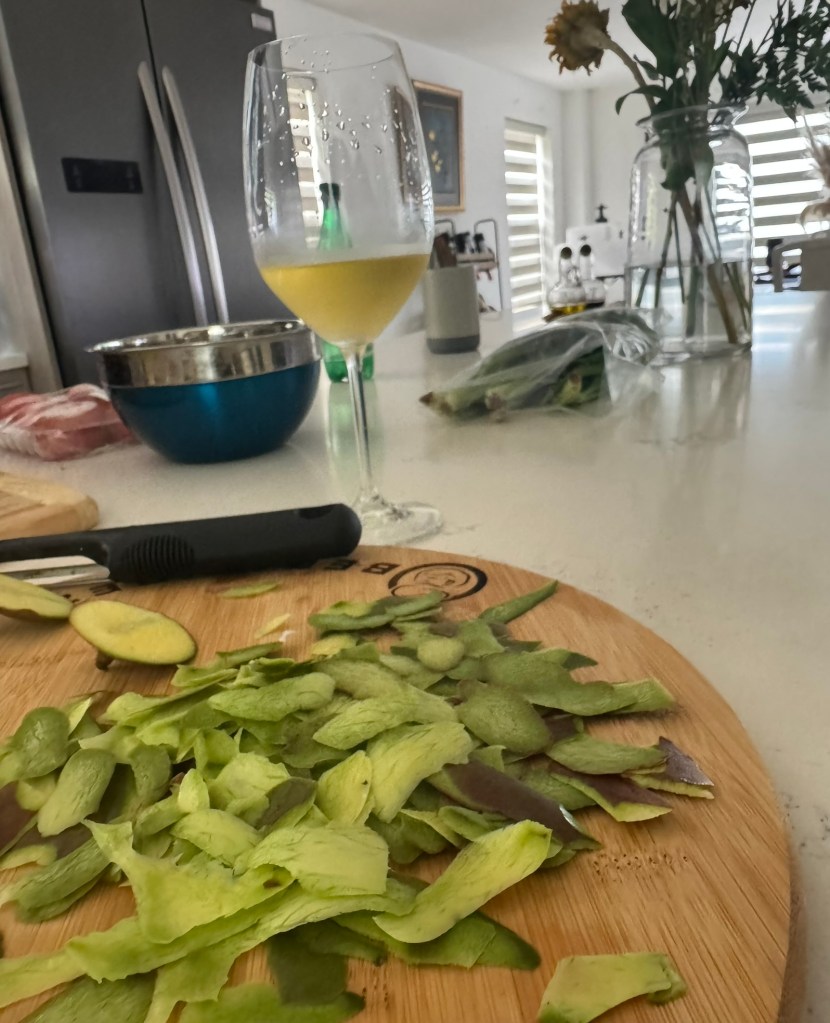
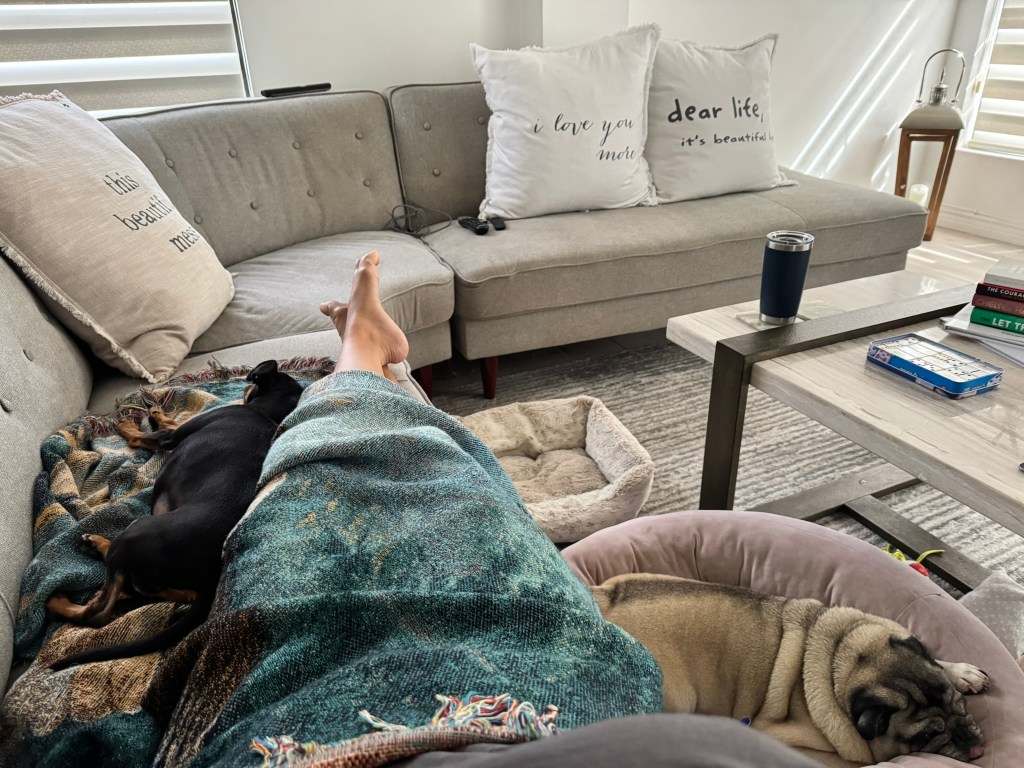
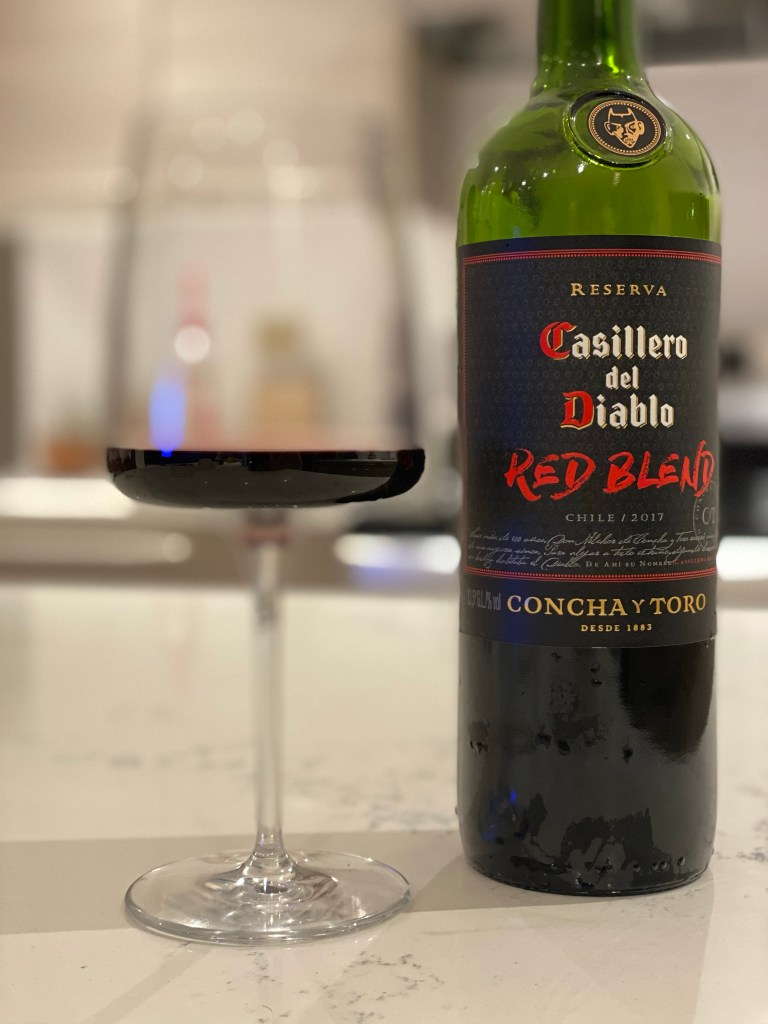
After years navigating boardrooms, deals, and governance across the Caribbean, I’ve learned that life — like leadership — is best lived in chapters. Some are bold and ambitious. Some are quiet and healing. And most are best shared over a glass of wine and a wagging tail nearby.
This space is where I write about it all — the beautiful, messy balance of careers, canines, and cabernet. From reflections on purpose and courage to lessons from leadership, love, and dog walks, these are the stories that shape who I am — and, maybe, who we’re all becoming.
Pull up a chair (or pour a glass) and stay awhile. Here’s to life in chapters — imperfect, authentic, and deeply human.
If I’m honest, the things that most often stay untouched on my to-do list are the ones that are personal to me.
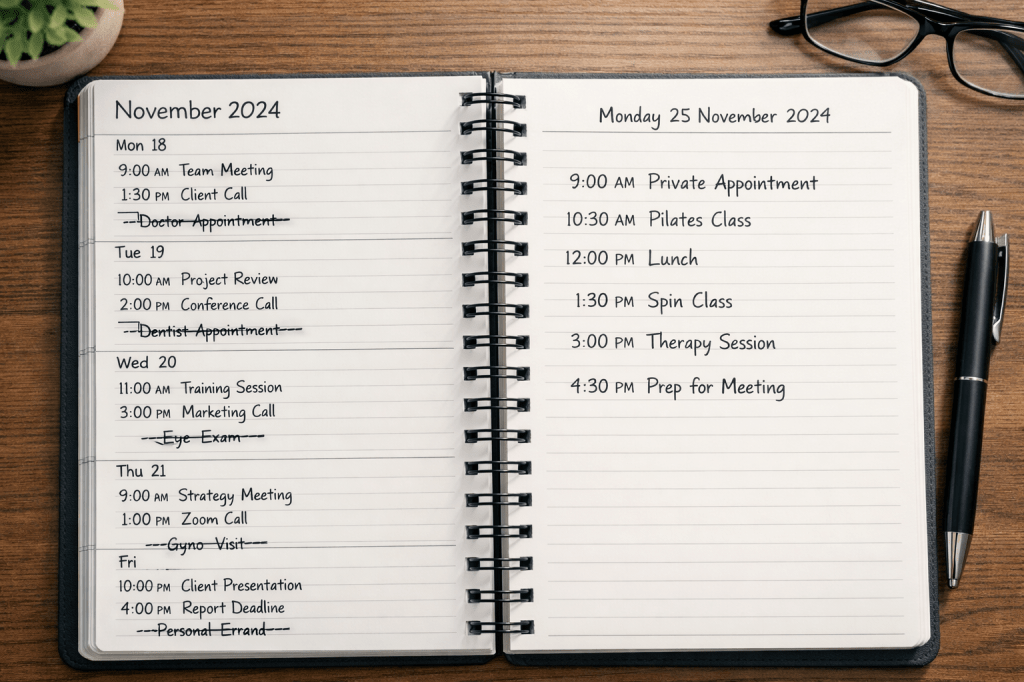
For years it was so easy to kick the can on anything that didn’t feel urgent. Work deadlines? Never missed. Commitments to others? Done with precision and pride. But the things that only affected me?
Doctor’s appointment? I’m not dying. Dentist cleaning? It can wait a few more months. Eye test? I can still see well enough. Gynecologist visit? Is it really necessary this year?
Somehow, my own care always found itself at the bottom of the pile.
I used to tell myself it was efficiency – that I was prioritizing what “mattered most.” The truth is, I was simply conditioned to believe that my needs could wait. That personal maintenance was optional while professional performance was mandatory.
What I’ve learned, slowly and sometimes the hard way, is that ignoring yourself isn’t discipline – it’s neglect disguised as dedication.
These days I’m trying to rewrite that habit. To treat the appointments that keep me well with the same seriousness I give a board meeting. To see self-care not as indulgent, but as responsible. To remember that the life I’m building only works if I’m healthy enough to live it.
So the answer to the prompt?
The thing that never gets done is “me” – unless I choose, deliberately, to move myself to the top of the list.
A complex, high-stakes game played by sly navigators who smile warmly to your face, then mispronounce your name in rooms where you aren’t present. Athletes of insecurity—those who dim others because they haven’t learned how to stand in their own light.
I watch those obsessed with titles, money, optics—trophies that matter most when self-respect is missing. The players who take freely but never give, who justify private harm if public perception benefits, who confuse strategy with character.
It’s a fascinating sport, really. Because many never realise that the life they’re living is the consequence of the damage they’ve inflicted—no matter how glossy it looks from the outside.
And me? I don’t play to win anymore. I observe. I learn. I do the work.
Even in my softer, sadder moments, I’m discovering this: it’s far better to be who I am than to perform who I think I should look like.
This post contains personal reflections on loss, sudden death, suicide, depression, illness, and grief. Please read with care. If you or someone you know is struggling, consider reaching out to a trusted person or a mental‑health professional. Support resources are listed at the end of this post.
One Year On
It has been one year since my husband’s—later, my—dear friend, Kirn, died by suicide. A year that has passed both slowly and impossibly fast.
I still remember that Wednesday. I was in a strategy session—one of those meetings where you are expected to be present, sharp, purposeful. My phone buzzed with a call from my husband. That alone wasn’t unusual, but he knew exactly where I was. I missed the call and messaged: Don’t forget I’m in a meeting. He replied: Ok, call me after.
Nothing about the exchange was extraordinary. And yet, something in my body went on alert. I excused myself, stepped into the hallway, and called him back.
For someone who is guided by purpose—who always needs to understand—and who for a long time led with philosophy and intellect rather than emotion, I was shaken in a way I hadn’t experienced before. This was a friend I had spoken to only days earlier. A friend my husband spoke to almost every morning, having known him since secondary school. One of the most expressive, caring, generous people we knew.
For a long time, I grappled with how he could take his own life. My husband grappled with how his best friend never shared that weight with him.
My therapist suggested I read The Bell Jar by Sylvia Plath—to sit with the interior world of someone who lived with depression and self‑harm ideation. I could understand self‑criticism. I knew how to diminish myself, reject my own strengths, fixate on failure—and then dust myself off and push forward. That wasn’t always healthy, but it was familiar. What I couldn’t understand was this.
I understand now that sometimes, you simply don’t understand.
Kirn’s death was meticulously planned—if a phrase like that can ever be used without discomfort. Funeral arrangements booked and paid for. Outfit chosen. Instructions left for the distribution of his assets; those not already shared or donated. His own eulogy written. Instructions of who should read it. Even an approved guest list.
I am still haunted by the words read by my father‑in‑law—because Kirn was like a son to them. That he was tired. That this was his choice. That he had lived a full life at 43. That he had given enough. That it was time. That we should not be sad for him, but happy—because he was happy now.
For 43 years, he worked relentlessly to provide: for his mother, his sisters, his children. Forever the hustler. Forever the giver. Always there for others.
A stark lesson: you cannot pour from an empty cup.
Later, through letters he left for my husband and a small few others, we learned he had been diagnosed with stomach cancer. The prognosis was not good. He decided he did not want to be a burden.
Those words—I don’t want to be a burden—landed with a weight I cannot fully explain. They were familiar. And they filled me with guilt. That someone so generous, so loving, so consistently present for others could believe he was undeserving of the care and priority others would surely have given him. That we would have given to him- was that my ego?
During that time, as I was learning about anger in therapy, I felt flashes of it—at him, at us, at the world, at God. Cancer does not discriminate. That is a fact. But emotion is not always rational.
In a moment I once would have called pettiness—but now recognise simply as emotion—I thought of someone else I knew. Someone deeply disappointing, insecure, two‑faced. Someone who survived their own cancer journey. I had shown up for them professionally and personally, even without knowing the full story. They survived. They thrived. And from what I could see, learned not one meaningful thing about humility, authenticity or humanity. As I still lament on this, perhaps this is my unhealed wound of that experience coming up.
And then there was Kirn. A good person. Exhausted from fighting for everyone else. Too tired to fight for himself.
That is not a sugar‑coated lesson. It still makes me angry.
Just writing this, I felt it again. I messaged my husband to say so. He asked—gently—whether I was just feeling randomly angry. (A fair question. I am capable of that.)
Our feelings don’t disappear. We work on healing, authentically, but the feelings live in us. We can give them space, acknowledgment, and grace—and we must also choose not to let them consume us.
I still don’t understand. But I accept that it happened.
I understand now that we cannot judge what someone has carried unless we have lived it ourselves. And no—this is not a justification for treating others poorly. Harmful behaviour is still a choice. Sometimes deliberate. Sometimes born of unhealed wounds. Both can be true.
I turned 40 last year. In the years leading up to it, I learned real, unglamorous life lessons. I am grateful that I chose not just to survive them, or rush past them in search of a victory narrative. I sat with my mistakes. With my losses. With friendships that ended. With questions about who I was becoming and where I wanted my life to go.
On a lighter, but strangely meaningful note—my best friend deepened my interest in astrology. Last year, I asked my priest what my stars looked like. The answer was bleak. There was no way to dress it up. This year, I asked again. The difference was profound. When I questioned how such a change was possible, his answer stayed with me:
Time, karma, and the work you’ve done—this happened because of you.
Faith—spiritual or otherwise—can anchor us. It reinforced what I already felt: that the internal work matters. That what truly matters in life is not always what looks impressive from the outside.
Kirn fought a good fight for others. He was extraordinary. And still, he suffered. Perhaps he felt he was not enough. Perhaps he believed it truly was his time. We will never fully know.
What I do know is this: we all have a choice in how we live and who we become. The lessons of the last few years have shaped the choices I make today.
We are all worth the fight. We owe it to ourselves to say that out loud—to examine who we allow into our mental, physical, and spiritual spaces.
The sound of Kirn’s mother’s cries as his body was taken away still rings in my ears. A reminder that our choices carry consequences that ripple far beyond us.
It is harder for my husband. Losing Kirn is like losing a limb. I advocate deeply for therapy—for myself, for others—not as a cure, but as a companion in learning how to live with pain rather than be ruled by it.
I believe Kirn lived a full life because he was full of life. Do I wish he were still here? Of course. But that is my lens, my longing.
He left behind three beautiful children. The road is unimaginably hard. And still, his life—and his loss—continues to teach.
I am thinking of him today. And of everyone who is struggling. Words urging people to speak and seek help matter. And so does the quieter work: choosing how we live, how we care for ourselves, how we care for others.
It feels fitting—and painful—that this reflection is written on a Wednesday. The call came on a Wednesday. I moved my therapy session that week from Wednesday to Thursday; and ironically my schedule did not allow for a session today. Full circles have a way of finding us.
Books have enriched me. But it is life that has taught me most—the tears, the endings, the pivots, the disappointments, the joy. I try to pause now and ask: What is the lesson here?
I am trying to live kinder. More purposefully. Less impressed by titles and optics, more guided by integrity and truth.
For all the lessons—even the ones that broke us—may we ask better questions. May we find meaning where we didn’t think to look. May we choose quality over quantity.
Kirn’s lessons live on. They continue to shape me.
🌿 If no one has reminded you today: you matter, your life matters, and you are worthy of care—especially from yourself.
✍🏽 Author’s Note This piece is shared in remembrance, reflection, and honesty—not as an answer, a solution, or a guide. It is one person’s experience of grief, anger, learning, and ongoing acceptance. If it stirs something tender in you, please treat yourself gently and reach for support where you can.
If You Need Support
If this post brings up difficult feelings, please consider reaching out:
A trusted friend or family member
A mental‑health professional
Local or international suicide‑prevention helplines
“I’m trimming the noise to hear the truth of who I am.”
I will reduce clutter by giving myself grace and redefining my purpose to align with my values and what truly makes me happy. Rather than chasing society’s narrow definition of success, I will focus on:
Self-belief: Trusting my instincts and recognizing my worth beyond external validation.
A quality life: Prioritizing daily routines, relationships, and activities that nourish my body, mind, and spirit.
A value system that speaks to my soul: Identifying core principles (e.g., honesty, kindness, curiosity, courage) and letting them guide decisions, big and small.
Personal happiness and peace: Seeking joy in meaningful work, rest, connection, and nature, while letting go of what drains me.
Releasing others’ experiences and expectations: Freeing myself from the burden of living up to other people’s agendas; choosing what resonates with me instead.
Embracing anger as a healthy tool: Acknowledging anger as information and energy that can protect boundaries, fuel change, and signal misalignment—without letting it fester into bitterness.
Stopping unnecessary apologies: Reserving apologies for genuine harm I’ve caused, and not for simply existing in ways that others find inconvenient or painful.
To implement this, I will:
Clarify my values and write them down where I’ll see them daily.
Audit my commitments, obligations, and relationships, removing or renegotiating what no longer serves me.
Practice self-compassion: speak to myself with the same kindness I offer friends.
Set boundaries clearly and follow through with consistency.
Reframe anger as a cue for action (e.g., boundary-setting, assertive communication, healing).
Forgive myself for past missteps, and let go of the need to explain every decision to everyone.
The result I seek is a life that feels genuine, liberating, and aligned with who I am at my core—less noise, more intention, and a sustainable sense of peace.
That familiar, lingering scent of shadow beni, garlic, and pepper — measured not in teaspoons, but by instinct. A true Caribbean household measure. An afternoon treat that takes you straight back to youth, barefoot memories, and sticky fingers.
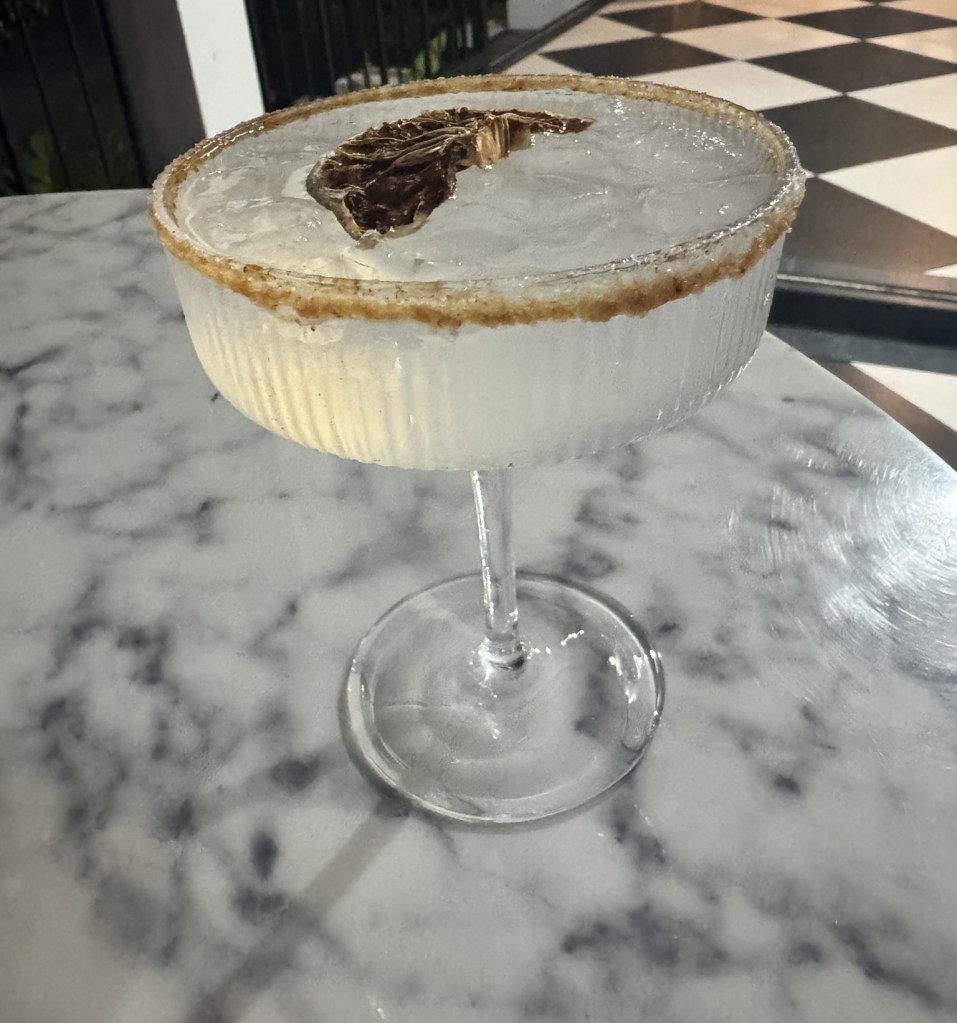
And because I’m rooted in balance these days, it would be followed closely by a tequila salt prune. Not exactly childhood nostalgia — but nostalgic all the same.
Some cravings feed memory. Others simply belong to a different chapter.
On enrichment, responsibility, loss, and the quiet lessons our dogs leave behind
There is a version of pet ownership that looks cute on Instagram. And then there is the real version — the one that smells like bone broth simmering on a stove, ear wipes at bedtime, puzzle feeders scattered across the yard, and the quiet acceptance that love requires time you often feel you don’t have.
This chapter is about the latter.
Enrichment Isn’t Optional — Even When You’re Tired
Over the years, I’ve learned that enrichment isn’t a luxury for dogs — it’s a responsibility. And if I’m honest, it’s something I’ve grappled with.
There was a time when walks were outsourced to a pet sitter because work consumed me. There were periods where “exercise” meant letting the dogs run around the back yard while I stayed glued to a laptop or phone call, convincing myself that proximity was enough.
What I know now — especially as my dogs get older — is this: they need as much stimulation as they did when they were puppies. Just differently.
For us, enrichment looks like:
Outdoor time running freely in the yard
Food puzzles at mealtime
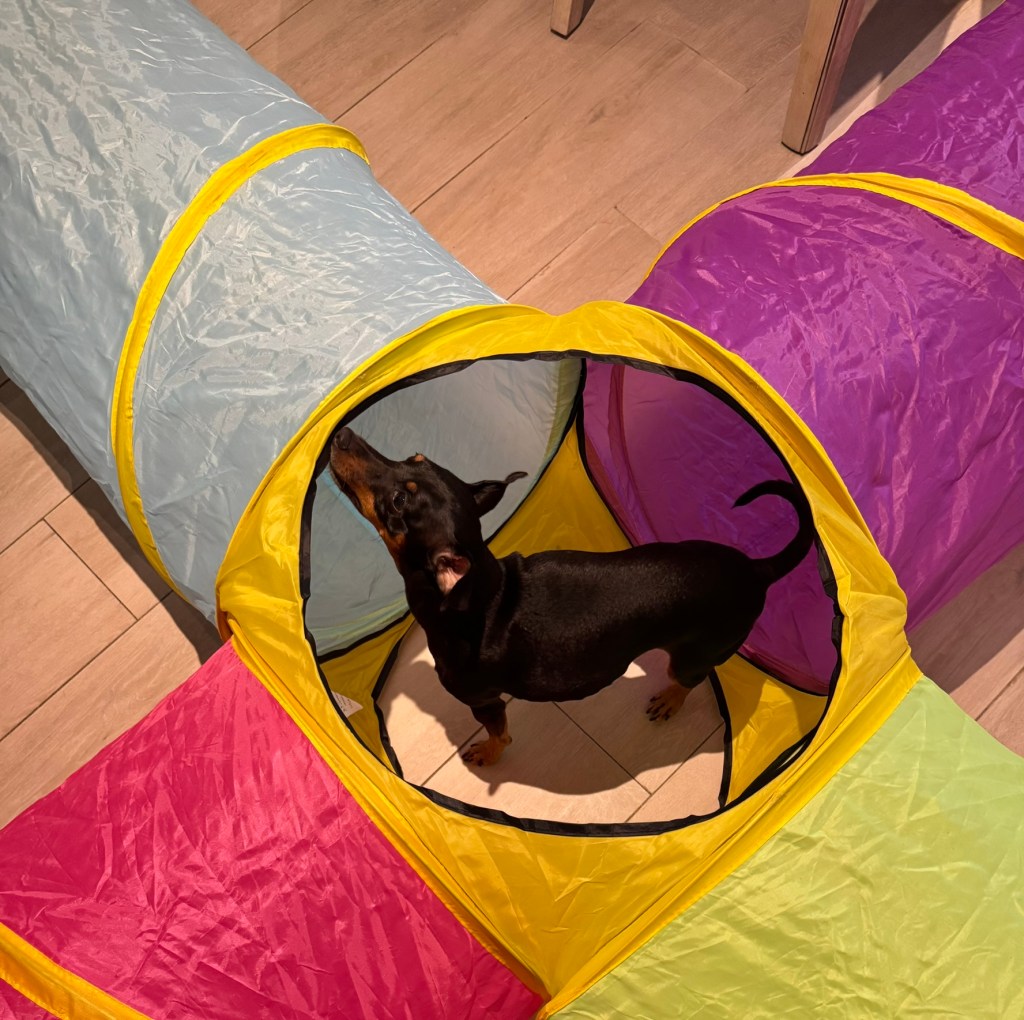
“Seek and find” dinners hidden in their tunnel
Lamb bones at Christmas that they each joyfully cannibalised
Dehydrated chicken feet that take real effort (and patience) to get through
Even on days when I’m lazy. Especially on days when I’m lazy.
Because stimulation isn’t just about burning energy — it’s about engagement. And engagement requires presence.
Food as Care, Not Convenience
What started as a very specific mission — supporting George’s joints — slowly evolved into a fully curated feeding routine that brings me far more joy than I ever expected.
Both George and Bella eat:
A GI-supportive dry dog food (EN Gastroenteric)
Organic, locally sourced Trinidadian chicken or turkey bone broth
Fresh frozen chicken salad as a side
What began as bone broth for George’s limbs has turned into a breakfast-and-dinner ritual that I genuinely love. Watching them inhale their meals — especially as they seek out shiitake mushrooms in the broth like their lives depend on it — is one of those small, grounding pleasures that reminds me why routine matters.
Care has texture. And care, done consistently, becomes joy.
The Unseen Medical Routines
Behind every “spoiled dog” joke is usually a long list of quiet, necessary care.
For George:
Liquid Vet Hip & Joint Wellness Syrup with dinner
Nightly ear cleaning (he’s prone to infections)
Eye and fold wipes with cleaning pads
For Bella:
Liv.52 tablets and Vitamin E for immune support
Careful monitoring due to her sensitive tummy
Support for bile regurgitation and vomiting
Surafil syrup for a few days whenever stress — especially separation anxiety — unsettles her stomach
Over the past year, we’ve noticed Bella struggles deeply when left with a sitter. She almost always returns home with an upset tummy, her anxiety written all over her little body. So now, we pre- plan for the anxious stay and return home. Thankful, that we can afford an excellent pet sitting arrangement for our senior pup and anxious diva- because gratitude opens the way to abundance.
All of this to say: pets are wonderful — but they come with tremendous responsibility.
And responsibility teaches you something vital: you must put aside time for others.
Dogs, Trinidad, and the Reality of Care
Living in Trinidad adds another layer to this story.
We have what we lovingly call the “local shepherd” — mixed-breed dogs with a resilience that can weather almost anything. Alongside that, there’s the ongoing love affair with designer breeds. And in stark contrast, the heartbreaking reality of stray dogs roaming the streets, with only a few tireless souls trying to rescue, treat, and rehome them.
Vet care is not cheap — though I would argue it’s still cheaper than it should be. And when you find a good vet, you hold onto them with your whole heart.
Because care — real care — is not accidental.
Oona: Loss, Timing, and the Breaking Open
Screenshot
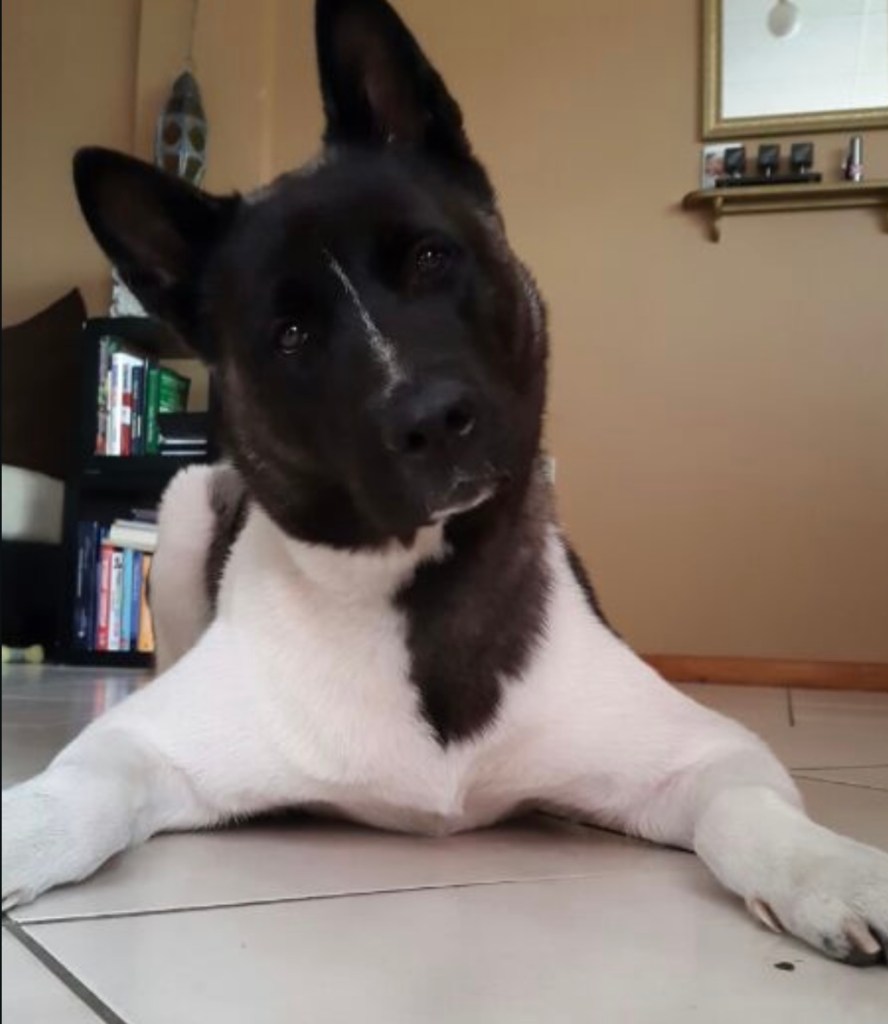
On October 1, 2024, we lost our family Akita, Oona.
She was the first pet my husband and I acquired together — back when he was my boyfriend — and she lived to 13 after an 18-month battle with cancer. We were incredibly fortunate to be able to offer her chemotherapy, which extended her life and gave us another year post-treatment, though it did change her personality in ways we didn’t fully anticipate.
At the time of her decline, she was staying at my parents’ home due to space constraints. My husband was away on a work trip. I was in the middle of an explosive period of change in my career.
My parents — who are known for controlling what they share (more on family dynamics another time) — didn’t tell us how rapidly her health was deteriorating.
The day after my husband left, they said she wasn’t doing well. Two days later — the same day my career pivot began — we had to accept that she needed to be euthanised.
I will never forget sitting on the floor of my parents’ house, on a video call with my husband, waiting for her to pass, while my phone lit up with work issues. October 1, 2024 is etched into me.
It felt like an out-of-body experience.
Her death represented so much:
A changing of the guard
Deep reflections on marriage, fertility and time
The removal of blinders about corporate life and culture
The loss of a being who entered my life just after returning to Trinidad — and just after meeting my husband
When my husband returned from his trip, he collected and brought her ashes home, I broke. Completely. All the anxiety, grief, exhaustion, and suppressed fear poured out in one moment. I remember seeing the worry on his face as I unravelled — just briefly — into something unrecognisable even to myself.
But I didn’t know then what I know now.
Moments that break you to the core also offer you a choice.
Some people experience life-altering events and learn nothing. Some come back harder, more closed, more bitter.
For me, Oona’s loss cracked something open. It forced me to ask how I wanted to shape my life — not just survive it.
What Dogs Teach Us, Even in Loss
The loss of a pet hurts in a way that’s hard to explain unless you’ve lived it. Especially when that pet carries entire chapters of your life within them — much like the loss of a friend.
And yes — I still get annoyed when my old boy George can’t quite hold his poop on the way out to a walk and leaves a little nugget in the garage.
But cleaning up a little poop is priceless compared to the nights when his warm, round body was my source of comfort — when I hugged the life out of him while grieving, sleeping, laughing, or just being still.
The Lesson of This Chapter
So what is this chapter about?
Enrich them — and enrich yourself.
Make the time that your employer, spouse, child — and even you — will not automatically give you.
For me, that looks like:
Sundays in the yard while they yelp at passing cars and imaginary threats
Evening training sessions disguised as dinner
Turning feeding into engagement instead of efficiency
Choosing discipline over convenience — gently, intentionally
It is purposeful discipline. And it rewires you.
I’ve lived the life where I didn’t have time — where I was glued to a laptop chasing the wrong things. Now, I am very clear: I am the CEO of my own life. And when you need to pivot, it’s the small moments of joy you’ve protected that will carry you through.
A Small Life Update (Because Balance Matters)
In other news — 30 Soft went well last week. We closed all the move, exercise, and stand rings. Steps were taken. Gold stars all around.
On Friday, I wanted a margarita and truffle fries. So I had them.
I’m committed to discipline — not rigidity. Two margaritas didn’t derail anything. Neither did the fries.
What mattered more was sitting on a balcony with my husband, present for a couple quiet hours, and still being home in pj’s by 8:30pm.
A Friday well spent.
For Busy People: Blending Doggy Care with Your Own Well-Being
Turn feeding time into training time
Use enrichment toys instead of passive bowls
Walks count as movement for both of you
Evening routines create calm — for humans and dogs
Care is not wasted time; it’s grounding
Closing Thought
Love asks us to slow down. Dogs don’t need perfection — they need presence. And in learning how to care for them well, we often learn how to care for ourselves better too.
If no one has told you today — you’re doing enough. And your dogs know it. 🤍
About the Author
Sarala Rambachan is a corporate attorney, governance advisor, writer, and lifelong dog lover based in Trinidad. She writes about leadership, loss, intention, and the quiet disciplines that shape a meaningful life — often with a canine at her feet and a cup of something warm nearby.
Clue of the Week
The things that ask the most of your time often give you back the most clarity.
My mission is to create space for honesty, growth, and meaningful connection—through words, leadership, and lived experience.
I write and lead for the women (and men) navigating transitions: career pivots, shifting friendships, changing identities, and the quiet reckoning that comes when what once fit no longer does. I believe in choosing depth over optics, integrity over titles, and alignment over applause.
Through storytelling, reflection, and practical wisdom drawn from law, governance, leadership, and life, I aim to remind others that they are not broken for feeling deeply, pausing often, or choosing a different path. Growth does not have to be loud to be powerful—and healing does not require perfection.
This space exists to explore what it means to lead with clarity and heart, to honour values over validation, and to build lives that feel as good on the inside as they look on paper.
If you leave here feeling seen, steadied, or a little more at home with yourself—then I’ve done what I came to do.
One of the biggest lessons the past three years has taught me is this: sometimes relationships don’t end because of betrayal, conflict, or cruelty — they end because value systems quietly drift apart.
I’ve watched credible, strong, experienced people — people I love or deeply respect — make choices that took them down a values path different from mine. Choices made in pursuit of what they saw as the goal: a job title, a role, a partner, a version of success that looks impressive on paper.
And while I understand ambition, survival, and the very human need for validation, it’s been painful to witness those choices come at the cost of alignment — and, in some cases, at the cost of friendship.
That loss hurt. Not because I don’t wish people well — I do — but because it forced me to confront a hard truth: what looks good is not always what matters. And pain is still pain, no matter how beautifully it’s dressed.
Acceptance Is Not Settling
In a recent therapy session, my therapist asked me a question that stopped me in my tracks:
“Have you ever loved or cared about someone you wished would change — but couldn’t?”
At first, I wasn’t sure I had. But the truth is… we all have.
I’d been throwing around language like “settling”, as though acceptance meant compromising myself. She challenged me instead to consider acceptance — not as resignation, but as emotional maturity.
Over the course of 2025, I’ve done a lot of work on myself — and I’ve been incredibly lucky to have the space to do it. I’ve learned what it truly means to have a voice. To take up space. To stop shrinking or performing for approval.
But the most important lesson has been learning that two truths can coexist:
I can be sad and grateful
Disappointed and accepting
At peace with an ending and appreciative of what once was
Acceptance isn’t weakness. It’s clarity.
When Performing Stops Working
If TikTok is to be believed, “2025 wrecked us all.” While it wasn’t my worst year — let’s call that 2024 — it was a hard one.
Hard because it forced me to sit with why I no longer needed to perform. Why I didn’t need to tick boxes someone else had decided were “the measure.”
I’ve smiled through crippling pain before. I vividly remember a board meeting where I’d excuse myself to cry in the bathroom — then walk back in, composed, articulate, “fine.” All while outwardly living what looked like a once-in-a-lifetime professional experience.
It’s astonishing what shifts when you stop caring whether people think you’re smiling or frowning. When they don’t know your next move — but the people who matter do.
Choosing Quiet Over Noise
These days, my life is filled with routine and quality. The loudest noise is me shouting at George (who is now a little hard of hearing), Isabella (who inherited my stubbornness), or my husband — who once told me that when I argue, he sees sheep jumping up and down.
Honestly? Not bad at all.
Don’t misunderstand me — the road to self-confidence isn’t a steady upward trek. It hasn’t been miraculous or neat. There has been real pain. Fear. Tears. Trauma responses. Situations handled “so as not to cause trouble” or “not to look bad.” Gratitude offered even after being hurt.
And I’m no saint. I’ve made mistakes. I’ve hurt people I care about. I’ve acted irrationally. I’ve been selfish. That’s part of being human.
What matters is what we do with the lessons.
What Matters vs. What Looks Like It Matters
Life will always set you a higher measure to prove your worth. Some of those measures may be necessary on paper — especially in careers — but they are not who you are.
Are there people who think they’ve “won” some mysterious war against me? I’m sure there are. Does it affect me now? Not really.
One of the most fundamental lessons of 2025 is this: people can’t turn up for you if they can’t turn up for themselves.
That doesn’t excuse bad behaviour — people can still be deeply disappointing — but it does explain a lot.
So I’ve leaned into turning up for myself. And for the people who truly see and feel this version of me, I’m profoundly grateful. In choosing quality over quantity, I know the connections I have are genuine — not competitive, not transactional.
I recently listened to a podcast that spoke about being intentional with who we label friend and who we place in that friendship bucket. Not everyone is rooting for you — sometimes because they haven’t done their own work, sometimes because… well… they’re just not great people.
Either way, that part isn’t our business.
What is our business is recognising that we become who we associate with.
So this January, the focus is knowing ourselves — so we can recognise those around us.
In Other News… Life Updates
Since this is, after all, Life in Chapters:
I’m attempting Dry January to reset my wildly indulgent Christmas ways. On January 1st, 2025, I started 75 Medium — committing to a minimum of 10K steps daily alongside physical, mental, and spiritual challenges — all in time to unveil a hotty (hotty for me) body at Jamaica Carnival with my bestie. And I am happy to report I smashed it- and kept up my daily steps ( sometimes doubling it) and exercise routine for the entire year- with the odd rest and travel day for balance.
This year? Dry January comes with a 30 Soft twist — because February travel means some days the only steps I’ll get are to the cooler… to top up my prosecco.
Grace, after all, is growth too.
And now I’m wondering — should I do a chapter on Dry January, discipline, and carnival body prep?
We’ll see what the next blog brings.
About the Author
Sarala Rambachan is a corporate attorney, governance advisor, mentor, and writer exploring leadership, healing, ambition, and authenticity through lived experience. Life in Chapters is her space to reflect honestly — without performance — on the seasons that shape us.
Clue of the Week
Acceptance doesn’t mean you approve of what happened — it means you stop fighting reality.
There was a time when, if I could pour a glass for my younger self, it would have been filled with warnings.
Don’t trust so quickly (though I still did). Don’t give so much (oh, boy, well did I over-give). Don’t work yourself to the bone thinking rest is something you earn later (worked through muscle and bone). Don’t confuse urgency with importance (well, I’ve lived through 3 million seasons of everything is urgent).
Today, if I poured that glass again, it wouldn’t come with advice at all.
It would come with permission.
I wouldn’t tell her to move faster. I wouldn’t tell her to hustle harder. I wouldn’t tell her to prove anything to anyone.
I would tell her this instead: You are allowed to slow down before life forces you to.
For a long time, urgency felt like success. Quick decisions. Full calendars. Being needed. Being relied on. Being the one who could handle it. In my professional life, urgency became a badge of honour — the deal that had to close, the crisis that needed managing, the role that required everything I had and then some. I thought that pace meant purpose.
But urgency is loud. And loud doesn’t always mean aligned.
At some point — quietly, without ceremony — I began choosing intentionality instead.
Intentionality in the work I say yes to. Intentionality in the leadership roles I take on. Intentionality in how much of myself I pour into rooms that were never meant to hold me.
This shift didn’t happen overnight. It came after years of building, achieving, carrying responsibility with grace even when it was heavy. It came after realising that success without space to breathe becomes another form of survival mode.
In my career pivot — stepping away from the certainty of a defined corporate path and into a season of recalibration — I learned something deeply uncomfortable and deeply freeing: Not every decision needs to be rushed to be right.
Some need to be felt.
Intentionality looks like choosing work that aligns with your values, not just your CV. It looks like redefining leadership beyond titles — toward impact, integrity, and how people feel after working with you. It looks like understanding that stepping back is not stepping down.
And personally? It looks like trusting myself enough not to explain every choice. It looks like no longer measuring my worth by productivity or proximity to power. It looks like allowing softness to coexist with strength.
If I could pour that glass again, I wouldn’t warn my younger self about heartbreak, disappointment, or uncertainty. She was always capable of surviving those.
I would simply sit with her and say: You don’t need to rush to become who you already are.
Some seasons are about momentum. Others are about meaning.
This one — for me — is about intention.
And if no one has told you today: You are allowed to choose peace without apology. You are allowed to evolve without explanation. You are allowed to take your time.
Pour the glass slowly. 🍷 You’ve earned that much.
About the Author
Shalini S. Rambachan is a corporate commercial attorney, governance advisor, and reflective writer exploring leadership, growth, and the quiet seasons in between. Through Life in Chapters and Canines & Cabernet, she writes about building a life — and a career — with intention, integrity, and heart.
Clue of the Week
I’m learning that urgency often comes from fear — and intentionality comes from trust.
Reflections on healing, voice, and choosing a life you’re awake inside of
2025 did not arrive gently.
It arrived on baited breath—tight-chested and heavy—with crisis, pain, shame, and fear sitting far too close to the surface. A career pivot I didn’t fully recognise myself inside of. Quiet questions about approaching 40, about a decade of marriage, about being childless and whether my partner and I were still growing together—or slowly apart. Grief over friendships that revealed themselves not as friendships at all, but transactions. Others who needed to walk away to chase their own goals, even if that meant leaving us behind.
I remember feeling like I was treading water in a pool of despair with no visible edge. No ladder. Just the exhausting effort of staying afloat.
And yet—here I am.
2026 arrived not with fireworks, but with wind. Gentle at first. Then steady. The kind that clears your lungs and reminds you that breathing doesn’t have to hurt.
I am calmer now. More confident. More rooted in myself. Therapy helped—immensely—but so did a burning decision to put my voice, my body, my wants, my life back at the centre. To stop living in anticipation of the next pay cheque, the next qualification, the next perfectly curated LinkedIn or Instagram moment that might finally signal, I’ve made it.
Healing, it turns out, is deeply unglamorous—and utterly magnificent.
Two days ago, my husband and I sat outside debating whether a visiting bird on the power line was pooping seeds or spitting them out. A real, earnest discussion. Meanwhile, my dogs were in a joyful tizzy, getting mental stimulation and exercise, and I wasn’t hiding from the sun for fear of getting darker. This moment followed morning movement, a comforting lunch, and a Yeti filled with leftover champagne—yes, leftover champagne, I know, blasphemy—but it’s been an indulgent season and I’m letting it be.
And that’s the truth of it: So many things can coexist.
I still think about career pivots. About what’s next. About the shape my work will take. But it no longer consumes me. It’s a piece of the whole now—not the price of admission to feeling worthy. My life has quality again. The best it’s had in a long while.
These last two weeks of Christmas and New Year were wonderfully indulgent. A re-imagined circle of friends. Activities that spoke to my soul, not my social media profile. There is power in that kind of quiet. In fear faced gently. In finding your voice.
There’s a shift that happens when the little girl inside you no longer needs to protect you—because you can protect yourself now. That shift is everything. It’s perspective. It’s power.
I’m grateful for the lessons. Even the painful ones. Especially the painful ones. I’m carrying them into this year with a peaceful mind, fun things to look forward to, and responsibilities I no longer resent. I’ve always believed there’s room for everyone at the table—but standing firmly in myself, I know now that no one gets to keep their seat at the cost of my sanity.
Titles are not worth friendships. Jobs are not worth your self-respect. Friend circles that aren’t for you will slowly dim your light.
And it is more than okay to say no—to re-imagine your life daily if needed.
There is no prize for living a life that looks right but feels wrong.
Fill your time with people who hold you—and whom you can hold in return. Don’t worry if that life doesn’t look the way you once imagined. If you’re willing to do the work, on yourself and for yourself, a year can change everything. You can choose to stay in the life you have—but this time, with your eyes wide open.
Lessons I’m Carrying Into 2026
Healing doesn’t erase ambition—it reorders it.
Anger, grief, joy, and gratitude can coexist without cancelling each other out.
Not everyone is meant to come with you, and that’s not a failure.
Rest is productive. Quiet is powerful.
Your voice gets clearer when you stop apologising for using it.
You don’t need permission to choose peace.
Clue of the Week
I’m learning to enjoy moments without narrating them—to myself or to the world.
About the Author
Shalini S. Rambachan is a corporate commercial attorney, governance advisor, and reflective writer navigating life, leadership, and reinvention with honesty and heart. Through her blog, she explores growth, healing, purpose, and the courage it takes to build a life that feels as good as it looks.
If no one has told you yet this year: you’re allowed to change. You’re allowed to choose yourself. And you’re allowed to enjoy the life you’re living—right now.