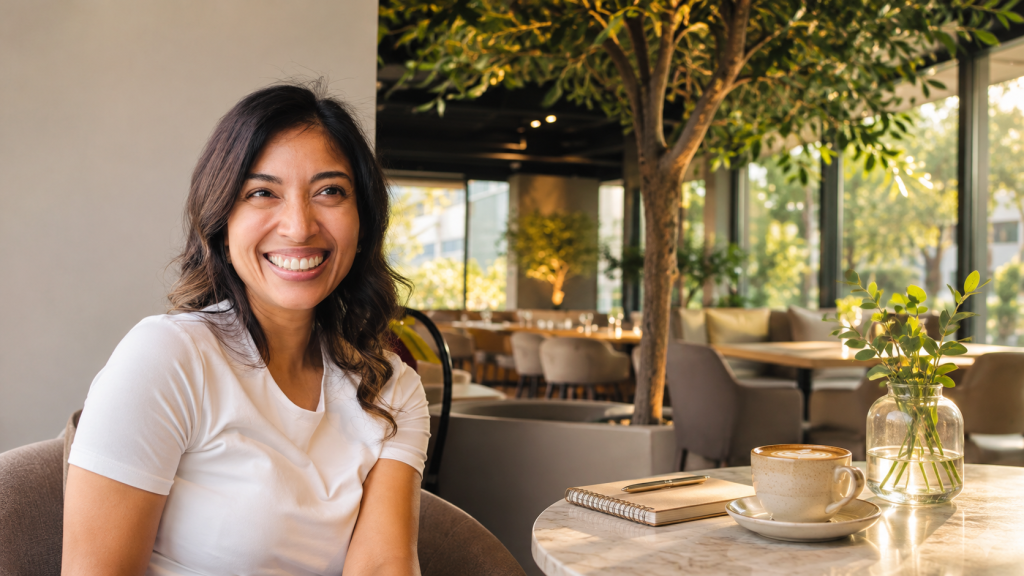
Hi, I’m Sarala — Caribbean corporate strategist/executive woman writing honestly about power, identity, leadership, reinvention and emotional truth- and what it costs.
After years navigating boardrooms, deals, and governance across the Caribbean, I’ve learned that life — like leadership — is best lived in chapters. Some are bold and ambitious. Some are quiet and healing. And most are best shared over a glass of wine and a wagging tail nearby.
This space is where I write about it all — the beautiful, messy balance of careers, canines, and cabernet. From reflections on purpose and courage to lessons from leadership, love, and dog walks, these are the stories that shape who I am — and, maybe, who we’re all becoming.
Pull up a chair (or pour a glass) and stay awhile. Here’s to life in chapters — imperfect, authentic, and deeply human.
If my future self could send me one piece of advice right now, I think she’d say, “Keep making plans while you wait.”
She’d probably send it as a WhatsApp voice note, because apparently even in the future I have more to say after I’ve said, “Okay, one last thing.”
I’ve spent a fair bit of this season waiting. For the email. For the decision after the good conversation. For someone to say, “Yes, let’s do this,” so I could finally put something in my calendar in ink.
And I’ve noticed how easily waiting for one answer can turn into waiting to make a dozen unrelated decisions. I’ll reach out to that person once I know what’s happening with this opportunity. I’ll write about the transition when I can tie it up with a neat little lesson. I’ll feel better about booking the golf lesson when my inbox has given me some reason to celebrate.
Meanwhile, my inbox is perfectly happy to send me a reminder that my storage is almost full.
I think my future self would tell me to send the thoughtful follow-up, close the laptop and go to golf. To invite someone for coffee because I’d genuinely like to know what they’re working on. To keep writing about what it feels like to build a business while I’m still figuring out how to describe what I do in one breath.
There are answers I still want. I’d be delighted if a few of them arrived on Monday morning. But when I look back on this part of my life, I hope I remember more than the days I heard back. I want to remember the first time a client called because someone had recommended me, the essays I almost talked myself out of publishing, and the afternoon I got one clean shot at the driving range and immediately decided I was a golfer.
I’ve written quite a bit about careers lately. George and Isabella would like to know when I intend to return to the subjects that matter. Specifically, who’s coming over, what they’re bringing, and when the cheese will be unattended.
Now, there’s a particular kind of optimism involved in putting a cheese board on a low coffee table when you live with two dogs. George will wait patiently for a lapse in supervision. Isabella prefers to identify the weakest guest and work directly with them.
This is the sort of Christmas entertaining I’m in the mood for this year. A few people at home, a bottle of wine, something decent to eat, and time to find out how everybody is really doing.
Friendship circles and family gatherings change. The people who used to make December feel full may live elsewhere now, have different commitments, or simply be less present in your life. Sometimes the change feels freeing. Sometimes you’re surprised by how much you miss a particular table, or one person’s laugh.
A small gathering gives you a way to spend time with people you want to see. And if you’re the one feeling a bit left out this year, you can start with one person and a plan small enough to follow through on.
Choose the wine and build the board around it
For four people, I’d start with one bottle of wine, two cheeses, crackers, a small jar of fig jam or a handful of sliced apples, and something salty. Add chilled water and a jug of sorrel spritz made with sorrel, soda water and lime. If you’re vegetarian like me, check the cheese labels for vegetarian or microbial rennet when you shop.
The Ingredients:
Côtes du Rhône rouge– Usually a friendly red with ripe berry or plum flavours and a peppery finish. My pick if I’m buying one red for the table.
Pair with: Aged Gouda. Its nutty, caramel-like flavour works beautifully with the ripe fruit in the wine. Add a little fig jam.
Cabernet Sauvignon-Dark fruit and a firmer, sometimes drying finish. I’d pour it with a cheese that has some character of its own.
Pair with: Mature cheddar. The sharp, savoury bite holds its own alongside the Cabernet. Plain crackers are enough here.
Brut Crémant or Brut Prosecco– Dry French sparkling wine, often with apple and citrus flavours or Brut Prosecco is a dry Italian sparkling wine with fresh apple notes. The bubbles freshen your palate between bites of creamy cheese. Look for Brut on the label if you prefer a drier pour. Especially welcome when guests arrive on a warm evening.
Pair with: Brie. The bubbles and acidity freshen your palate between bites of creamy cheese. A few salted almonds round it out.
The Method:
Add Laughter and serve ENJOYMENT!
If you’re keeping an eye on the bill, choose the wine first, then buy the cheese to match. For a Côtes du Rhône evening, I’d serve Gouda as the main pairing and add a small wedge of Brie for variety. I’d skip the extra garnishes and buy crackers I’d happily finish myself the next day.
Set up the room you’ll actually use
Make it an early evening plan. Try six to eight and say “wine and cheese” in the invitation so everyone knows what to expect. “I’m having a few people over for wine and cheese on Saturday at six. I’d love you to come” does the job.
Set up one easy place to sit and serve. Put glasses, a water jug, napkins and a little bowl for olive pits together. Use a lamp or switch on the tree lights if you’ve already put it up. If you’re hosting in the Trinidad heat, keep the sparkling wine chilled and bring the cheese out shortly before people arrive.
Give the dogs their own spot and treats. Put human snacks on a table the dogs can’t reach. If your dogs get excited when the doorbell goes, have a familiar spot ready for them while everybody settles in. I’d also tell guests they can say hello to George and Isabella without paying a cheese tax.
Make a smaller plan if Christmas feels lonely
If you’re missing someone, coming out of a difficult year, or feeling a little on the outside of the usual plans, a party may be more than you want to organise. You might prefer to ask one person over for coffee, suggest a late-afternoon walk, or set an actual time to call a friend who lives away. Put it on the calendar so it has a chance of happening.
And if someone comes to mind as you read this, invite them directly. “I’m free Sunday afternoon and I’d love to see you” can feel very different from a general invitation in a group chat. You’ve let them know you were thinking of them.
My version of the evening is probably four people, Côtes du Rhône, aged Gouda and a goodbye at the door that takes another twenty minutes. There will be enough leftovers for toast the next morning, assuming Isabella’s negotiations are unsuccessful.
What would make Christmas feel a little more like yours this year?
There’s a particular kind of humility that comes from uploading your CV and then being asked to type out your entire CV.
I’ve spent years as a corporate attorney helping people make decisions when the outcome was uncertain. You’d think I’d be exceptionally well prepared to wait for a reply to a job application.
Apparently, the skill is context-specific.
I’ve applied for a lot of jobs. Some I could picture myself doing before I’d even finished reading the description. Others made me curious about where my experience might take me. And after enough applications without an offer, I’ve caught myself rereading my own CV with the suspicion of someone reviewing a contract drafted by the other side.
Is this clear enough? Is that really a strength? Should I move this paragraph up?
By the third reread, I’m prepared to hold a full inquiry into a bullet point.
The strange thing about this season is that I’m also building a consultancy. I can spend part of my day doing work that reminds me exactly what I bring to the table, then open my inbox and feel as though someone else gets to decide whether any of it counts. I give that inbox an extraordinary amount of authority for something that also contains a reminder to renew my antivirus.
If you’re in a season of transition too, here are three things I’m practising. Some days I’m better at them than others.
1. Make it easy to see why your experience fits
Before you edit your CV, pull out the three things the role seems to need most. Then ask yourself, When have I done something that would give them confidence I can do this? Put those examples near the top, where someone can find them on a quick read.
I might lead with cross-border transactions for one role and board advisory for another. Both are part of my experience. What changes is which part of the story the reader needs to hear first.
And if you’re moving into a different field, spell out the connection. “Managed legal workstreams” may be accurate. “Coordinated advisers across multiple jurisdictions, kept approvals on track and briefed senior leaders on decisions” gives someone outside Legal a much clearer sense of what you can do.
2. Be brave enough to send the message
Think of one person you’ve enjoyed working with, or someone whose career move you’re genuinely curious about. Reach out with a small, specific ask. A 15-minute conversation about how they made a move or what they’re seeing in their sector is an easier invitation to answer than “Please keep me in mind for anything.”
You could say, “I’m exploring roles where I can bring my legal and governance experience into a broader advisory remit. I’d value your perspective on where you’re seeing that combination come up. Would you have 15 minutes for a chat?”
Then send it before you revise it into a three-page memorandum. I say this with affection and some professional experience.
3. Let people help you, and give yourself some grace
Pride can sound remarkably polite. I don’t want to bother her. I’ll reach out when I have better news. Surely he knows I’m open to opportunities.
Sometimes people who think highly of you simply have no idea you’d welcome an introduction. If someone offers to put you in touch, say yes. Give them two sentences they can forward about what you do and what you’re looking for. Thank them, follow up once if it makes sense, and give them room to respond. A straightforward ask feels easier when you remember how often you’ve been glad to make an introduction for someone else.
And on a discouraging week, give yourself something to count besides replies. A CV that finally makes your experience clear, a message you were nervous to send, or a conversation that helped you see another possibility are all things you did. Give yourself credit for them before checking your inbox again.
I still want the email that starts with “We’re delighted.” I’d probably read it twice before I believed it. In the meantime, I’d like to get through the occasional Tuesday without asking my inbox for a performance review.
Tip for the week: Don’t forget those deposits you’ve already made in yourself while waiting for the outcome ( that you think) you want the most.
If you’ve been through a career transition, what helped you keep going when it felt like nothing was moving?
I’ve forgiven myself for staying too long in places where I had to keep proving my worth.
I remember how good I was at explaining things away. Everyone was under pressure. It was a difficult quarter. Maybe if I worded the email differently. I could make a very persuasive case for giving almost anything another six months. Occupational hazard, I suppose.
For a while, I was harder on myself for staying than I was on anyone who made it difficult to stay. I can give that version of myself a little grace now. She cared about the work, had bills to pay, and had spent years being rewarded for figuring out how to make things work. Of course she tried again.
What I remember most is how often I left a conversation and spent the drive home rehearsing what I wished I’d said. These days, when I catch myself doing that after every conversation with someone, I pay attention. Sometimes I turn up the radio and let myself enjoy the drive home.
What have you forgiven yourself for that you still remember clearly?
There was a time when I might have answered this question with something about working hard and achieving my goals. I still believe in those things. I’ve just become more interested in what the work is making possible—and whether I actually enjoy the life I’m working so hard to build.
I want meaningful work, relationships where I can exhale, and the freedom to change my mind. I want to be useful without needing to be indispensable. And I want to enjoy an ordinary Tuesday instead of saving all my happiness for an achievement, a holiday or a smaller number on a scale.
Some days, that philosophy looks like courage: putting myself forward, starting again, believing in something before there is much evidence.
Other days, it looks like time with my husband and dogs, a good book, or cake for breakfast without turning it into a moral dilemma.
I’m still ambitious. I just want my ambition to leave room for me.
What would your one sentence be—and has it changed over the years?
This week, I have been a little under the weather and rather short on enthusiasm.
I keep opening my laptop with the best intentions, then looking at the sofa as though it has made a compelling counteroffer.
Naturally, I chose this moment to question whether blogging is worth it.
Because apparently, feeling tired wasn’t enough. I also needed an informal review of my creative purpose.
Is anyone out there?
Writing online is a peculiar exercise in courage.
You take a thought that has been living privately in your head, find words for it, and send it out into the world. Sometimes, you share something tender. Sometimes, you try to make someone laugh. Sometimes, you spend twenty minutes deciding whether a sentence sounds honest or just slightly unhinged.
Then you press publish.
And wait.
A quiet comments section can feel surprisingly personal when you have put a little of yourself on the page.
I know better than to measure the value of my writing entirely through numbers. I also know exactly where to find those numbers, which complicates my spiritual growth considerably.
There is something humbling about being a grown woman with professional qualifications and years of experience, then having your mood affected by whether someone clicked a tiny heart.
But I enjoy knowing that something landed. That a reader laughed, felt understood, or paused long enough to recognise a piece of their own life.
Wanting that connection feels human.
Meanwhile, the calendar has plans
While I have been negotiating with my motivation, the year has continued at an entirely unreasonable pace.
Divali is approaching. Christmas is close behind.
I’m still trying to work out what happened to several earlier months, and suddenly there are festive invitations and decisions to be made.
What are we wearing? What are we cooking? What are the plans?
At the moment, my most firmly established plan is to sit down.
And yet, I love this season.
I love the food, the lights, the familiar rituals. I love having a reason to dress up and gather with people. I love the little moments of anticipation that interrupt ordinary days.
I can look forward to all of that and still feel tired today. I’m trying to give myself permission to arrive at the season as I am, without first manufacturing an appropriate level of sparkle.
A little light feels manageable
As Divali approaches, I keep thinking about preparing and lighting deyas.
There is something comforting about having a small, familiar task to do. Pour the oil. Arrange the wick. Light it carefully. Watch the flame settle.
When my thoughts are crowded with questions about progress, work and whether I am doing enough, that sort of attention feels welcome.
This week, I can manage a few words. A little rest. A conversation with someone I love. Perhaps an evening when I close the laptop without checking how a post is doing one final time.
That last one may require supervision.
I have spent enough of my life being purposeful and prepared to find low-energy days mildly offensive. Part of me still wants to turn them into something useful before allowing them to end.
But being under the weather doesn’t need to become a lesson by teatime. Sometimes, I just need to feel better.
I’m still here, writing
For now, I want to keep writing.
I enjoy finding the sentence that says what I mean. I enjoy noticing the funny detail in a frustrating week. And I enjoy the moments when someone replies, “I thought it was just me.”
There are also people who read quietly. I know because I am sometimes one of them: touched by something, interrupted before commenting, or mentally composing a reply that never makes it onto the screen.
Remembering that helps me be kinder to the silence.
I would still welcome a lively comments section. Personal growth has not removed my appreciation for a little applause.
But today, I have finished this piece. Soon, I’ll make a cup of tea and leave it to find whoever needs a little company.
The festive season is loading.
I’m still buffering.
Hopefully, we’ll both be ready in time for the food.
How are you feeling as the festive season approaches: excited, exhausted, reflective—or a little of everything? Tell me in the comments. A one-word answer counts; nobody is being assigned homework.
For a long time, my response to stress was to become more organised.
Make a list. Find a solution. Anticipate the problem behind the problem. If I could get enough things under control, surely I would feel better.
As an attorney, that instinct has served me well. I can think through difficult situations, manage competing demands and keep moving when there is a lot at stake. But in my personal life, I am learning how tiring it can be to approach every worry as a matter requiring immediate attention.
Sometimes, I need to put the list down and ask myself a simpler question:
What do I actually need right now?
The answer might be sleep. Something to eat. Movement. A conversation where I don’t have to sound composed. Sometimes, I need to acknowledge that something is upsetting me before I start trying to fix it.
I don’t always get this right. There are days when my mind is several steps ahead of me, having conversations that haven’t happened and preparing for outcomes that may never arrive. Building a business has certainly given that part of my brain plenty of material.
But these are some of the ways I am learning to manage it.
I move my body and give my thoughts somewhere else to go.
Golf has become a lovely part of my life. There is something useful about having to pay attention to the ball in front of you when your mind would otherwise be occupied with twenty different things.
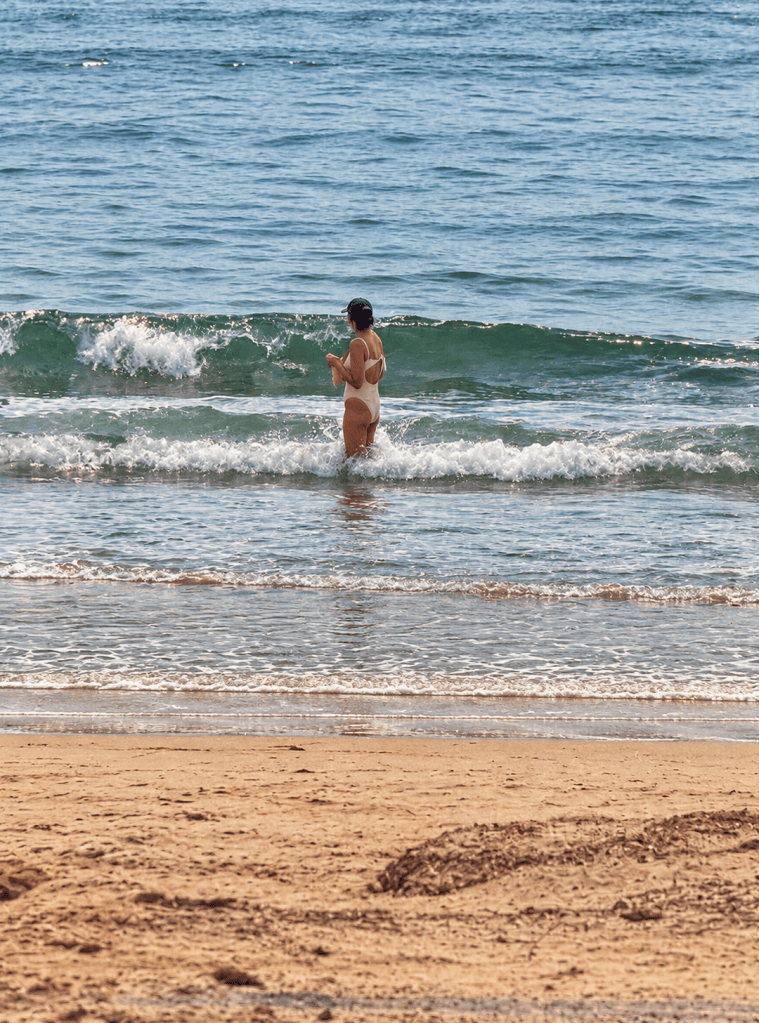
Exercise, time outdoors and being at the beach help too. I enjoy the feeling of being physically present somewhere—the water around my legs, the air on my skin, the simple pleasure of being outside.
For a while, my world gets bigger than whatever has been worrying me.
I give myself permission to rest sooner.
This is still a practice.
I can be very persuasive with myself about why I should keep going. There is always one more email, one more task, one more thing I could get out of the way.
Lately, I have been paying closer attention to the cues from my body. When I am tired, in pain or feeling the effects of hormonal changes, pushing harder can make an already difficult day feel worse.
I am learning to adjust what I expect of myself on those days. Some things can wait until I have more energy to give them.
I talk things through.
Therapy has given me space to examine the stories I tell myself, particularly the ones that turn uncertainty into a prediction of failure.
I am getting better at noticing the difference between “I don’t know how this will work out” and “This won’t work out.”
That distinction matters when you are building something new. It leaves room for possibility.
I make room for ordinary happiness.
Time with my husband and doggies. A good meal. A cute outfit. A little laughter. Something enjoyable on the calendar.
Around my birthday, there was champagne at midnight and cake for breakfast. There was rest, gratitude and permission to enjoy what was in front of me.
Those moments don’t resolve every concern. They do remind me that a concern doesn’t have to occupy every corner of my life.
I try to identify the next useful step.
When I think about everything at once—business, money, work, the future—it can become overwhelming very quickly.
So I try to bring the question closer: What can I do today?
Sometimes that means preparing a proposal or following up on an opportunity. Sometimes it means accepting that I have done what I can for now and allowing the matter to rest.
I am still learning how to leave it there.
Managing stress, for me, is becoming an exercise in paying attention: to what needs action, what needs patience and what my body is trying to tell me.
I want to build a meaningful, successful life. I also want to be present enough to enjoy it.
So lately, alongside asking myself what needs to get done, I have been asking:
What would help me feel a little more at ease today?
It is a small question, but I am learning to take the answer seriously.
As the day approaches, I have been thinking about how I expected 40 to feel.
I imagined a sense of arrival—not a perfect life, but a quiet confidence that I had reached the age when the important pieces would finally make sense.
I thought my career would feel secure, my relationships settled and my decisions certain. I thought I would have stopped wondering whether I was doing life correctly.
Instead, 40 brought more questions.
It became the year in which I had to examine who I was without the professional title that had explained me for so long. It asked me to build something new while managing the uncertainty that comes with leaving behind a dependable salary and familiar structure.
It gave me extraordinary experiences. It also confronted me with uncomfortable truths.
Here are five things turning 40 taught me about strength, reinvention and starting again.
1. A milestone birthday does not guarantee clarity
We attach expectations to certain ages.
By 30, we should have direction. By 40, we should be established. By 50, perhaps we imagine we will finally possess the wisdom to stop second-guessing ourselves.
But birthdays do not automatically deliver clarity.
Sometimes they simply illuminate the distance between the life we imagined and the one we are actually living.
I entered 40 without the corporate role that had shaped much of my adult identity. For more than 12 years, my work gave my life structure. It provided responsibility, credibility and a clear way to measure progress.
Outside that environment, I had to ask different questions.
Who am I when my value is not reinforced by a title?
What does success mean when there is no established ladder to climb?
How do I measure progress when some of my most important work is still unfolding?
Turning 40 did not answer those questions. It made them impossible to ignore.
Perhaps that is one of the quieter gifts of a milestone birthday: not certainty, but the courage to examine what no longer feels true.
2. Being capable is not the same as being okay
I have always been capable.
I can organise, solve, advise, anticipate and keep moving. I know how to carry responsibility without making the weight visible.
For a long time, I treated that ability as evidence that I was fine.
At 40, I began to see the difference.
Capability can conceal exhaustion. It can make disappointment look manageable and loneliness look like independence. It can teach other people that we need less care simply because we have demonstrated that we can cope without it.
There are times when strength is necessary. But there are also times when strength becomes a performance we continue because we do not know how to put it down.
This year forced me to notice where I had been using competence to compensate for what was missing.
Where was I carrying responsibility that should have been shared?
Where was I accepting less support because I knew I could survive without it?
Where was I saying, “I can handle it,” when the more honest question was, “Why am I expected to handle this alone?”
Many capable women know this pattern intimately. We become so skilled at managing that people stop asking whether we should have to.
Turning 40 taught me that coping well does not necessarily mean we are being cared for well.
3. Freedom and uncertainty can exist at the same time
This year, I built my consultancy. I advised clients, travelled, spoke on stages, appeared on podcasts and shared parts of my story that I once would have kept behind professional language.
I created opportunities that may never have existed had I remained inside my former life.
There have been moments when I have felt deeply aligned with the work I am building.
There have also been moments when I have missed knowing exactly how much money would enter my bank account and when it would arrive.
We often romanticise reinvention.
We celebrate the resignation, the launch, the announcement and the courageous first step. We speak less about what happens after the applause—when income is inconsistent, an expected opportunity does not materialise or the next step remains unclear.
Starting again can feel liberating and frightening.
You can know that leaving was necessary and still miss the security of what you left.
You can be proud of the risk you took and still question whether it will work.
You can feel more like yourself and less secure at the same time.
These truths do not cancel each other out.
Freedom does not remove financial responsibility, and purpose does not eliminate the need for sustainability.
At some point, reinvention has to become more than an inspiring story. It must become a life capable of supporting the person who chose it.
4. Visibility is not the same as stability
I became more visible at 40.
My words reached new audiences. I travelled and spoke in rooms I once might only have imagined. I saw photographs of myself on stages and received messages from women who recognised parts of their own stories in mine.
After years of doing meaningful work behind organisations and senior executives, it felt important to allow my own name, face and voice to take up space.
But visibility can create an illusion.
A photograph cannot show financial uncertainty.
A professional announcement cannot explain the quiet period between opportunities.
A stage cannot tell you how a woman feels when she returns to her hotel room or home.
Applause is affirming, but it is not infrastructure.
A visible life is not automatically a sustainable one. Being recognised is not the same as being secure. Appearing successful does not exempt us from privately questioning whether the foundations beneath that appearance are strong enough.
This lesson extends beyond business.
A relationship can look loving and still require more effort.
A home can look peaceful while the people inside it feel disconnected.
A woman can appear composed while quietly carrying more than anyone realises.
Turning 40 taught me to pay closer attention to the life beneath the photographs.
That is the life that must eventually feel as meaningful as the one people can see.
5. Two truths can exist at once
This year was beautiful.
This year was difficult.
I am proud of myself.
I am still worried about parts of my future.
I love much of the life I am creating.
There are parts of it that cannot remain as they are.
For much of my life, I believed I had to choose one version of the story. If I was grateful, I should not acknowledge disappointment. If I was brave, I should not admit fear. If I had chosen a path, I should not confess that parts of it were harder than expected.
But real life is rarely that tidy.
An impressive year can also be an emotionally difficult year.
A decision can be right and still require adjustment.
A relationship can contain love and still need more care.
We can celebrate how far we have come while being honest about what still hurts.
Allowing both truths to exist has been one of the most liberating lessons of 40.
It means I do not have to dismiss the beauty of this year because it was difficult. Nor do I have to minimise the difficulty simply because beautiful things happened.
I can honour the whole story.
What I am carrying into 41
I am not entering 41 with a dramatic declaration that I have finally figured everything out.
I have not.
I still want greater financial security. I want my business to grow. I want relationships that feel reciprocal and a life in which I do not have to be strong every minute of the day.
But I am entering 41 less willing to perform “fine” in the parts of my life that need attention.
I want to build income with the same intention with which I have built visibility.
I want to stop confusing endurance with alignment.
I want to receive effort, not only give it.
I want to enjoy my life without believing that every joyful moment must justify itself by becoming productive.
Most of all, I want to build a life capable of holding the woman I am becoming.
Perhaps that is a more useful way to approach any milestone birthday.
Instead of asking, “Have I arrived?” we might ask:
Where am I using capability to conceal that I am not okay?
What looks successful publicly but feels unsustainable privately?
What truth do I need to carry into my next year of life?
Turning 40 did not take me to a perfect destination.
It introduced me to a more honest version of myself.
And on Friday, that is the woman who will turn 41.
My birthday is approaching, which means it is almost time for the annual examination I conduct without being asked: the review of my life.
I look at what changed, what grew, what ended, what I avoided and whether the life I have been building actually feels the way I imagined it would.
This year, the review is complicated.
From the outside, it has been a year of courage, visibility and reinvention. From the inside, it has also been a year of uncertainty, uncomfortable truths and repeatedly asking myself whether I am building something sustainable—or simply becoming better at making uncertainty look brave.
The year after 40
Turning 40 felt significant.
It was not because I suddenly had all the answers. In fact, I may have entered this decade with more questions than certainty. But I did feel a growing responsibility to stop living by default.
I wanted to choose more deliberately.
I wanted to build work that reflected the breadth of my experience. I wanted to use my voice beyond boardrooms and legal documents. I wanted to write, speak, create and discover who I was without relying entirely on a corporate title to explain my value.
Over the past year, I have done many of those things.
I built my consultancy. I advised clients. I travelled. I stood on stages and spoke about reinvention, leadership and the moment the traditional ladder no longer fits. I appeared on podcasts, shared more of my story and allowed myself to be seen in ways that once felt uncomfortable.
I also returned to writing consistently.
Week after week, I tried to tell the truth about this chapter—not the polished version in which courage is immediately rewarded, but the version in which confidence and doubt regularly sit beside each other.
There is much for which I am grateful.
There is also much that has been difficult.
The part nobody romanticises
Reinvention is often described as though the decision itself is the hardest part.
Leave the job. Start the business. Book the trip. End the relationship. Choose yourself. Begin again.
But choosing a new direction is only the beginning. You then have to live inside that decision.
You have to continue when the applause ends, when the income is inconsistent, when an opportunity does not materialise and when the person you expected to support you cannot—or does not—show up in the way you hoped.
You have to keep believing in what you are building while also being honest about whether it is working.
That has been one of the most difficult parts of this year.
I have experienced freedom, but I have also missed certainty.
I have been proud of myself, but I have also questioned myself.
I have created opportunities that may never have existed had I remained in the safety of my former life. I have also watched my savings more closely than I would like and wondered how long courage is supposed to take before it begins to feel sustainable.
Both things are true.
My life feels more like mine than it did a year ago. It also feels less predictable.
Alignment has not automatically produced security.
Purpose has not removed the need to earn.
And bravery does not pay a bill simply because it photographs well.
An impressive year can still be a difficult year
This may be the lesson I carry most deeply into 41: an impressive year and an emotionally difficult year can be the same year.
A woman can be photographed on a stage and still return to her room worried about her future.
She can launch a business and still question whether she has done enough.
She can be described as brave while privately wondering whether she made the right decision.
She can love parts of the life she is creating and grieve parts of the life she expected to have by now.
We are often encouraged to select one version of the story.
Either the reinvention was empowering or it was frightening.
Either the year was successful or it was disappointing.
Either we are grateful or we are struggling.
Real life is rarely that tidy.
This year expanded me. It also exhausted me.
It brought beautiful experiences, meaningful work and evidence that my voice can travel beyond the spaces in which I once felt confined. It also exposed the places where I still seek reassurance, tolerate uncertainty for too long or make myself responsible for effort that should not be mine alone.
I cannot call the year a failure simply because it did not give me everything I wanted.
But I also do not want to call it a success without examining what it cost me.
The questions have changed
In earlier years, my birthday review centred on achievement.
What had I accomplished? What could I add to the list? What goal should come next?
As I approach 41, those questions feel incomplete.
I still care about meaningful achievement. I am still ambitious. I still want my work to grow, my income to become more secure and my voice to reach the people who need it.
But I am also asking:
Does my life feel supported, or am I carrying too much of it alone?
Am I building a business—or relying on hope, visibility and occasional opportunities to eventually become a business?
Where have I accepted less effort, care or reciprocity than I need?
What am I continuing because it genuinely matters to me, and what am I continuing because I am afraid of admitting that it may need to change?
Am I happier—or simply proud that I survived?
These are not comfortable birthday questions.
But perhaps comfort is no longer the point.
What I want from 41
I do not want the next year of my life to become another performance.
I do not want to look publicly brave, professionally visible and personally composed while privately living with questions I am afraid to answer.
I want substance beneath the story.
I want a business that is not only meaningful but sustainable. I want relationships in which care, communication and effort are not things I must repeatedly request. I want to keep creating, speaking and writing without measuring the value of my voice only by numbers.
I want softness, but not avoidance.
I want peace, but not at the cost of honesty.
I want to continue becoming, but I also want to build something solid enough to hold the woman I am becoming.
Perhaps this year’s life review is not about proving that leaving corporate life was the right decision. Perhaps it is about being honest enough to decide what must change next.